
Qatar Signals Progress in US-Iran War Talks
Qatar's foreign ministry said mediators including Qatar, Pakistan, and Oman have reached "very progressive stages" in efforts to end the US-Iran war, pushing Brent crude down more than four percent.
Key Takeaways
July 12, 2026 · 4 min read · By Rishabh Bhardwaj
·
AI-assisted, human-reviewed · Our editorial standards
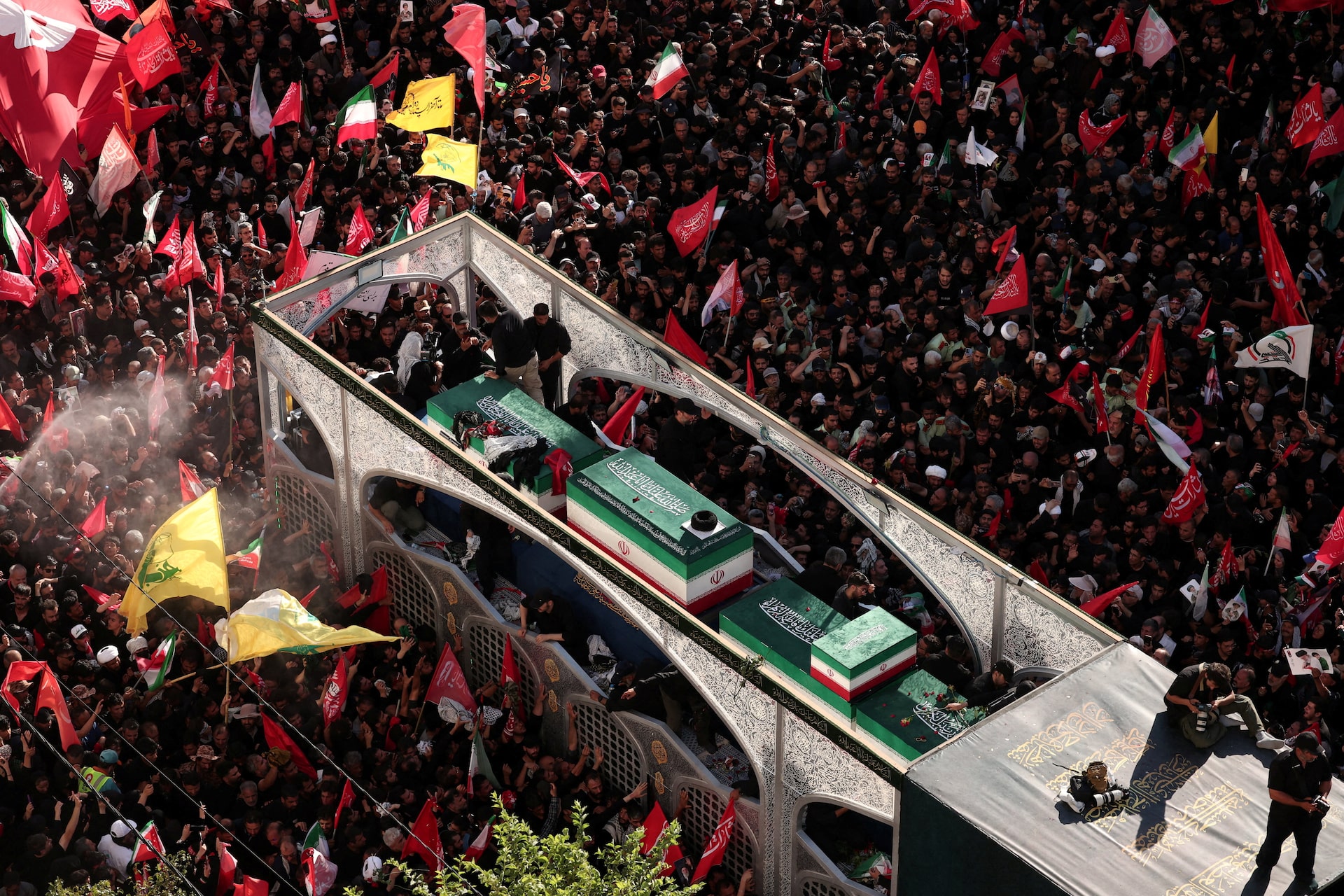
Iran has claimed it struck US military installations across four countries, Kuwait, Qatar, Bahrain, and Jordan, in what it describes as retaliation for American attacks on Iranian territory. The announcement came as Iran simultaneously held burial ceremonies for slain Supreme Leader Ali Khamenei, marking one of the most dramatic escalations in the Middle East in decades.
The Iranian government said its forces targeted American military bases in the region, though independent verification of the strikes, their scale, and the damage caused remains limited at this stage. The timing is significant: Khamenei's funeral signals a leadership transition at precisely the moment Iran is prosecuting an active military confrontation with the United States.
Iran framed the strikes as a direct response to prior US attacks on Iranian targets. Washington has not confirmed the specifics of Iranian claims about damage to its installations, but the US government has publicly committed to keeping the Strait of Hormuz open, the narrow waterway through which roughly 20 percent of global oil trade passes. That statement alone tells you where the sharpest economic risk sits.
The Strait of Hormuz connects the Persian Gulf to the Arabian Sea. Any disruption, whether through mining, naval blockade, or continued strikes on regional infrastructure, would immediately affect oil and gas flows from Saudi Arabia, Iraq, the UAE, Kuwait, and Qatar combined. Energy markets are acutely sensitive to even the threat of Hormuz closure, and a US commitment to keep it open implies a willingness to use naval force to do so.
The presence of US military bases in Qatar, Bahrain, Kuwait, and Jordan is well established. Qatar hosts Al Udeid Air Base, the largest US air base in the Middle East and the forward headquarters of US Central Command. Bahrain is home to the US Navy's Fifth Fleet. These are not symbolic targets. If Iranian strikes caused meaningful damage to any of these facilities, the operational and political consequences for US regional posture would be substantial.
The death of Supreme Leader Khamenei changes Iran's internal calculus in ways that are hard to predict from the outside. Leadership transitions in authoritarian systems often produce either consolidation or internal competition, and either outcome shapes how aggressively a new leadership pursues or de-escalates a military confrontation. Iran choosing to conduct strikes while simultaneously burying its supreme leader suggests the current government is trying to demonstrate continuity of resolve rather than signal any openness to negotiation.
For the Gulf states hosting US bases, the situation is acutely uncomfortable. Countries like Qatar and Bahrain maintain complex relationships with both Washington and Tehran. Having their territory named as a site of Iranian strikes, regardless of the actual damage, creates domestic and diplomatic pressure they cannot easily ignore.
Energy markets are the most immediate transmission channel for broader global consequences. Brent crude and regional benchmarks will react to any credible evidence of infrastructure damage, naval movements in the Gulf, or further escalation. Insurance premiums for shipping through the Strait of Hormuz are likely to rise even if the waterway remains physically open, because risk pricing moves faster than military outcomes.
For India, which imports roughly 85 percent of its crude oil and sources a significant share from the Gulf region, a sustained escalation carries direct consequences for fuel costs and the current account. Indian nationals working in Gulf countries also number in the millions, making any regional destabilisation a consular and economic concern simultaneously.
What to watch next: confirmation or denial from the US Department of Defense on damage to its bases, any Iranian statement clarifying the scope and intent of further strikes, early oil price moves and Hormuz shipping reports, and signals from whoever emerges as Iran's acting or new Supreme Leader on whether this military posture will continue or be used as leverage for negotiation.
Qatar's foreign ministry said mediators including Qatar, Pakistan, and Oman have reached "very progressive stages" in efforts to end the US-Iran war, pushing Brent crude down more than four percent.
Qatar confirmed it is mediating between the US and Iran but said no direct talks are currently planned. The clarification follows conflicting statements from President Trump, who claimed talks are under way, and Tehran, which denied any dialogue is happening.
Saudi Aramco reported sharply higher second-quarter 2026 profits as the Iran war restricts global oil supply and pushes crude prices up. Other oil supermajors also posted outsized earnings, raising concerns about sustained fuel cost pressure for importing economies.
President Trump called current Iran negotiations the "last chance" to end five months of conflict, pushing oil prices higher. Tehran denied formal talks are taking place, raising the risk of a diplomatic breakdown with direct consequences for global energy markets.