Marvell Commits $250 Mn to India Chip Expansion
Marvell Technology will invest $250 million in India over three years, doubling its workforce and expanding offices in Bengaluru and Hyderabad to advance AI and cloud chip design.
Key Takeaways
July 3, 2026 · 4 min read · By Rishabh Bhardwaj
·
AI-assisted, human-reviewed · Our editorial standards
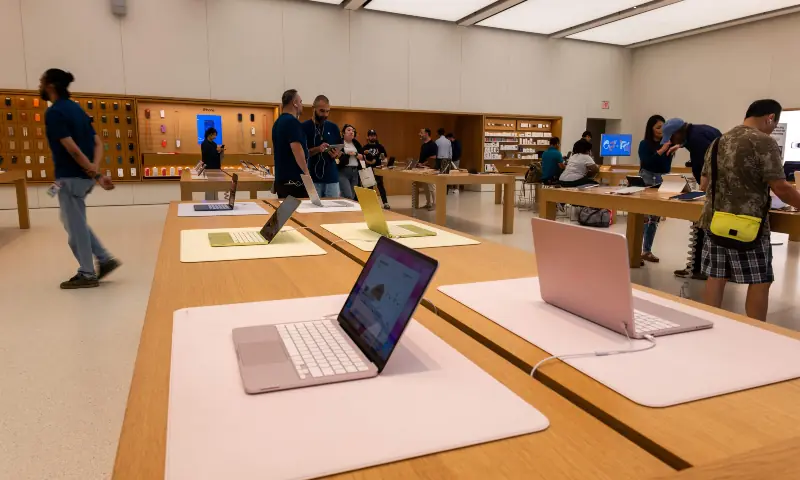
Apple announced price increases on Thursday for its MacBook computers, iPad tablets, and Apple TV streaming devices, blaming a sharp rise in memory and storage costs driven by the rapid buildout of artificial intelligence data centres. The increases are the first concrete pricing action following repeated warnings from outgoing CEO Tim Cook about unavoidable cost pressures.
The price changes on Apple's US website range from $30 to $300 per product. The 14-inch MacBook Pro jumped from $1,700 to $2,000, a $300 increase. The iPad Air rose from $600 to $750, and the Apple TV streaming device climbed from $130 to $200. The iPhone, which is Apple's largest single revenue source, remains unchanged in price for now.
Apple explained the move in unusually blunt terms. "The rapid expansion of AI data centres has created an extraordinary surge in demand for memory and storage," an Apple spokesperson said. "We have never seen a component price increase this much, this quickly." The company said it had absorbed the cost pressure for as long as it could but was no longer able to shield customers.
The root cause is structural, not cyclical. AI data centres require enormous volumes of high-speed memory chips and RAM, the same components found in laptops, tablets, phones, and most other consumer electronics. As tech companies race to expand AI infrastructure, they are competing for the same pool of memory supply that device makers depend on. According to the article, memory chip prices have risen by at least 50 percent every quarter since late 2025. That pace is exceptional by any historical standard.
Cook called the spike a "hundred-year flood" in a Wall Street Journal interview last week, noting there is "less supply at a time when consumers want devices and the memory guys are passing along huge price increases." That framing is significant. It signals Apple views this as an external supply shock, not a margin-expansion play, but for consumers the outcome is the same: higher prices for the same hardware.
Apple reported an all-time annual revenue record of $416 billion in its last fiscal year, which gives it more capacity than most companies to absorb component cost shocks. The decision to pass costs to customers anyway suggests the memory price surge is severe enough that even Apple's scale cannot fully buffer it.
The pricing announcement sent Apple shares down more than 4.7 percent in morning trading on Thursday. Investors are likely weighing two concerns: whether higher prices will slow unit sales, particularly for MacBooks and iPads which are more discretionary purchases than iPhones, and whether this opens the door to further increases if memory costs keep rising.
The iPhone's unchanged pricing is a deliberate choice. iPhones generate the largest share of Apple's revenue and are the most price-sensitive product in the lineup. Any hike there would carry far greater risk to volume. But that protection may not hold indefinitely if component costs continue rising through 2026.
The timing adds another layer of pressure. Cook is set to step down as CEO on September 1, just days before Apple is expected to unveil its next iPhone generation. His successor, John Ternus, will inherit both the pricing fallout and the task of launching the most important product in the company's calendar. If customers or investors push back sharply against these price rises, Ternus will face that test before his first major product cycle is even complete.
For consumers buying or upgrading soon, the increases are already live on Apple's US site. Anyone considering a MacBook Pro, iPad Air, or Apple TV should expect to pay the new, higher prices. The broader question is whether other device makers facing the same memory cost pressures will follow Apple's lead and raise prices across the electronics market.
Marvell Technology will invest $250 million in India over three years, doubling its workforce and expanding offices in Bengaluru and Hyderabad to advance AI and cloud chip design.
Microsoft, Nvidia, SpaceX, and Palantir have joined the newly formed Open Secure AI Alliance alongside dozens of U.S. and European tech companies. The group aims to set shared AI security standards as fallout from a cyber attack on OpenAI pushes the industry toward coordinated defenses.
Skyroot Aerospace's Vikram-1 became India's first privately built rocket to reach orbit, making India only the third country after the US and China with a private orbital launch capability.
India has approved a ₹1.25 lakh crore ISM 2.0 that replaces the earlier grant-only model with a grant-plus-equity structure, co-investing alongside private venture capital in fabless chip design startups.