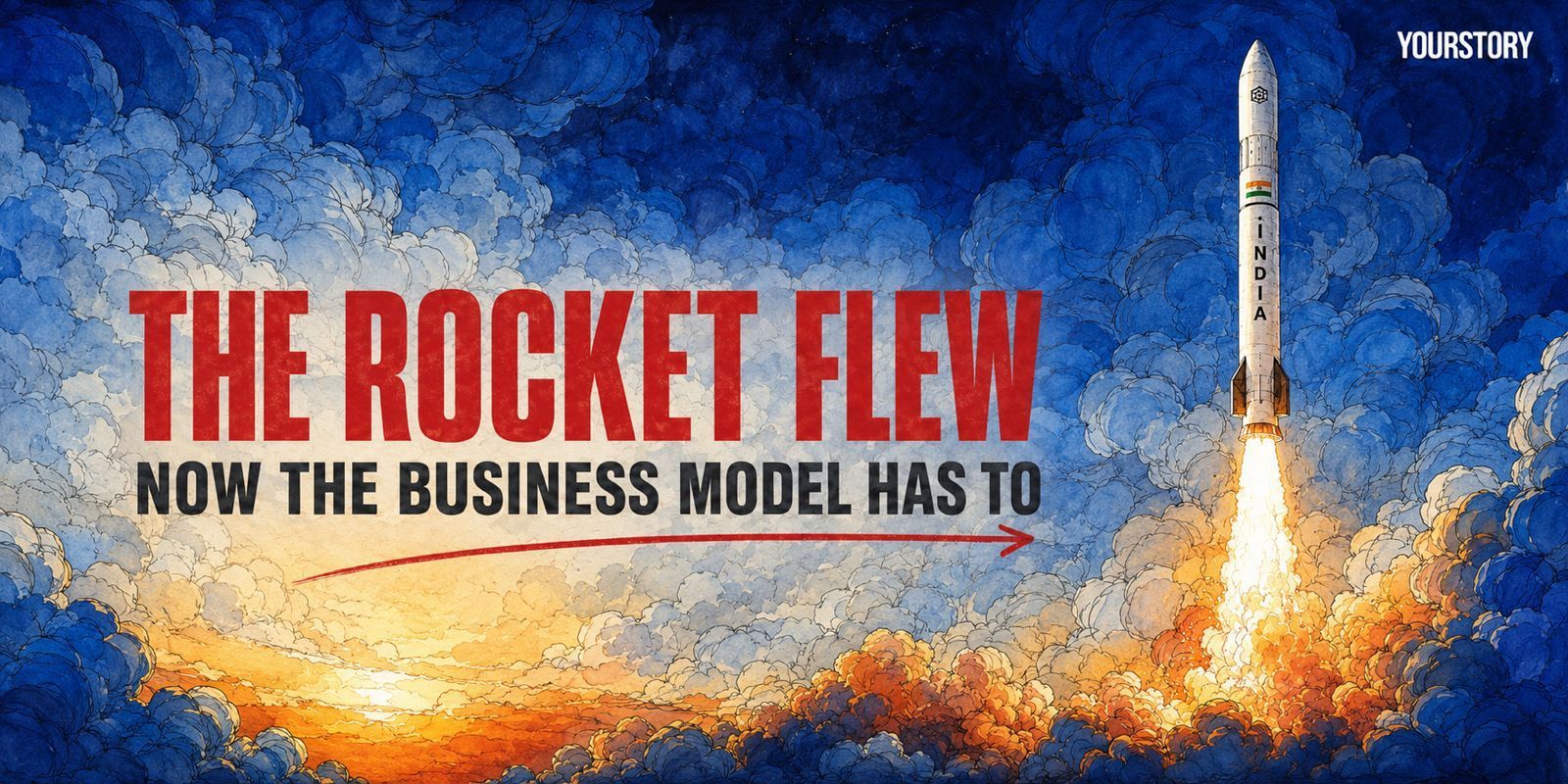
Skyroot Reaches Orbit, Now Faces Rocket Economics
Skyroot Aerospace's Vikram-1 became India's first privately built rocket to reach orbit, making India only the third country after the US and China with a private orbital launch capability.
Key Takeaways
July 28, 2026 · 3 min read · By Rishabh Bhardwaj
·
AI-assisted, human-reviewed · Our editorial standards
Nvidia, SpaceX, Microsoft, and Palantir are among the founding members of a new industry group called the Open Secure AI Alliance, launched to address AI safety and security concerns as the fallout from a recent cyber attack on OpenAI continues to reverberate across the tech sector.
The alliance draws together dozens of companies from the United States and Europe, making it one of the broadest cross-industry coalitions formed around AI security to date. The timing is pointed: OpenAI disclosed a significant cyber attack, and the incident has accelerated pressure on AI companies to demonstrate coordinated, proactive defenses rather than reactive responses.
The Open Secure AI Alliance is a collective industry effort to set shared standards and practices around securing AI systems. By anchoring the group with names like Nvidia, which supplies the chips that power most large AI models, SpaceX, which operates critical infrastructure including satellite communications, and Microsoft, which embeds AI into enterprise products used by hundreds of millions of people, the alliance carries real weight from the start.
Palantir's inclusion adds another dimension. The company builds data analytics and AI platforms used by governments and defense agencies, so its participation signals that the alliance is not limited to consumer or commercial AI but extends into sensitive national security contexts.
The OpenAI cyber attack serves as an immediate backdrop. While full details of that incident remain under investigation, its visibility has made the AI industry's security posture a live business and reputational risk, not just a theoretical concern. Companies that deploy AI at scale now face questions from enterprise customers, regulators, and governments about how AI systems are protected against adversarial interference, data theft, and model manipulation.
Industry alliances like this one can move in two directions. At their best, they produce enforceable standards, shared threat intelligence, and coordinated incident response that make the whole ecosystem harder to attack. At their weakest, they become public relations exercises with little binding force.
The composition of this group suggests it has the infrastructure to do more than issue press releases. Nvidia controls the hardware layer of AI development. Microsoft controls a large share of AI deployment through Azure and its integrated products. SpaceX and Palantir bring operational and government-facing credibility. If these companies align on common security frameworks, smaller AI developers that rely on their platforms may be pulled into compliance by default.
For enterprise buyers, the alliance's formation is a signal worth watching. Large organizations procuring AI tools increasingly require vendors to meet specific security certifications. A recognized industry standard backed by major players could become a de facto procurement requirement faster than any government regulation.
The European participation matters too. AI regulation in Europe under the EU AI Act is already moving toward enforcement, and a transatlantic alliance that aligns U.S. and European security norms could reduce friction for companies operating in both markets.
The broader context is a sector under growing scrutiny. Governments in the U.S., UK, and EU have each flagged AI security as a priority in 2026, and incidents like the OpenAI attack feed directly into legislative momentum for mandatory security requirements. Companies that get ahead of regulation by shaping voluntary standards often find themselves better positioned when binding rules arrive.
What to watch: whether the Open Secure AI Alliance publishes concrete technical standards, whether membership expands to include cloud providers and open-source model developers, and how quickly its frameworks are referenced in government procurement and regulatory guidance.
Skyroot Aerospace's Vikram-1 became India's first privately built rocket to reach orbit, making India only the third country after the US and China with a private orbital launch capability.
India has approved a ₹1.25 lakh crore ISM 2.0 that replaces the earlier grant-only model with a grant-plus-equity structure, co-investing alongside private venture capital in fabless chip design startups.
OpenAI unveiled GPT-Red, an AI tool that automates cyberattack simulations to harden its own models against real-world hackers. Separately, US heat pump sales outpaced natural-gas furnaces by 32 percent in Q1 2026, even after a key federal tax credit for the appliances expired.
Skyroot Aerospace's Vikram-1 became India's first privately developed rocket to reach orbit under Mission Aagaman, a landmark for the country's commercial space sector.