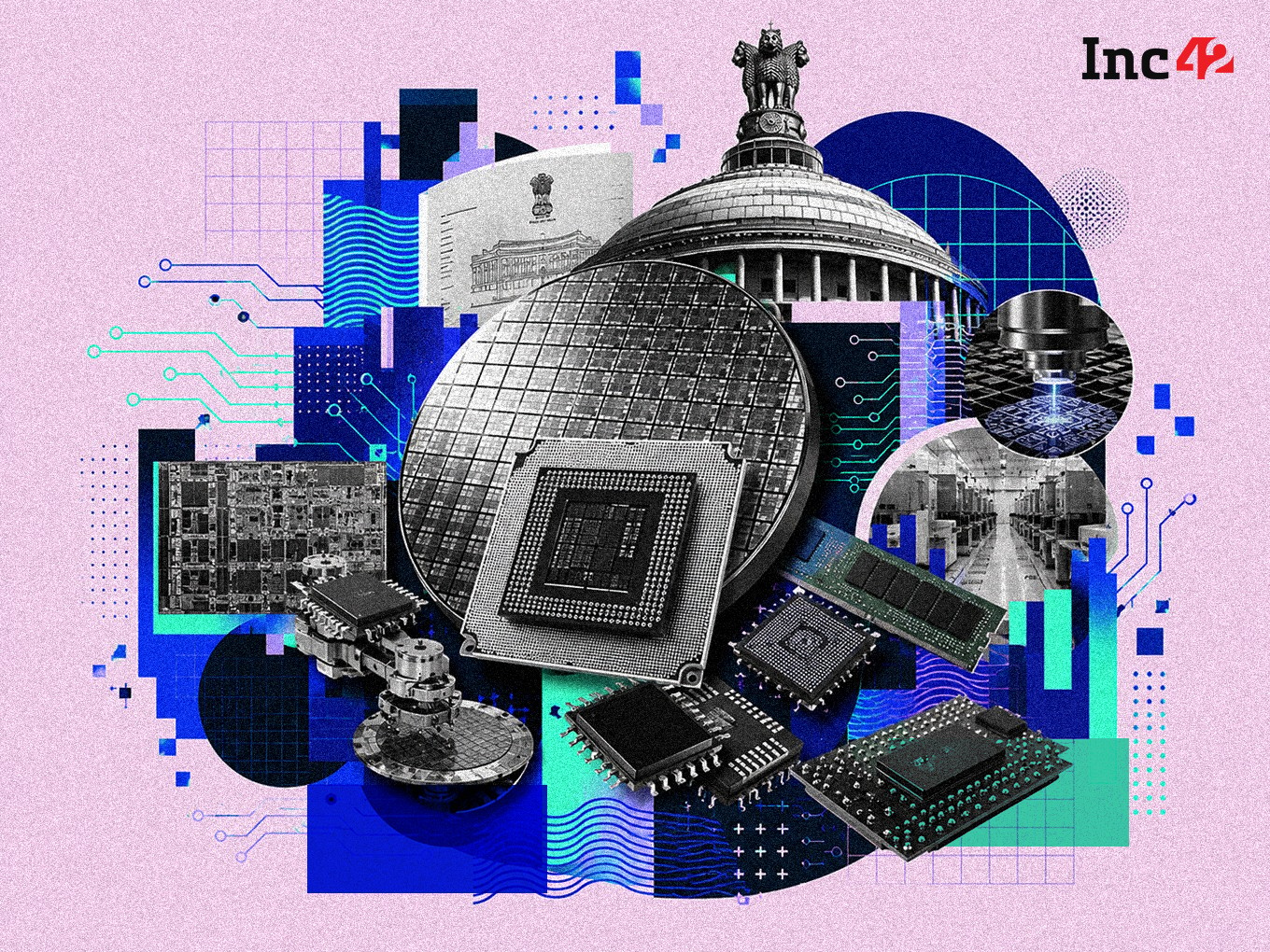
India is relaunching its semiconductor programme with a ₹1.25 lakh crore budget and a sharply different strategy: instead of chasing chip factories, the government now wants to build globally competitive fabless chip design companies from within India.
The Cabinet has approved the broad framework for India Semiconductor Mission 2.0 (ISM 2.0), the successor to the Semicon India Programme launched in 2021. The headline change is the funding model. Where ISM 1.0 relied on grants and subsidised access to Electronic Design Automation (EDA) tools, ISM 2.0 introduces a grant-plus-equity structure where the government co-invests alongside private venture capital on matching terms.
India Semiconductor Mission CEO Amitesh Sinha told Business Standard that government investment would match private investment on a like-for-like, stage-by-stage basis, with no cap on either the amount invested or the equity stake acquired. The government intends to act as a passive financial co-investor, not a controlling shareholder, and will not seek board seats or operational control.
Why the focus shifted to chip design
India already has a deep bench in semiconductor engineering. Industry estimates suggest more than 20% of the world's chip design engineers are based here, spread across engineering centres run by Qualcomm, NVIDIA, AMD, Intel, Texas Instruments, Synopsys, and MediaTek in Bengaluru, Hyderabad, Delhi NCR, and Chennai. Startups including Mindgrove Technologies, NetraSemi, iVP Semi, Saankhya Labs, Morphing Machines, InCore Semiconductors, and BigEndian Semiconductors have already raised funding and advanced real designs.
The problem is that talent has not translated into global companies. Semiconductor startups face a structural capital gap that software companies do not. Tape-out costs, the process of finalising a chip design for manufacturing, can run into millions of dollars. EDA tool licences and IP procurement add further costs before a single rupee of revenue arrives. ISM 1.0's Design Linked Incentive (DLI) Scheme, launched in 2022, committed ₹234 crore across 22 companies against a total project cost of ₹690 crore. Mindgrove received ₹15 crore under DLI to support its V2600 SoC. But industry participants say grant sizes were too small relative to the capital needed to commercialise a chip.
Raja Manickam, founder and CEO of iVP Semi, expects ticket sizes under the new equity model to range between ₹50 crore and ₹100 crore, a significant step up from earlier DLI tranches. He argues the matching co-investment model reduces government risk while encouraging private investors to commit more capital, because the government enters on the same commercial terms as venture funds.
What investors want to see in the details
Detailed operational guidelines have not yet been released, and that gap is the primary concern across the industry right now. Founders are waiting on several specific questions: whether existing DLI beneficiaries qualify automatically, what milestones trigger eligibility, how capital is disbursed relative to tape-outs or fundraising events, and how much of the ₹1.25 lakh crore budget is specifically earmarked for fabless design companies.
Ajay Krishnan, Vice President of ESDM at the Karnataka Digital Economy Mission, flagged a structural timing issue: semiconductor startups often need bridge funding between venture rounds, but a matching-investment model assumes those rounds arrive on a predictable schedule. He suggested the guidelines should allow milestone-linked bridge capital tied to product development progress.
Chetan Mehta, founding partner at AUM Ventures, said passive, long-term government capital can strengthen investor confidence by de-risking a capital-intensive business. But if government ownership introduces veto rights over fundraising, board appointments, technology partnerships, acquisitions, or international expansion, subsequent investors will price those restrictions as a liability. Undefined restrictions on IP licensing or overseas commercial engagement could directly limit a startup's global reach.
Observers also note that semiconductor acquisitions already face heightened national security scrutiny globally. Transparent rules governing the government's equity position will be critical for investors to price any additional exit or governance risk appropriately.
The broader direction is clear. ISM 2.0 signals that the government is willing to take equity stakes in strategic deeptech sectors rather than limiting itself to grants, a model also visible in reports that the central government is considering a 1 to 2 percent strategic stake in Bengaluru-based Sarvam AI through the IndiaAI Mission. Whether ISM 2.0 succeeds in converting India's chip design talent into globally recognised companies will depend almost entirely on how the operational guidelines balance government participation with the commercial flexibility that private investors and founders need.