India to Restore UPI Merchant Fees, PhonePe Gains Most
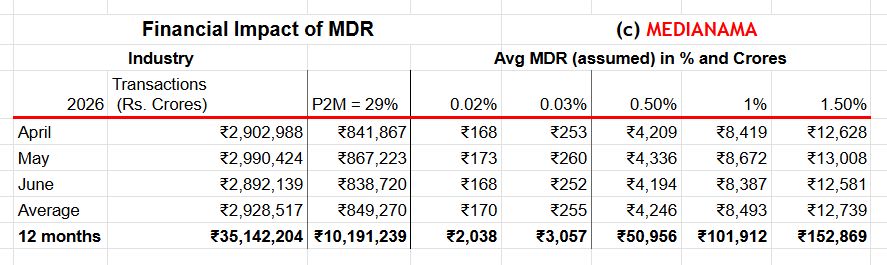
India's government plans to amend the Payment and Settlement Systems Act to restore UPI merchant discount rates, ending the zero-MDR regime in place since January 2020.
Key Takeaways
May 2, 2026 · 2 min read · By Rishabh Bhardwaj
·
AI-assisted, human-reviewed · Our editorial standards

The Supreme Court stepped back from directing the Election Commission of India on how to staff vote-counting centres for the West Bengal local body elections, ruling that the EC has the authority to choose its own counting personnel.
The ruling came after the Trinamool Congress approached the court seeking intervention in the staffing of counting booths ahead of the May 4 results. The TMC's concern centred on who would be present during the count, a politically sensitive question in a state where local elections have historically been contested fiercely.
The EC told the court it would implement its existing circular fully, both in letter and spirit. Importantly, it confirmed that state government employees would also be present during the counting process on May 4, alongside central or commission-appointed personnel. This assurance appeared to address part of the TMC's concern about counting staff composition.
The Supreme Court, satisfied with the EC's assurance, chose not to issue any directive overriding the commission's discretion. The court's position reinforces a well-established principle: the EC is a constitutionally independent body with full authority over election conduct, including the logistics of vote counting.
The dispute over counting personnel is not merely procedural. In closely contested state elections, the identity and affiliation of officials present at counting centres can become a flashpoint. By seeking court intervention, TMC signalled concern that the staffing process could affect the integrity or perception of the count.
The EC's assurance of a mixed presence, its own appointees alongside state government employees, is a middle-ground outcome. State employees are seen as closer to the ruling state government, while centrally deputed staff are viewed as more independent of state political influence.
The court's refusal to direct the EC keeps the commission's constitutional autonomy intact and sets no new precedent that would allow political parties to seek judicial override of EC operational decisions. What to watch on May 4: whether the staffing mix at counting centres holds as committed, and whether either side raises fresh objections once results begin to come in.
India's government plans to amend the Payment and Settlement Systems Act to restore UPI merchant discount rates, ending the zero-MDR regime in place since January 2020.
India's government has introduced the Taxation and Other Laws (Amendment) Bill, 2026, proposing changes to payments regulation, income tax, and the Finance Act to attract FDI and support Make in India. The Bill's final shape will depend on parliamentary debate and committee review.
The government's Taxation and Other Laws (Amendment) Bill, 2026, proposes to replace the blanket UPI MDR ban with a system allowing the Centre to notify which payment modes stay fee-free.
Prime Minister Narendra Modi inaugurated the Rs 5,000 crore Bhogapuram greenfield airport in Andhra Pradesh, built under a public-private partnership model. He also laid foundation stones for infrastructure projects worth nearly Rs 18,000 crore in the state, signalling a broad investment push for the region.