India to Restore UPI Merchant Fees, PhonePe Gains Most
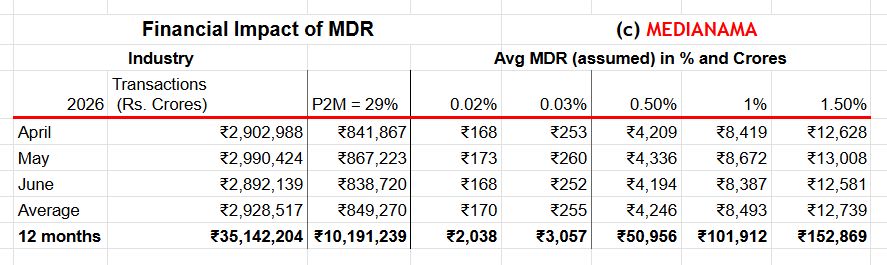
India's government plans to amend the Payment and Settlement Systems Act to restore UPI merchant discount rates, ending the zero-MDR regime in place since January 2020.
Key Takeaways
June 30, 2026 · 4 min read · By Rishabh Bhardwaj
·
AI-assisted, human-reviewed · Our editorial standards
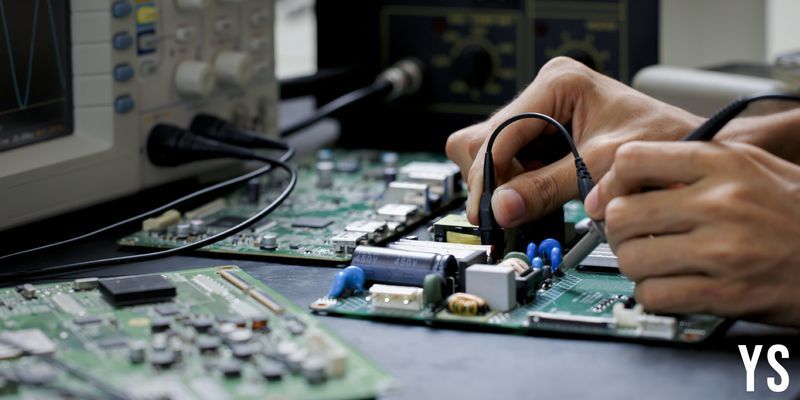
India's Finance Ministry has cleared a Rs 1.25 lakh crore budget outlay for India Semiconductor Mission 2.0, with the proposal now headed to the Cabinet for final approval. The allocation, greenlit by the Expenditure Finance Committee, is 64 percent larger than the Rs 76,000 crore earmarked under ISM 1.0, marking a significant step up in India's state-backed push to build a domestic chip manufacturing industry.
The mission was first announced in the Union Budget 2026-27, with the stated goal of building a comprehensive chip ecosystem, covering not just fabrication but also semiconductor equipment, materials, indigenous intellectual property, and supply chain resilience. India's Ministry of Electronics and Information Technology has framed ISM 2.0 as a deepening of the country's existing commitment rather than a fresh start.
Semiconductor policy tends to focus on the most visible part of the value chain: chip fabrication plants, or fabs. ISM 2.0 broadens the lens. Union Minister Ashwini Vaishnaw has said the mission will prioritise indigenous chip design, productisation, attracting ecosystem partners, and talent development. That framing signals a shift toward building a self-sustaining industry rather than simply hosting foreign-owned plants.
The larger outlay matters because semiconductor manufacturing requires sustained, long-horizon public investment to de-risk private capital. Taiwan, South Korea, and the United States have each committed hundreds of billions in state support over decades. India's Rs 1.25 lakh crore commitment, roughly $15 billion at current exchange rates, is meaningful at the national level, though it remains modest compared with the scale of global incentive programmes. The size of the allocation will shape how many projects can be subsidised, what equipment procurement can be supported, and whether India can attract marquee foundry and equipment partners.
Under ISM 1.0, the government approved 12 semiconductor manufacturing projects with a combined investment pipeline of approximately Rs 1.64 lakh crore. That pipeline includes one semiconductor fabrication unit, two compound semiconductor fabrication units, and nine packaging units. Two of those projects have already been inaugurated for commercial manufacture in 2026. A third, CG Semi, is scheduled for inauguration on July 4, 2026, with one or two more expected before the end of the calendar year, according to a senior IT Ministry official.
India's progress on the design side is arguably as significant as the manufacturing story. Under the Design Linked Incentive Scheme, 24 projects are currently being supported. Beyond that, 105 companies have received access to advanced chip design tools, and 23 design tapeouts, which are the final step before a chip design goes into production, have been completed at various foundries, including at advanced process nodes. This is the part of the value chain where Indian engineering talent is most competitive, and ISM 2.0's emphasis on indigenous intellectual property suggests the government intends to build on that base.
The mechanism here is straightforward: state subsidies and design incentives lower the cost of entry for Indian companies trying to develop proprietary chip designs, making it commercially viable to compete with established players in Taiwan, the US, and South Korea. Over time, if Indian firms own more chip IP, they capture more value from the global semiconductor supply chain rather than simply providing assembly and packaging services.
For investors and companies tracking India's electronics and technology sector, the Cabinet approval, once it comes, will be the formal trigger to watch. It will determine the precise disbursement structure and eligibility criteria for ISM 2.0, which in turn will drive which companies apply and which segments of the supply chain get the most support. The government's decision to include equipment and materials, not just chip production, suggests ambitions to move up the value chain over the next decade.
India's semiconductor story is moving from policy announcements to physical plants. With commercial manufacturing now underway and a significantly larger funding commitment in the pipeline, the question shifts from intent to execution: how quickly projects can scale, whether supply chain depth develops around the anchor units, and whether India can attract the specialised equipment and materials suppliers that make a chip cluster genuinely competitive.
India's government plans to amend the Payment and Settlement Systems Act to restore UPI merchant discount rates, ending the zero-MDR regime in place since January 2020.
India's government has introduced the Taxation and Other Laws (Amendment) Bill, 2026, proposing changes to payments regulation, income tax, and the Finance Act to attract FDI and support Make in India. The Bill's final shape will depend on parliamentary debate and committee review.
The government's Taxation and Other Laws (Amendment) Bill, 2026, proposes to replace the blanket UPI MDR ban with a system allowing the Centre to notify which payment modes stay fee-free.
Prime Minister Narendra Modi inaugurated the Rs 5,000 crore Bhogapuram greenfield airport in Andhra Pradesh, built under a public-private partnership model. He also laid foundation stones for infrastructure projects worth nearly Rs 18,000 crore in the state, signalling a broad investment push for the region.