Michael Selig, chair of the U.S. Commodity Futures Trading Commission, told Congress on Thursday that the agency will continue issuing regulations despite him being the sole sitting commissioner on the five-member body. The CFTC's other four seats are currently vacant, leaving the derivatives regulator operating well below its full deliberative capacity. Selig's commitment signals the agency does not intend to pause its rulemaking calendar while awaiting Senate confirmation of additional commissioners. The practical consequence is that any regulations issued under a single-commissioner quorum could face legal and procedural scrutiny, and market participants in derivatives, swaps, and futures markets should monitor whether output rules carry the same weight and durability as those issued by a fully constituted commission. Senate confirmation timelines for the remaining seats will determine how long this governance gap persists and how much of the CFTC's regulatory agenda advances under constrained authority.
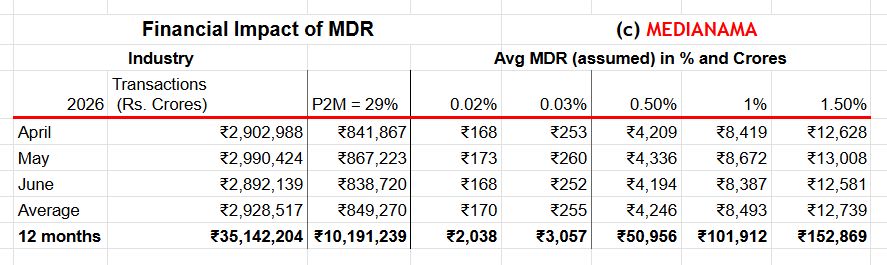
India's government plans to amend the Payment and Settlement Systems Act to restore UPI merchant discount rates, ending the zero-MDR regime in place since January 2020.
India's government has introduced the Taxation and Other Laws (Amendment) Bill, 2026, proposing changes to payments regulation, income tax, and the Finance Act to attract FDI and support Make in India. The Bill's final shape will depend on parliamentary debate and committee review.
The government's Taxation and Other Laws (Amendment) Bill, 2026, proposes to replace the blanket UPI MDR ban with a system allowing the Centre to notify which payment modes stay fee-free.
Prime Minister Narendra Modi inaugurated the Rs 5,000 crore Bhogapuram greenfield airport in Andhra Pradesh, built under a public-private partnership model. He also laid foundation stones for infrastructure projects worth nearly Rs 18,000 crore in the state, signalling a broad investment push for the region.