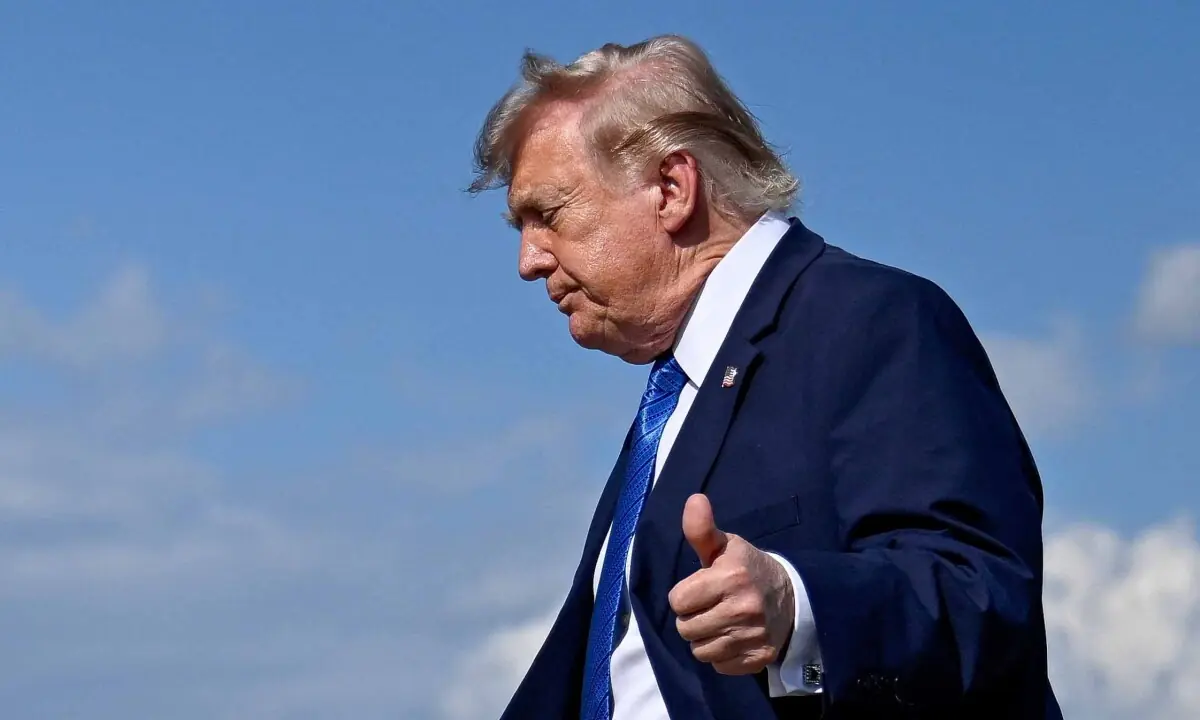
President Donald Trump said late Saturday he would hold off on a fresh military strike against Iran, provided a deal to halt Tehran's nuclear program and reopen the Strait of Hormuz can be reached quickly. Trump posted on his Truth Social platform that Iran and "other Middle Eastern Countries" had asked for time to complete an agreement, and that he agreed to cancel the planned attack "subject to being able to rapidly make a DEAL." He added that Israel "joins me in this commitment," though Israel issued no public statement to confirm that claim.
The pause comes after a conflict that, according to the article, began on February 28 with US and Israeli strikes on Iran. Since then, the Strait of Hormuz, a narrow waterway through which a significant share of the world's oil flows, has been largely closed to commercial shipping because of the risk of Iranian attack. That single bottleneck has been the primary transmission point from this conflict to the global economy, pushing Reuters-polled analysts to forecast further oil price increases after Brent crude futures surged 24 percent in July alone.
Why the Strait of Hormuz is the whole story
The Strait of Hormuz sits between Iran and the Arabian Peninsula. Nearly all crude oil exports from Saudi Arabia, the UAE, Iraq, Kuwait, and Iran itself pass through it. When traffic stops, global energy markets tighten fast. That is exactly what has happened since late February: shipping has been largely deterred, fuel costs have climbed, and the economic pressure has built to a point where Trump acknowledged at a Friday Camp David cabinet meeting that it is putting political strain on his administration. He argued higher fuel costs are justified in the near term to prevent Iran from acquiring nuclear weapons, but the pressure to end the war is visible in his willingness to pause an attack in exchange for a deal framework.
Trump's negotiating team, which he named as son-in-law Jared Kushner, special envoy Steve Witkoff, and Secretary of State Marco Rubio, has been working toward an agreement. Yet Trump also said Friday he was "losing faith" in Tehran, citing what he described as repeated broken commitments. Iran has made the same accusation in reverse about Washington, so the mutual distrust is a real obstacle to a fast resolution.
Iran's response and the regional fallout
Iran's tone this weekend was not conciliatory. Iranian Foreign Minister Abbas Araqchi warned in separate phone calls with Turkish Foreign Minister Hakan Fidan, Pakistani Chief of Defence Forces Field Marshal Asim Munir, and Saudi Foreign Minister Prince Faisal bin Farhan that Iran would respond "decisively" to any US or Israeli aggression. An Iranian state-affiliated outlet, Nournews, went further, threatening strikes on oil fields in Saudi Arabia and the UAE, and gas fields in Qatar and Israel, if US forces hit Iranian energy infrastructure.
That threat carries immediate market weight. Saudi Crown Prince Mohammed bin Salman called Trump on Saturday to "express concern and ask for clarity" about US plans, according to a US official cited by Axios. A White House official confirmed the call to Reuters without providing detail. The fact that Riyadh is seeking direct assurance signals how exposed Gulf producers feel to Iranian escalation, even as they sit on the other side of the conflict.
Meanwhile, the conflict's geographic footprint is already widening. Kuwait's army said it destroyed Iranian drones targeting several vital facilities on Saturday, with one government site in northern Kuwait and civilian property on Bubiyan Island struck by falling shrapnel, causing material damage but no casualties. Separately, the UK Maritime Trade Operations reported two incidents off Oman, including a tanker struck by an unknown projectile that damaged its engine room. Houthi forces in Yemen have also begun threatening the Bab el-Mandeb strait, the southern chokepoint of the Red Sea and another key export route for Saudi crude. Two maritime chokepoints now face active or emerging threat simultaneously.
For global energy markets, the deal-or-no-deal question is now the dominant price variable. A credible agreement that reopens the Strait of Hormuz would likely push oil prices sharply lower. A breakdown, or a return to strikes on Iranian energy infrastructure, could push them sharply higher, particularly if Gulf producers face retaliatory attacks. The window Trump described as "rapidly" is undefined, which means markets are effectively pricing in sustained uncertainty until a concrete deal framework or a resumption of hostilities removes the ambiguity.
What to watch: Whether Iran publicly confirms it requested a pause and accepts the deal framework Trump described, whether Israel makes any independent statement on its role, and whether Araqchi's hardline weekend diplomacy reflects Tehran's actual negotiating posture or is intended for a domestic audience. Any resumption of drone or missile activity near Gulf energy infrastructure, or further maritime incidents off Oman, will be the clearest early signals that the pause is not holding.