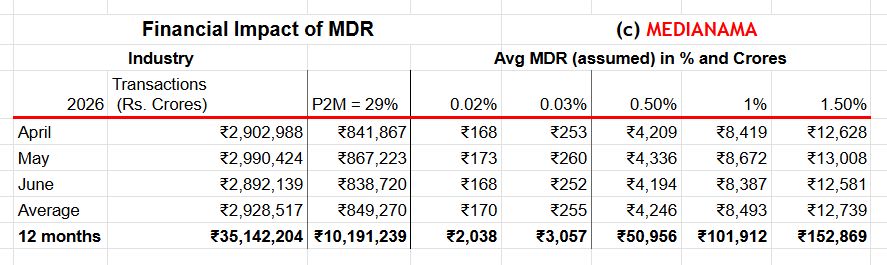
India to Restore UPI Merchant Fees, PhonePe Gains Most
India's government plans to amend the Payment and Settlement Systems Act to restore UPI merchant discount rates, ending the zero-MDR regime in place since January 2020.
Key Takeaways
May 30, 2026 · 4 min read · By Rishabh Bhardwaj
·
AI-assisted, human-reviewed · Our editorial standards
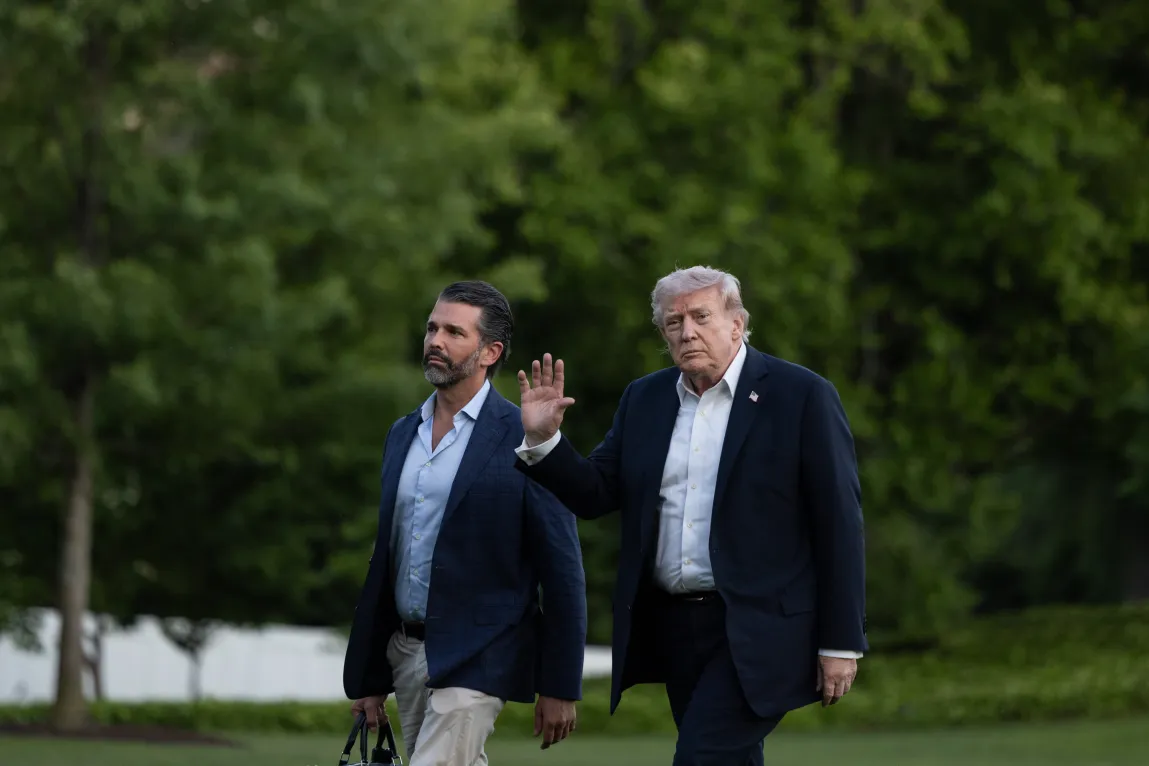
Peter Navarro, a senior White House adviser, personally directed the Pentagon to give a $620 million loan to Vulcan Elements, a two-year-old North Carolina rare-earth magnet startup in which Donald Trump Jr. holds an investment stake. Defense Department records and interviews reviewed by ProPublica reveal that Navarro's request was the only one of its kind among the dozens of companies the Pentagon was weighing for funding at the time.
Pentagon staff were told to treat the deal as a White House priority and worked late nights over several weeks to close it, a timeline far shorter than the months-long vetting process companies typically undergo. "The call came from the White House: We have to get this done," said one person involved in the process. The White House has not confirmed Navarro's role, and Navarro did not respond to questions.
Trump Jr.'s venture capital firm, 1789 Capital, took a stake of undisclosed size in Vulcan in August 2025, roughly three months before the Pentagon announced the loan in November. Estimates of Vulcan's valuation jumped from around $200 million at the time of that investment to around $2 billion after the deal was announced, a tenfold increase. Trump Jr.'s spokesperson said he had no knowledge of how the deal came together and did not speak to Navarro about Vulcan. 1789 Capital said it played no role in securing the loan.
The loan came through the Pentagon's Office of Strategic Capital, a division created under the Biden administration to fund private companies working on critical minerals and military technologies. The goal is to reduce U.S. dependence on China, which dominates the processing of rare-earth elements used in missiles, fighter jets, drones, and semiconductors. The Trump administration expanded the office's lending authority from roughly $1 billion to $200 billion and replaced its open application process with a more network-driven approach run by former Wall Street executives.
That shift matters because it changes who gets funded. Under the prior model, companies applied and were vetted methodically. Under the new model, officials rely more on personal contacts to identify deals. Vulcan is the clearest example of that dynamic: it was not selected through an open process but flagged by a top White House official who is a close personal friend of the company's investor.
Navarro and Trump Jr. have a publicly documented friendship. Trump Jr. visited Navarro in prison after he was jailed for defying a congressional subpoena related to the January 6, 2021 Capitol riot. Navarro dedicated his latest book to Trump Jr. A week before the Vulcan loan was announced, Trump Jr. hosted Navarro on his streaming show, where the two discussed rare earths, though Vulcan was not mentioned by name. Navarro referred to Trump Jr. as "brother" on air.
Richard Painter, the chief White House ethics lawyer during the George W. Bush administration, said presidential aides should not be directing agency lending decisions that benefit the president's family. "This is our money they're spending," Painter said. "This is corruption we pay for."
Democratic senators have demanded the Pentagon explain how Vulcan was selected, citing potential conflicts of interest. House Democrats attempted to subpoena Trump Jr. but were blocked by Republicans. The Pentagon's formal response to lawmakers addressed only how it handles conflicts among its own employees, not those involving the president's family.
Vulcan was founded in 2023 by a Harvard Business School student. When its first manufacturing facility opened in March 2025, its total funding was less than $10 million. The Pentagon loan, alongside an $80 million conditional loan to partner company ReElement Technologies and $50 million in Commerce Department incentives, was announced in November. In exchange, the government received a $50 million equity stake in Vulcan with the right to buy more later. Vulcan said it plans to build a large new facility and add hundreds of jobs.
The Office of Strategic Capital is expected to deploy billions more in the coming months. Among the companies under review is Unusual Machines, a Florida drone parts maker on whose advisory board Trump Jr. sits and in which he holds millions of dollars in shares. The Pentagon previously faced cronyism allegations when it gave Unusual Machines a contract to build drone engines for the Army.
For companies without White House connections, the scramble for Pentagon funding is intensifying. One Nevada mining firm hired a lobbyist specifically to reach Pentagon staff. Its CEO told ProPublica he hoped "you don't need to be chums with Trump Jr. to get a project across." Records reviewed by ProPublica show his company had already been rejected for a loan, though no reason was given.
India's government plans to amend the Payment and Settlement Systems Act to restore UPI merchant discount rates, ending the zero-MDR regime in place since January 2020.
India's government has introduced the Taxation and Other Laws (Amendment) Bill, 2026, proposing changes to payments regulation, income tax, and the Finance Act to attract FDI and support Make in India. The Bill's final shape will depend on parliamentary debate and committee review.
The government's Taxation and Other Laws (Amendment) Bill, 2026, proposes to replace the blanket UPI MDR ban with a system allowing the Centre to notify which payment modes stay fee-free.
Prime Minister Narendra Modi inaugurated the Rs 5,000 crore Bhogapuram greenfield airport in Andhra Pradesh, built under a public-private partnership model. He also laid foundation stones for infrastructure projects worth nearly Rs 18,000 crore in the state, signalling a broad investment push for the region.