India to Restore UPI Merchant Fees, PhonePe Gains Most
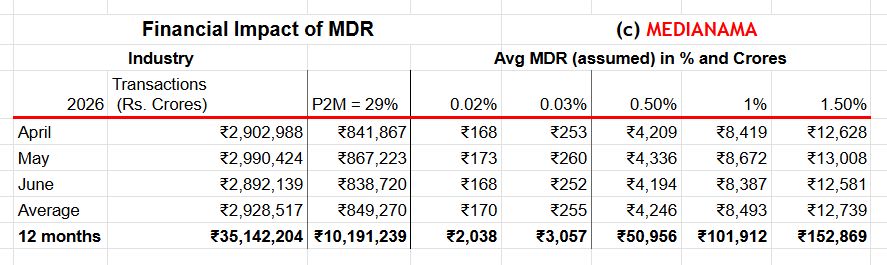
India's government plans to amend the Payment and Settlement Systems Act to restore UPI merchant discount rates, ending the zero-MDR regime in place since January 2020.
Key Takeaways
May 10, 2026 · 2 min read · By Rishabh Bhardwaj
·
AI-assisted, human-reviewed · Our editorial standards
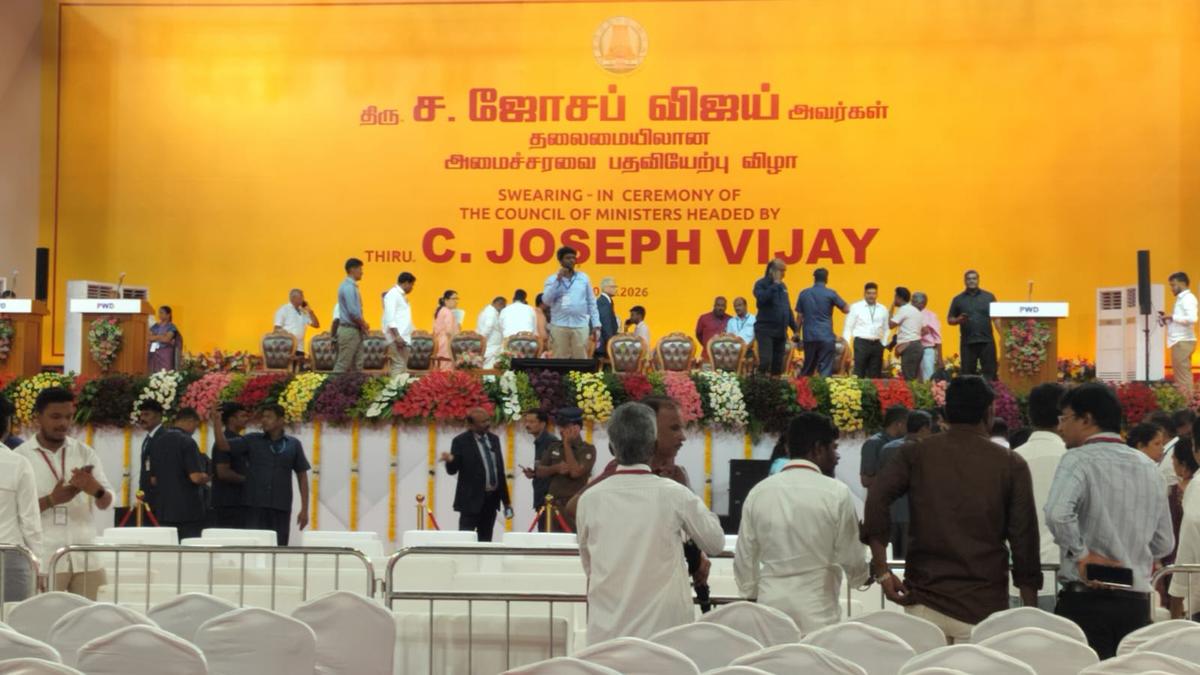
Tamil Nadu is getting a new government today as Thamizhaga Vettri Kazhagam (TVK) president C. Joseph Vijay, the actor widely known as Vijay, prepares to take oath as Chief Minister in a swearing-in ceremony that marks his formal entry into elected office.
TVK will lead a coalition government, having secured the legislative support of five Congress MLAs-elect along with two each from CPI, CPI(M), VCK, and IUML. That backing brings the alliance's combined tally to 120 seats in the Tamil Nadu assembly.
The alliance math is straightforward. TVK's own seat count forms the base, and the five left-of-centre and minority-backed partners together add enough numbers to cross the majority mark. Congress contributes the largest allied bloc at five seats, while CPI, CPI(M), VCK, and IUML each bring two. The spread across parties, communist, Dalit-focused, and Muslim-minority outfits, signals a broad social coalition strategy rather than a single-party mandate.
Vijay launched TVK only recently, making the jump from a decades-long film career to founding a political party and contesting a state election. A first-time electoral victory at the head of government is an unusual arc even by Tamil Nadu's standards, which have historically seen film personalities transition into politics, most notably M.G. Ramachandran and J. Jayalalithaa via AIADMK, and the late M. Karunanidhi who built DMK into a dominant force.
The immediate watch points are cabinet composition and whether TVK can maintain coalition discipline across six partner parties with distinct voter bases. Congress, the CPI, and CPI(M) each have national affiliations and their own policy priorities, which could create friction on resource allocation, welfare scheme design, or Centre-state negotiations, especially in areas like GST devolution, education policy, and infrastructure funding where Tamil Nadu has historically pushed back against the central government.
TVK's governance approach and economic policy stance are still largely untested, so the first budget and early administrative decisions will be closely watched for signals on fiscal priorities, investor outreach, and welfare commitments. Tamil Nadu is one of India's larger manufacturing and export states, making its political direction relevant beyond its borders.
India's government plans to amend the Payment and Settlement Systems Act to restore UPI merchant discount rates, ending the zero-MDR regime in place since January 2020.
India's government has introduced the Taxation and Other Laws (Amendment) Bill, 2026, proposing changes to payments regulation, income tax, and the Finance Act to attract FDI and support Make in India. The Bill's final shape will depend on parliamentary debate and committee review.
The government's Taxation and Other Laws (Amendment) Bill, 2026, proposes to replace the blanket UPI MDR ban with a system allowing the Centre to notify which payment modes stay fee-free.
Prime Minister Narendra Modi inaugurated the Rs 5,000 crore Bhogapuram greenfield airport in Andhra Pradesh, built under a public-private partnership model. He also laid foundation stones for infrastructure projects worth nearly Rs 18,000 crore in the state, signalling a broad investment push for the region.