India to Restore UPI Merchant Fees, PhonePe Gains Most
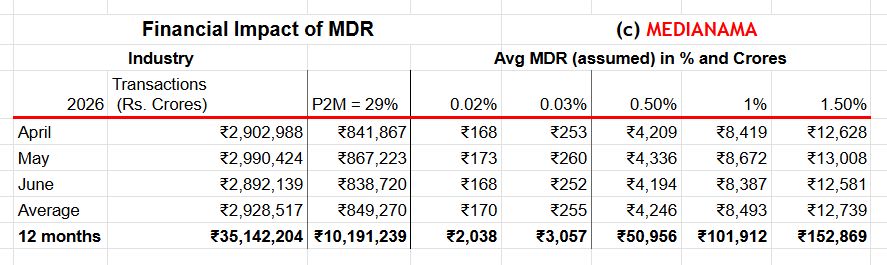
India's government plans to amend the Payment and Settlement Systems Act to restore UPI merchant discount rates, ending the zero-MDR regime in place since January 2020.
Key Takeaways
May 10, 2026 · 2 min read · By Rishabh Bhardwaj
·
AI-assisted, human-reviewed · Our editorial standards

Tamil Nadu's newly sworn-in Chief Minister, referred to as Vijay in the article, signed his first official order extending 200 units of free electricity to domestic consumers in the state.
The move fulfills what appears to be a pre-election commitment, with the free power scheme being one of the more tangible welfare measures a new government can deliver quickly. Domestic electricity subsidies in Tamil Nadu have a long political history, and extending or expanding them is a standard early signal of a new administration's priorities.
The Chief Minister also made pointed remarks about political authority, stating there will be no power centres other than himself and that he alone will be the centre of power within the government. Such statements at the outset of a tenure are typically aimed at consolidating party discipline and signaling centralized decision-making to both allies and the bureaucracy.
For households, 200 units of free electricity per month covers a significant share of average domestic consumption in Tamil Nadu, particularly for lower- and middle-income families. The subsidy reduces monthly utility costs directly, which matters in a state where power bills are a regular household expense.
The fiscal cost of the scheme falls on the state government, which will either absorb it through the budget or pass it along to the state electricity utility. Tamil Nadu's power utility has historically carried subsidy-related financial stress, and expanded free units could add to that burden depending on how the scheme is structured and funded.
Key questions going forward include how the scheme is financed, whether it applies uniformly or is capped by income or consumption tier, and how the state electricity board's finances adjust. The CM's centralisation remarks also signal an administration likely to move quickly on early policy decisions, making the first budget and cabinet composition worth watching closely.
India's government plans to amend the Payment and Settlement Systems Act to restore UPI merchant discount rates, ending the zero-MDR regime in place since January 2020.
India's government has introduced the Taxation and Other Laws (Amendment) Bill, 2026, proposing changes to payments regulation, income tax, and the Finance Act to attract FDI and support Make in India. The Bill's final shape will depend on parliamentary debate and committee review.
The government's Taxation and Other Laws (Amendment) Bill, 2026, proposes to replace the blanket UPI MDR ban with a system allowing the Centre to notify which payment modes stay fee-free.
Prime Minister Narendra Modi inaugurated the Rs 5,000 crore Bhogapuram greenfield airport in Andhra Pradesh, built under a public-private partnership model. He also laid foundation stones for infrastructure projects worth nearly Rs 18,000 crore in the state, signalling a broad investment push for the region.