The U.S. Supreme Court has issued a ruling that reshapes how congressional and state legislative districts are drawn under the Voting Rights Act, forcing both major parties to rethink their electoral maps. The decision shifts the legal ground that has governed minority representation in American politics for decades. Both Republicans and Democrats are now moving quickly to assess which districts may need to be redrawn and what the ruling means for upcoming election cycles. The Voting Rights Act has long been used to require or protect majority-minority districts, where a racial or ethnic group forms the majority, giving that community stronger influence over who gets elected. This ruling changes how those districts are evaluated or enforced, though the article does not specify the exact legal test the Court altered. Redistricting battles are likely to follow in multiple states, with legal challenges expected as lawmakers and courts work out what the new standard requires in practice.
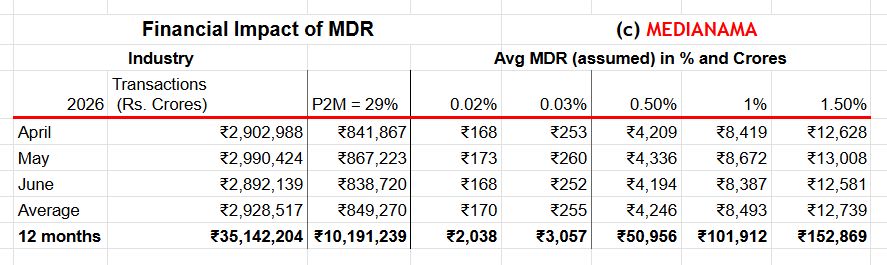
India's government plans to amend the Payment and Settlement Systems Act to restore UPI merchant discount rates, ending the zero-MDR regime in place since January 2020.
India's government has introduced the Taxation and Other Laws (Amendment) Bill, 2026, proposing changes to payments regulation, income tax, and the Finance Act to attract FDI and support Make in India. The Bill's final shape will depend on parliamentary debate and committee review.
The government's Taxation and Other Laws (Amendment) Bill, 2026, proposes to replace the blanket UPI MDR ban with a system allowing the Centre to notify which payment modes stay fee-free.
Prime Minister Narendra Modi inaugurated the Rs 5,000 crore Bhogapuram greenfield airport in Andhra Pradesh, built under a public-private partnership model. He also laid foundation stones for infrastructure projects worth nearly Rs 18,000 crore in the state, signalling a broad investment push for the region.