India to Restore UPI Merchant Fees, PhonePe Gains Most
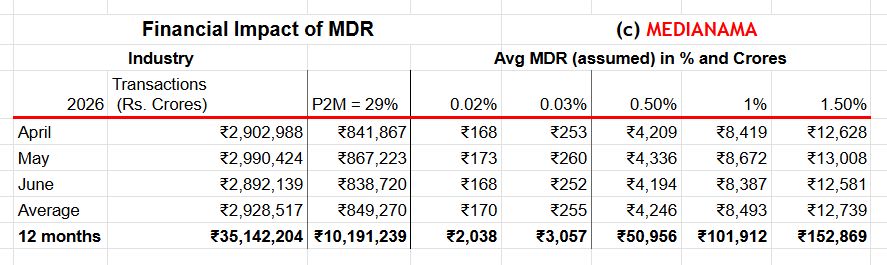
India's government plans to amend the Payment and Settlement Systems Act to restore UPI merchant discount rates, ending the zero-MDR regime in place since January 2020.
Key Takeaways
May 26, 2026 · 3 min read · By Rishabh Bhardwaj
·
AI-assisted, human-reviewed · Our editorial standards

Karnataka Chief Minister Siddaramaiah is set to resign, with the Congress high command backing Deputy Chief Minister DK Shivakumar as his replacement, according to sources familiar with the matter.
The move would mark a significant shift in Karnataka's ruling arrangement, less than two years into the Congress government's term. The party won the state assembly election in May 2023, ending a BJP-led government, and subsequently split the top executive role between Siddaramaiah and Shivakumar in what was understood as a power-sharing arrangement from the start.
Shivakumar, who heads the Karnataka Pradesh Congress Committee and currently serves as Deputy CM, has long been seen as a claimant to the chief ministership. His backing from the Congress high command, the central party leadership based in Delhi, signals that the informal rotation agreement is now being activated.
Chief ministerial transitions in mid-term are rarely smooth. They test party unity, reshuffle administrative priorities, and can unsettle investor sentiment in states where large infrastructure or industrial decisions are pending. Karnataka is one of India's most economically significant states, home to Bengaluru's technology sector, major manufacturing corridors, and a large share of direct foreign investment.
Siddaramaiah has been facing political pressure linked to a land allocation controversy involving the Mysuru Urban Development Authority, which has added urgency to the leadership question. A change at the top now would allow the party to reset its political narrative ahead of local body elections and the 2028 state assembly cycle.
Shivakumar brings a different profile to the role. He is known as a strong organizational hand and a key fundraiser for Congress at the national level. His ascent to the chief ministership would consolidate his position as one of the party's most powerful regional figures, with implications for how Congress manages its southern states strategy.
The immediate mechanics involve Siddaramaiah formally submitting his resignation to the Governor, followed by the Congress legislature party meeting to elect a new leader. Shivakumar would then be sworn in, most likely with a new cabinet configuration that reflects his own political network and priorities.
Key questions include who takes the Deputy CM role vacated by Shivakumar, how ministerial portfolios are redistributed, and whether the transition happens without significant public dissent within the party. Siddaramaiah retains a strong personal support base in the OBC and Kuruba communities, and his faction's accommodation within the new setup will shape how stable the government looks going forward.
For Karnataka's administrative agenda, including ongoing welfare scheme implementation and infrastructure projects, a mid-term leadership change typically means a brief slowdown as the new chief minister establishes priorities and reviews commitments made by the outgoing government. Markets and businesses operating in the state will be watching for continuity signals, particularly on industrial policy and the status of large investment memoranda signed under the current administration.
The Congress party's central leadership, by moving decisively on this transition, appears to be prioritizing political consolidation over administrative continuity at this point in the term.
India's government plans to amend the Payment and Settlement Systems Act to restore UPI merchant discount rates, ending the zero-MDR regime in place since January 2020.
India's government has introduced the Taxation and Other Laws (Amendment) Bill, 2026, proposing changes to payments regulation, income tax, and the Finance Act to attract FDI and support Make in India. The Bill's final shape will depend on parliamentary debate and committee review.
The government's Taxation and Other Laws (Amendment) Bill, 2026, proposes to replace the blanket UPI MDR ban with a system allowing the Centre to notify which payment modes stay fee-free.
Prime Minister Narendra Modi inaugurated the Rs 5,000 crore Bhogapuram greenfield airport in Andhra Pradesh, built under a public-private partnership model. He also laid foundation stones for infrastructure projects worth nearly Rs 18,000 crore in the state, signalling a broad investment push for the region.