The Delhi High Court has ruled that a share buy-back constitutes a capital reduction rather than an acquisition of assets, directly affecting how such transactions are taxed under Indian law. The court held that once shares are extinguished through a buy-back, they cannot be treated as 'property received' by the company, eliminating the legal basis for applying asset-acquisition tax provisions to the transaction. The ruling draws a clear line between a company retiring its own equity and an external purchase of a third-party asset. The mechanism matters: in a conventional asset acquisition, property changes hands and a recipient holds tangible value; in a buy-back, the shares cease to exist entirely upon cancellation, making the property-received framework inapplicable. Tax authorities and corporate finance teams should review how existing and planned buy-back structures are classified in filings, as this judgment reshapes the applicable tax treatment. Companies executing buy-backs in India now have clearer judicial backing to contest asset-acquisition tax characterizations, though the ruling's finality will depend on whether it is challenged before a higher court.
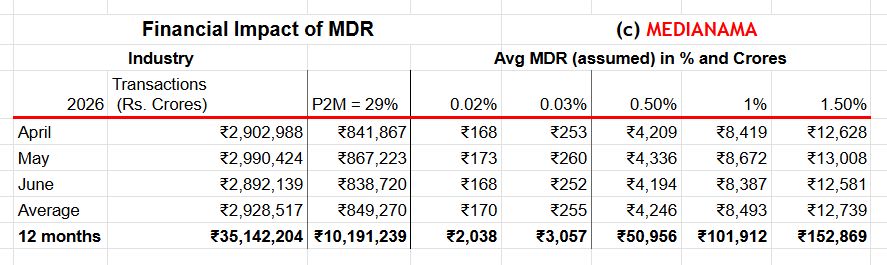
India's government plans to amend the Payment and Settlement Systems Act to restore UPI merchant discount rates, ending the zero-MDR regime in place since January 2020.
India's government has introduced the Taxation and Other Laws (Amendment) Bill, 2026, proposing changes to payments regulation, income tax, and the Finance Act to attract FDI and support Make in India. The Bill's final shape will depend on parliamentary debate and committee review.
The government's Taxation and Other Laws (Amendment) Bill, 2026, proposes to replace the blanket UPI MDR ban with a system allowing the Centre to notify which payment modes stay fee-free.
Prime Minister Narendra Modi inaugurated the Rs 5,000 crore Bhogapuram greenfield airport in Andhra Pradesh, built under a public-private partnership model. He also laid foundation stones for infrastructure projects worth nearly Rs 18,000 crore in the state, signalling a broad investment push for the region.