India to Restore UPI Merchant Fees, PhonePe Gains Most
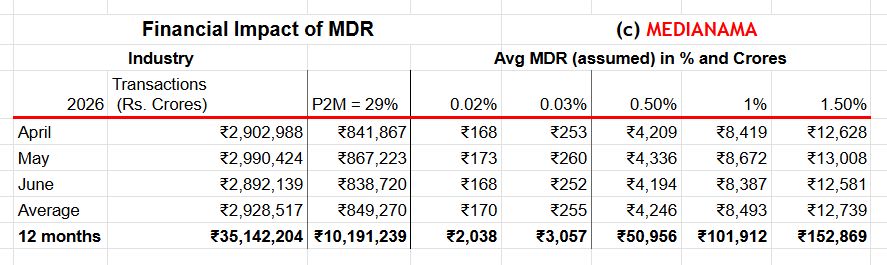
India's government plans to amend the Payment and Settlement Systems Act to restore UPI merchant discount rates, ending the zero-MDR regime in place since January 2020.
Key Takeaways
May 8, 2026 · 2 min read · By Rishabh Bhardwaj
·
AI-assisted, human-reviewed · Our editorial standards
The Reserve Bank of India has amended its capital adequacy rules to let banks count quarterly profits toward their core regulatory capital, a change that could give lenders more financial headroom without raising fresh equity.
The update, issued under the Reserve Bank of India (Commercial Banks, Prudential Norms on Capital Adequacy) Fifth Amendment Directions, 2026, allows banks to include current financial year profits in their Capital to Risk Weighted Assets Ratio (CRAR) calculation on a quarterly basis. Previously, banks could typically count only audited annual profits, meaning interim earnings sat outside the capital calculation for much of the year.
CRAR is the ratio of a bank's capital to its risk-weighted assets, essentially a measure of how much of a cushion a bank holds against potential losses. Regulators set minimum thresholds; falling below them triggers restrictions on lending and dividends. The higher a bank's CRAR, the more room it has to grow its loan book.
By letting banks count quarterly profits as they are earned, the RBI is effectively allowing capital to build up faster through the year. A bank that earns strong profits in the first or second quarter can now reflect that strength in its CRAR sooner, rather than waiting for the annual audit cycle to close.
The amendment is not unconditional. Banks must follow a prescribed formula set by the RBI, and specific eligibility conditions apply before a bank can include interim profits in the ratio. The RBI has not publicly detailed every condition in what has been reported so far, so banks will need to review the full directions to assess their position.
The practical effect is most meaningful for banks that are operating close to regulatory minimums or are actively trying to expand lending. For them, faster recognition of profits in the capital base could reduce pressure to raise expensive equity or hold back dividends purely to shore up ratios on paper.
For well-capitalised banks with comfortable buffers, the change is less urgent but still useful, it introduces greater precision in how capital strength is reported through the year, giving investors and regulators a more current picture of a bank's financial health each quarter.
Watch for how banks disclose their CRAR in upcoming quarterly results and whether any mid-sized lenders use the new framework to justify faster loan book growth or dividend decisions.
India's government plans to amend the Payment and Settlement Systems Act to restore UPI merchant discount rates, ending the zero-MDR regime in place since January 2020.
India's government has introduced the Taxation and Other Laws (Amendment) Bill, 2026, proposing changes to payments regulation, income tax, and the Finance Act to attract FDI and support Make in India. The Bill's final shape will depend on parliamentary debate and committee review.
The government's Taxation and Other Laws (Amendment) Bill, 2026, proposes to replace the blanket UPI MDR ban with a system allowing the Centre to notify which payment modes stay fee-free.
Prime Minister Narendra Modi inaugurated the Rs 5,000 crore Bhogapuram greenfield airport in Andhra Pradesh, built under a public-private partnership model. He also laid foundation stones for infrastructure projects worth nearly Rs 18,000 crore in the state, signalling a broad investment push for the region.