India's Petroleum and Natural Gas Regulatory Board (PNGRB) has launched competitive bidding for nine LPG pipeline projects totaling approximately 2,500 km, targeting Rs 12,500 crore in capital investment. Four of the nine pipelines are currently in active bidding, with the full network designed to link refineries and import terminals directly to bottling plants. The initiative explicitly frames road tanker transport as the risk and cost problem it intends to solve. By routing LPG through dedicated pipelines, PNGRB expects to reduce transit losses, lower greenhouse gas emissions, and eliminate the accident and spillage risks inherent in bulk road movement. The regulatory rationale is also economic: pipeline infrastructure typically lowers per-unit distribution costs over time, improving unit economics for the downstream bottling and distribution chain. PNGRB has set 2030 as the target year for eliminating bulk LPG road transportation entirely, giving investors and operators a defined policy horizon. Employment generation and regional development are cited as secondary objectives. Bidders and infrastructure investors should track award timelines for the remaining five pipeline projects, which will determine whether the full 2,500 km network stays on schedule.
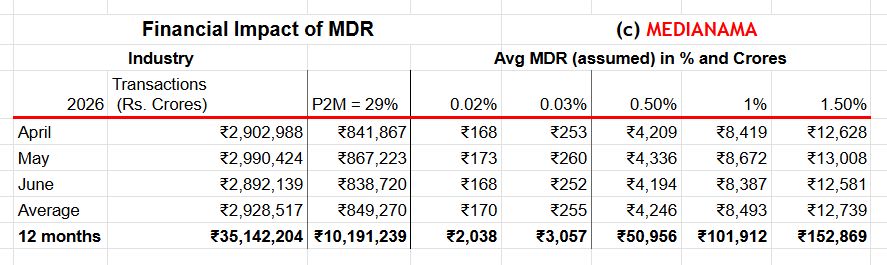
India's government plans to amend the Payment and Settlement Systems Act to restore UPI merchant discount rates, ending the zero-MDR regime in place since January 2020.
India's government has introduced the Taxation and Other Laws (Amendment) Bill, 2026, proposing changes to payments regulation, income tax, and the Finance Act to attract FDI and support Make in India. The Bill's final shape will depend on parliamentary debate and committee review.
The government's Taxation and Other Laws (Amendment) Bill, 2026, proposes to replace the blanket UPI MDR ban with a system allowing the Centre to notify which payment modes stay fee-free.
Prime Minister Narendra Modi inaugurated the Rs 5,000 crore Bhogapuram greenfield airport in Andhra Pradesh, built under a public-private partnership model. He also laid foundation stones for infrastructure projects worth nearly Rs 18,000 crore in the state, signalling a broad investment push for the region.