
Qatar Signals Progress in US-Iran War Talks
Qatar's foreign ministry said mediators including Qatar, Pakistan, and Oman have reached "very progressive stages" in efforts to end the US-Iran war, pushing Brent crude down more than four percent.
Key Takeaways
July 5, 2026 · 3 min read · By Rishabh Bhardwaj
·
AI-assisted, human-reviewed · Our editorial standards
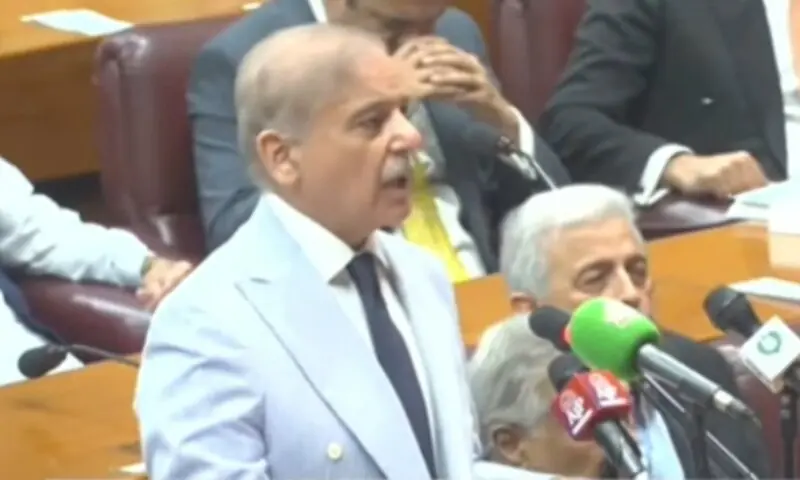
Pakistan will host the signing ceremony of a US-Iran peace agreement in Geneva on Friday, June 19, Prime Minister Shehbaz Sharif announced Monday. The deal marks what Shehbaz called an immediate and permanent end to military action between the two countries, including in Lebanon, after what he described as three months and 16 days of conflict and negotiation.
The announcement places Pakistan at the center of a significant diplomatic moment. Hosting a ceremony of this scale in Geneva, one of the world's primary venues for international diplomacy, signals that Islamabad played a meaningful back-channel role in bringing the two sides together, even if the full details of Pakistan's involvement have not yet been disclosed.
Shehbaz addressed the Pakistani parliament and the broader international community in his speech, framing the agreement not as a bilateral deal between Washington and Tehran but as a broader victory for dialogue and multilateral diplomacy. "This is not an agreement between two countries, but it is the success of peace and dialogue," he said. He credited the top leadership of both the US and Iran for showing patience under difficult circumstances throughout the negotiation process.
The deal calls for an immediate and permanent end to military action, including operations in Lebanon, according to Shehbaz. The conflict, which began roughly three and a half months ago, drew in Lebanon as part of the broader theater of hostilities. No further details about the agreement's terms, verification mechanisms, or guarantees have been disclosed publicly yet. The full scope of commitments on both sides will likely become clearer when the document is signed on Friday.
Shehbaz thanked PML-N supremo Nawaz Sharif for guidance throughout the process, along with President Asif Ali Zardari and PPP Chairman Bilawal Bhutto-Zardari. The broad acknowledgment across Pakistan's political leadership suggests the diplomatic effort was treated as a national priority rather than a single-party initiative.
For Pakistan, hosting the Geneva ceremony carries real strategic weight. Islamabad has long sought to position itself as a constructive regional mediator, particularly given its geographic position between Iran to the west and the broader Middle East. Being named as the host of a US-Iran signing ceremony would mark one of the most prominent diplomatic roles Pakistan has played on the global stage in years.
The ceasefire, if it holds, also removes a significant source of regional instability that had spillover risk for energy markets, shipping lanes, and Gulf economies that Pakistan depends on for remittances from its diaspora workforce. A durable end to US-Iran hostilities would ease pressure on oil supply chains and reduce the risk of wider conflict that had threatened to pull in neighboring states.
For the US and Iran, the deal represents a significant shift. Relations between the two countries have been adversarial for decades, and any agreement that includes a permanent end to military action is structurally different from temporary ceasefires or informal understandings reached in the past. The use of the word "permanent" in official Pakistani government framing sets a higher bar, and will be tested by implementation.
What to watch next: the actual text of the agreement when it is signed Friday, what guarantees or third-party verification mechanisms are included, and whether Lebanon's situation is addressed as part of the broader deal or treated separately. Pakistan's formal role, whether as a witness, co-signatory, or facilitating host, will also clarify how deep its involvement in the negotiations actually ran.
Qatar's foreign ministry said mediators including Qatar, Pakistan, and Oman have reached "very progressive stages" in efforts to end the US-Iran war, pushing Brent crude down more than four percent.
Qatar confirmed it is mediating between the US and Iran but said no direct talks are currently planned. The clarification follows conflicting statements from President Trump, who claimed talks are under way, and Tehran, which denied any dialogue is happening.
Saudi Aramco reported sharply higher second-quarter 2026 profits as the Iran war restricts global oil supply and pushes crude prices up. Other oil supermajors also posted outsized earnings, raising concerns about sustained fuel cost pressure for importing economies.
President Trump called current Iran negotiations the "last chance" to end five months of conflict, pushing oil prices higher. Tehran denied formal talks are taking place, raising the risk of a diplomatic breakdown with direct consequences for global energy markets.