
Qatar Signals Progress in US-Iran War Talks
Qatar's foreign ministry said mediators including Qatar, Pakistan, and Oman have reached "very progressive stages" in efforts to end the US-Iran war, pushing Brent crude down more than four percent.
Key Takeaways
July 4, 2026 · 4 min read · By Rishabh Bhardwaj
·
AI-assisted, human-reviewed · Our editorial standards
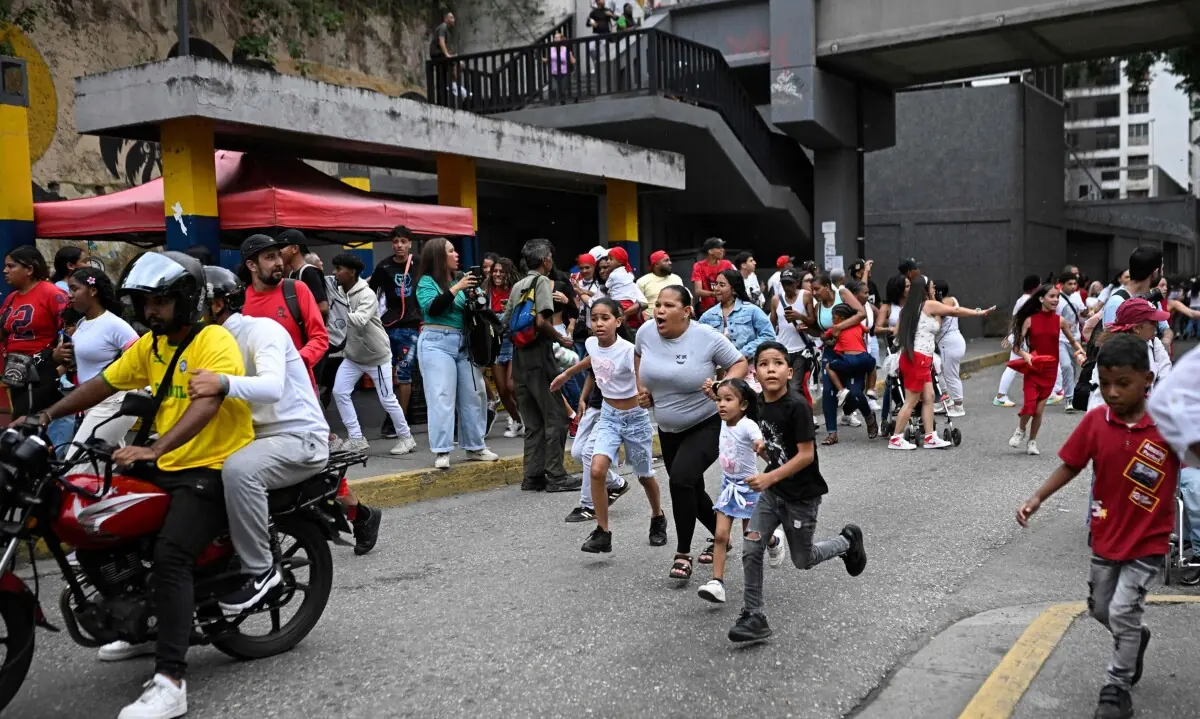
Twin earthquakes measuring magnitude 7.2 and 7.5 struck Venezuela on Thursday, killing at least 32 people and injuring more than 700, according to interim president Delcy Rodriguez. The back-to-back tremors, separated by less than a minute, collapsed buildings in Caracas, forced the closure of the country's main airport, and triggered a tsunami warning that was later withdrawn.
The US Geological Survey recorded the first quake at magnitude 7.2, centered roughly 160 kilometers west of Caracas, followed almost immediately by a 7.5-magnitude tremor. The USGS described the 7.5 as the strongest earthquake to hit Venezuela in more than a century, surpassing anything since a magnitude 7.7 offshore quake on October 29, 1900. The agency warned that "high casualties and extensive damage are probable and the disaster is likely widespread," with an early estimate placing the death toll somewhere between 10,000 and 100,000, a range that reflects deep uncertainty in the immediate aftermath.
Rodriguez declared a state of emergency and said she did not yet have full data from La Guaira, the coastal city near Caracas that officials identified as the hardest-hit region. Interior Minister Diosdado Cabello confirmed on state television that buildings and homes had collapsed, and said fire departments, police, and civil assistance teams had all been mobilized. In Chacao, an eastern Caracas municipality, Mayor Gustavo Duque told broadcaster Globovision that two structures had collapsed, leaving 16 injured and an unspecified number dead.
The quakes struck during a public holiday marking an 1821 military victory, meaning many Venezuelans were at home. Astrid Ramirez, a 41-year-old publicist in western Caracas, said people began screaming and running down stairs the moment shaking started. Coro Martinez, 56, described a loud crash and objects falling inside her home. Maria Romero, an 80-year-old pensioner in southern Caracas, said police helped her evacuate and called the event worse than the deadly 1967 quake that also struck the capital. One resident said she received an automatic phone alert seconds before the intensity surged, going from light movement to full shaking in under two seconds.
Emergency workers were filmed climbing through the rubble of a collapsed Caracas building after dark, while relatives gathered outside looking for trapped loved ones. Some Caracas municipalities canceled classes and local events through Monday. Hospital de Clinicas in Caracas doubled its night shift to handle the surge of injured patients, and video from inside showed ceiling panels hanging loose and plaster on the floors.
The US Tsunami Warning System briefly issued a threat for Puerto Rico, the US and British Virgin Islands, Aruba, Curacao, and Bonaire. It was withdrawn roughly an hour later, with no confirmed wave damage reported. The US Embassy in Caracas urged American citizens to seek shelter and stay away from damaged structures.
US President Donald Trump posted on Truth Social that the earthquakes had "left a devastating number of deaths" and said he had instructed all government agencies to prepare to respond. "We will be there for our new and great friends," Trump wrote, a reference to the changed diplomatic footing between Washington and Caracas since Rodriguez took over from Nicolas Maduro in January following what the article describes as a US-backed ouster.
That political context matters for what comes next. Rodriguez has sought closer ties with the US on oil, mining, and other industries, and Washington's stated readiness to assist could accelerate coordination on disaster relief, a meaningful shift from years of strained relations. Venezuela's government will need outside support quickly: the country sits on the boundary of the Caribbean Plate and the South American Plate, a seismically active zone, and its infrastructure was already under significant stress before Thursday's quakes. The USGS notes that an 1812 earthquake at roughly the same location killed an estimated 30,000 people.
The official death toll of 32 will almost certainly rise as rescue teams reach La Guaira and other areas that have not yet reported fully. Damage to the main airport and key roads will slow that work, making the next 48 to 72 hours critical for search and rescue operations and for establishing the true scale of destruction.
Qatar's foreign ministry said mediators including Qatar, Pakistan, and Oman have reached "very progressive stages" in efforts to end the US-Iran war, pushing Brent crude down more than four percent.
Qatar confirmed it is mediating between the US and Iran but said no direct talks are currently planned. The clarification follows conflicting statements from President Trump, who claimed talks are under way, and Tehran, which denied any dialogue is happening.
Saudi Aramco reported sharply higher second-quarter 2026 profits as the Iran war restricts global oil supply and pushes crude prices up. Other oil supermajors also posted outsized earnings, raising concerns about sustained fuel cost pressure for importing economies.
President Trump called current Iran negotiations the "last chance" to end five months of conflict, pushing oil prices higher. Tehran denied formal talks are taking place, raising the risk of a diplomatic breakdown with direct consequences for global energy markets.