India to Restore UPI Merchant Fees, PhonePe Gains Most
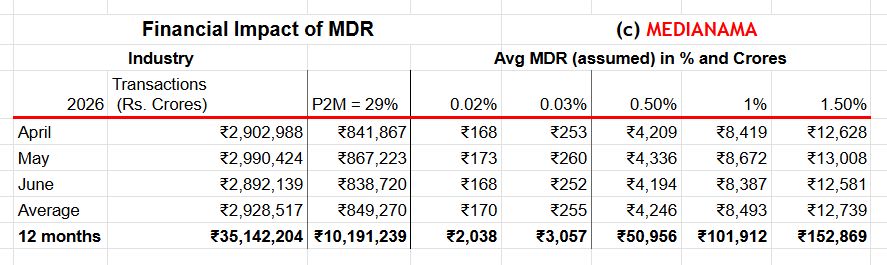
India's government plans to amend the Payment and Settlement Systems Act to restore UPI merchant discount rates, ending the zero-MDR regime in place since January 2020.
Key Takeaways
May 9, 2026 · 2 min read · By Rishabh Bhardwaj
·
AI-assisted, human-reviewed · Our editorial standards

Prime Minister Narendra Modi arrived in West Bengal on Thursday to attend the swearing-in ceremony of the BJP's first-ever state government there, marking a significant political shift in one of India's most contested electoral battlegrounds.
West Bengal has long been dominated by the Left Front, which ruled the state for 34 consecutive years before the Trinamool Congress under Mamata Banerjee took power in 2011. The BJP's rise to form a government here represents the party's deepest penetration yet into a state where it had historically struggled to convert national support into state-level power.
Winning West Bengal has been a long-stated ambition for the BJP, which dramatically increased its seat tally in the state through successive Lok Sabha and assembly elections. Forming a government here consolidates the party's footprint in eastern India, a region it has been actively targeting for political expansion.
For the BJP, this is not just a numerical gain. West Bengal carries symbolic weight, it is a large, populous state with a distinct political culture, and breaking through here signals the party's ability to displace entrenched regional forces beyond its traditional strongholds in northern and western India.
The composition of the new cabinet and who takes the chief minister's role will be closely watched, as will how the new government navigates West Bengal's complex administrative and political landscape. The BJP will also face the immediate task of managing relations with a state bureaucracy and public workforce that has operated under different political leadership for decades.
Modi's personal presence at the ceremony underlines how much the party values this win. His attendance signals that the Centre intends to stay closely engaged with the new government as it takes shape.
India's government plans to amend the Payment and Settlement Systems Act to restore UPI merchant discount rates, ending the zero-MDR regime in place since January 2020.
India's government has introduced the Taxation and Other Laws (Amendment) Bill, 2026, proposing changes to payments regulation, income tax, and the Finance Act to attract FDI and support Make in India. The Bill's final shape will depend on parliamentary debate and committee review.
The government's Taxation and Other Laws (Amendment) Bill, 2026, proposes to replace the blanket UPI MDR ban with a system allowing the Centre to notify which payment modes stay fee-free.
Prime Minister Narendra Modi inaugurated the Rs 5,000 crore Bhogapuram greenfield airport in Andhra Pradesh, built under a public-private partnership model. He also laid foundation stones for infrastructure projects worth nearly Rs 18,000 crore in the state, signalling a broad investment push for the region.