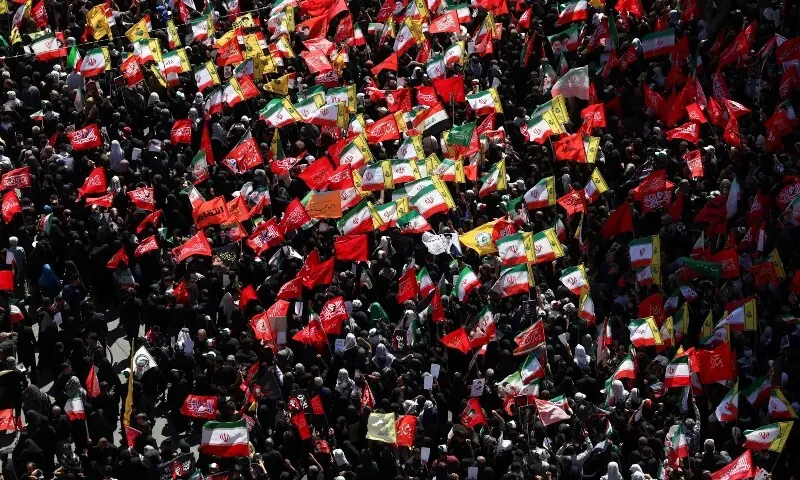
Hundreds of thousands of Iranians gathered in Mashhad on Thursday for the burial of Supreme Leader Ali Khamenei, assassinated in an Israeli strike on February 28. The procession made its way to the Shrine of Imam Reza, Iran's most revered place of worship, where Khamenei was interred alongside family members killed in the same strike, including his infant granddaughter, daughter, son-in-law, and his son Mojtaba's wife Zahra Haddad Adel.
Mashhad governor Hassan Hosseini said on state television he expected 15 million people to attend. The funeral was the final event in six days of ceremonies held across Tehran, the clerical city of Qom, and Iraq. The scale of the event forced officials to delay the start from 6am to 2pm local time after ceremonies in Iraq ran long. A helicopter transported the coffin across the final stretch to the shrine because crowds blocked the main avenue. At least one fighter jet escorted the plane carrying Khamenei's body to Mashhad, a sign of the security conditions still gripping the country.
Anger on the streets, uncertainty at the top
The mood among mourners was openly defiant. Many waved red flags, a symbol of vengeance in Iranian tradition. Signs near the mausoleum showed US President Donald Trump with a bounty on his head and Israeli Prime Minister Benjamin Netanyahu with the message "There will be blood" in English. Shop owner Mohammad Afsharian, 41, captured the sentiment directly: "People here all seek revenge. I don't know what's the story with diplomacy, but all the people are carrying red flags."
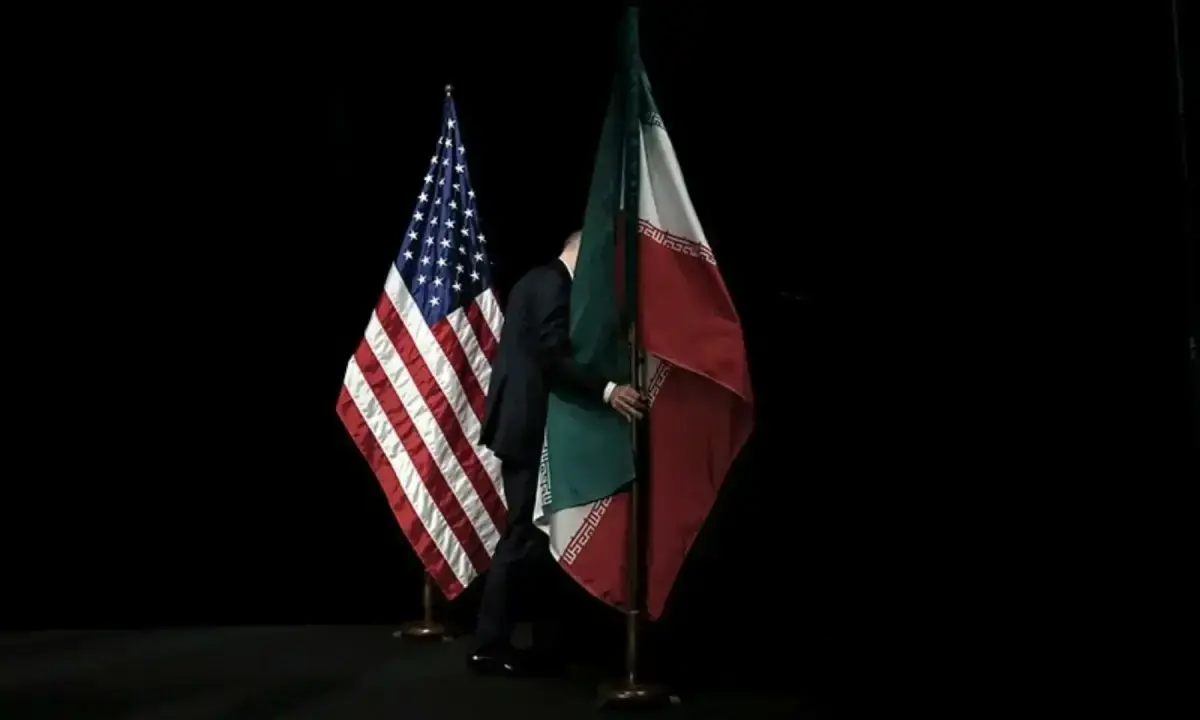
The public anger comes despite an accord reached last month that was meant to end the war. New hostilities with the United States have since broken out, and the fighting forced the closure of the Tehran-Mashhad rail link. The state rail company said road transport was being arranged for stranded passengers. Temperatures reached 35 degrees Celsius in Mashhad, and water sprinklers were deployed to keep the crowd manageable.
The burial prayer was led by Hossein Noori Hamedani, a 101-year-old ayatollah. IRNA, Iran's official news agency, confirmed Khamenei was buried in the Shrine of Imam Reza, a site of deep significance for Shia Muslims as the only one of the 12 Shia imams buried inside Iran. Khamenei himself had expressed a wish to be buried there, according to his chief of staff Mohammad Mohammadi-Golpaygani.
Who leads Iran now, and what comes next
The most consequential question surrounding the funeral remained unanswered publicly. Mojtaba Khamenei, Khamenei's son and reported successor, made no public appearance. Reports indicate he was injured in the same February 28 strike that killed his father. His absence from all six days of ceremonies has drawn close scrutiny from outside observers trying to gauge the stability of Iran's leadership structure.
Iran's government is clearly using the funeral to project unity. The ceremony spanned locations that map the pillars of the Islamic Republic, from its political capital Tehran to the clerical center of Qom and across the border into Iraq. The Shrine of Imam Reza carries enormous symbolic weight: several former Iranian shahs and former President Ebrahim Raisi, who died in a 2024 helicopter crash, are also buried there.
The immediate question is whether the public appetite for retaliation, visible in the red flags and hostile banners, will shape Iran's next moves against Israel and the United States. The new hostilities that followed last month's ceasefire accord suggest the political pressure on Iran's incoming leadership is intense. With Mojtaba Khamenei's condition and authority still unclear, any formal policy direction from Tehran will be watched carefully for signs of continuity or a shift in approach.
For global markets and regional security, Iran's leadership transition under these conditions carries real weight. Energy markets, already sensitive to Middle East conflict, and countries with economic exposure to the region face continued uncertainty until Iran's new power structure clarifies its posture.