Marvell Commits $250 Mn to India Chip Expansion
Marvell Technology will invest $250 million in India over three years, doubling its workforce and expanding offices in Bengaluru and Hyderabad to advance AI and cloud chip design.
Key Takeaways
May 27, 2026 · 4 min read · By Rishabh Bhardwaj
·
AI-assisted, human-reviewed · Our editorial standards
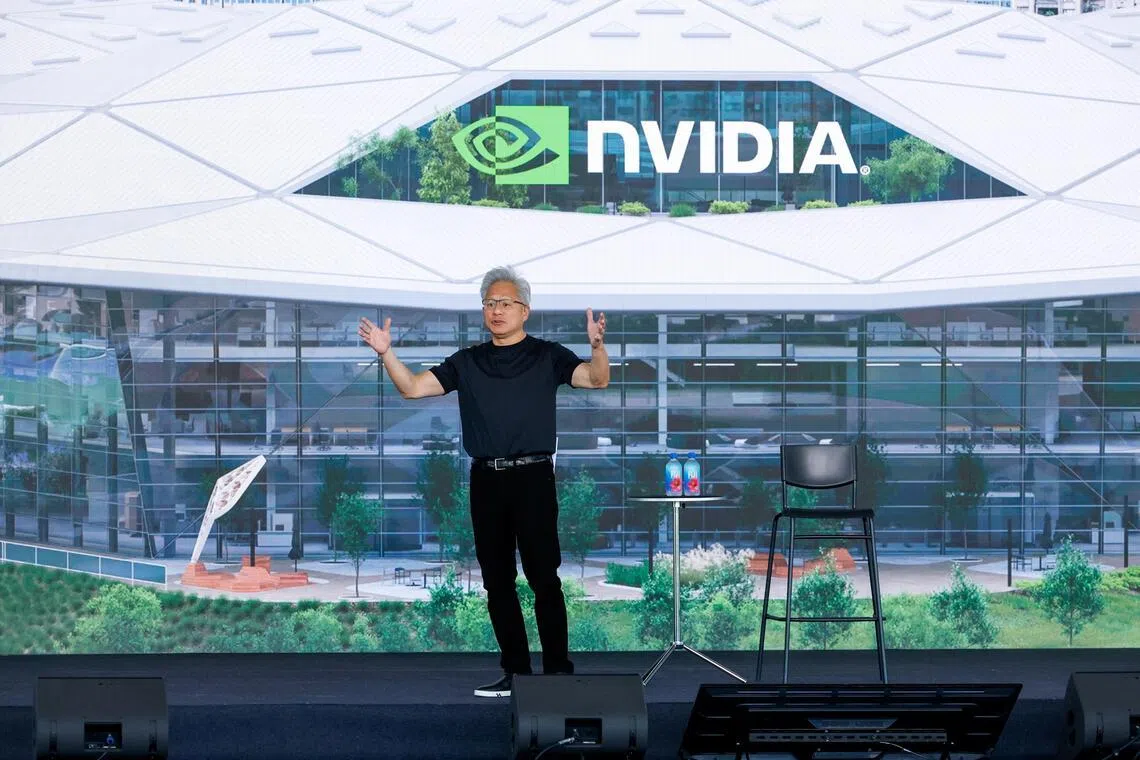
Nvidia chief executive Jensen Huang has announced the company plans to spend $191 billion a year in Taiwan, calling the island the epicentre of the global artificial intelligence revolution. The pledge marks one of the largest single-country procurement commitments in the tech industry and signals how deeply Nvidia has tied its production fortunes to Taiwanese suppliers.
Huang made the remarks during a visit to Taiwan, where he predicted the island would remain the world's dominant technology manufacturing hub for the foreseeable future. The statement carries weight because Nvidia designs the chips that power most of the world's AI infrastructure, and nearly all of those chips are fabricated and packaged in Taiwan.
Taiwan's role is not incidental. Taiwan Semiconductor Manufacturing Company, known as TSMC, produces Nvidia's most advanced processors, including the H100 and Blackwell series chips that data centres around the world are racing to install. Beyond chip fabrication, Taiwan hosts a dense ecosystem of suppliers handling advanced packaging, printed circuit boards, cooling systems, and server assembly. Nvidia's spending commitment reflects payments across this entire chain, not just to one company.
The $191 billion annual figure dwarfs most government infrastructure budgets and underscores how capital-intensive AI hardware has become. Each generation of Nvidia's AI chips requires more complex manufacturing steps, tighter tolerances, and closer collaboration with Taiwanese partners. That dependency has grown alongside the AI boom, making the relationship harder to unwind even if Nvidia wanted to diversify.
Huang's framing of Taiwan as the epicentre of AI is also a public positioning move. Nvidia is the most valuable semiconductor company in the world by market capitalisation, and its choices shape where the industry invests. By anchoring itself publicly to Taiwan, Huang reinforces the island's strategic value at a moment when geopolitical pressure from the United States to shift production elsewhere has intensified.
For investors, the commitment confirms that Nvidia's supply chain is not shifting away from Taiwan in any meaningful near-term timeframe. Companies hoping to benefit from Nvidia's spending, including TSMC and the broader cluster of Taiwanese electronics suppliers, receive a strong forward demand signal. Taiwan's export outlook for advanced semiconductors and related hardware remains robust as long as Nvidia's AI chip orders keep growing.
For policymakers, the announcement cuts both ways. Washington has pushed hard for semiconductor production to move to the United States, backing the CHIPS Act with tens of billions in subsidies to attract fabs and assembly capacity onshore. Huang's statement does not contradict those efforts directly, but it makes clear that the core of Nvidia's output will stay anchored in Taiwan for now. That limits how quickly the United States can reduce its dependence on Taiwanese manufacturing for AI hardware, regardless of subsidy incentives.
The geopolitical dimension matters too. Taiwan sits at the centre of one of the world's most sensitive territorial disputes. The concentration of AI chip production on the island means that any disruption, whether from military tension, a natural disaster, or a trade policy shift, would ripple immediately through global AI infrastructure spending. Nvidia's $191 billion annual commitment effectively raises the economic cost of any scenario that interrupts Taiwanese production.
For Nvidia's competitors and customers, the scale of this commitment signals the company's confidence in continued AI hardware demand. It also raises questions about supply chain resilience for any company that relies on the same Taiwanese ecosystem, since Nvidia's purchasing power gives it priority access to capacity that others may find harder to secure.
Watching for: whether Nvidia's spending commitment accelerates expansion plans at TSMC and related suppliers, and whether the announcement prompts renewed lobbying in Washington over semiconductor policy and the pace of domestic production ramp-up.
Marvell Technology will invest $250 million in India over three years, doubling its workforce and expanding offices in Bengaluru and Hyderabad to advance AI and cloud chip design.
Microsoft, Nvidia, SpaceX, and Palantir have joined the newly formed Open Secure AI Alliance alongside dozens of U.S. and European tech companies. The group aims to set shared AI security standards as fallout from a cyber attack on OpenAI pushes the industry toward coordinated defenses.
Skyroot Aerospace's Vikram-1 became India's first privately built rocket to reach orbit, making India only the third country after the US and China with a private orbital launch capability.
India has approved a ₹1.25 lakh crore ISM 2.0 that replaces the earlier grant-only model with a grant-plus-equity structure, co-investing alongside private venture capital in fabless chip design startups.