A provision in the federal tax code eliminating taxes on tip income, initially framed as a labor benefit for service workers, is producing an unintended secondary effect in mortgage underwriting. Because tipped workers' qualifying income now rises under the policy, lenders can count a larger income base when assessing loan eligibility, expanding purchasing power for an estimated 4 million tipped workers without any change to their gross wages. The mechanism is straightforward: mortgage qualification thresholds are income-driven, and reducing tax liability on tip income effectively increases the net income figure lenders can use, lowering the debt-to-income ratios that often block lower-wage applicants. That shift could open homeownership access to a segment of the workforce historically undercounted in underwriting models. The practical constraint is scale and timing, whether lenders standardize this treatment across underwriting guidelines and how quickly that translates into actual loan approvals are the variables to watch.
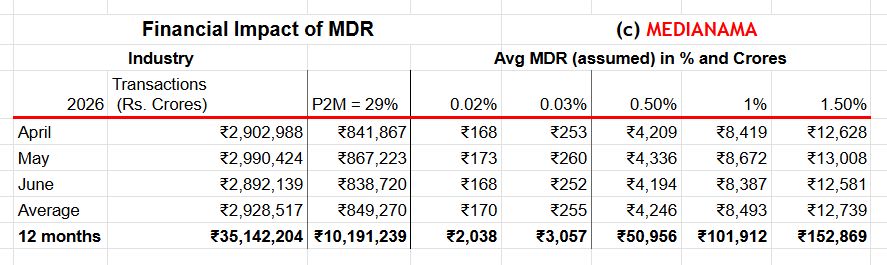
India's government plans to amend the Payment and Settlement Systems Act to restore UPI merchant discount rates, ending the zero-MDR regime in place since January 2020.
India's government has introduced the Taxation and Other Laws (Amendment) Bill, 2026, proposing changes to payments regulation, income tax, and the Finance Act to attract FDI and support Make in India. The Bill's final shape will depend on parliamentary debate and committee review.
The government's Taxation and Other Laws (Amendment) Bill, 2026, proposes to replace the blanket UPI MDR ban with a system allowing the Centre to notify which payment modes stay fee-free.
Prime Minister Narendra Modi inaugurated the Rs 5,000 crore Bhogapuram greenfield airport in Andhra Pradesh, built under a public-private partnership model. He also laid foundation stones for infrastructure projects worth nearly Rs 18,000 crore in the state, signalling a broad investment push for the region.