India's National Medical Commission has published proposed amendments to the Registration of Medical Practitioners and Licence to Practice Medicine (Amendment) Regulations 2026, targeting two structural tensions in the country's medical education system: overly restrictive entry barriers for new medical colleges and insufficiently rigorous postgraduate training standards. The draft simultaneously relaxes norms for establishing undergraduate medical colleges while tightening requirements at the postgraduate level, signaling a deliberate rebalancing of where quality control is applied. A notable operational provision would create a single national licence for Armed Forces Medical Services doctors, allowing them to practice across all states without navigating individual state registration processes. Currently, cross-state practice requires separate state-level registration, a friction point that complicates deployment of AFMS personnel. The amendments are still in proposed form, meaning institutional feedback and regulatory review lie ahead before any changes take effect. Colleges planning expansion, postgraduate training programs, and military medical administrators should track the finalized regulation text closely, as the eventual standards will reset compliance baselines across each of these cohorts.
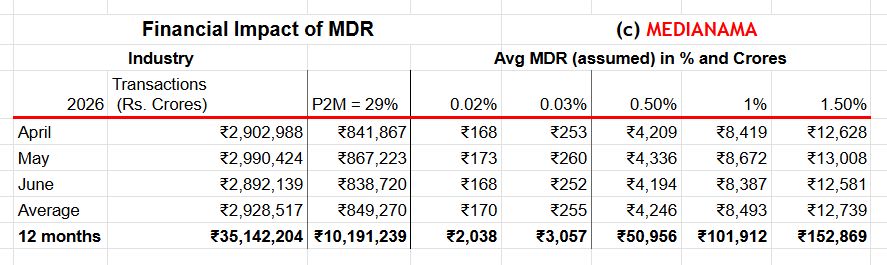
India's government plans to amend the Payment and Settlement Systems Act to restore UPI merchant discount rates, ending the zero-MDR regime in place since January 2020.
India's government has introduced the Taxation and Other Laws (Amendment) Bill, 2026, proposing changes to payments regulation, income tax, and the Finance Act to attract FDI and support Make in India. The Bill's final shape will depend on parliamentary debate and committee review.
The government's Taxation and Other Laws (Amendment) Bill, 2026, proposes to replace the blanket UPI MDR ban with a system allowing the Centre to notify which payment modes stay fee-free.
Prime Minister Narendra Modi inaugurated the Rs 5,000 crore Bhogapuram greenfield airport in Andhra Pradesh, built under a public-private partnership model. He also laid foundation stones for infrastructure projects worth nearly Rs 18,000 crore in the state, signalling a broad investment push for the region.