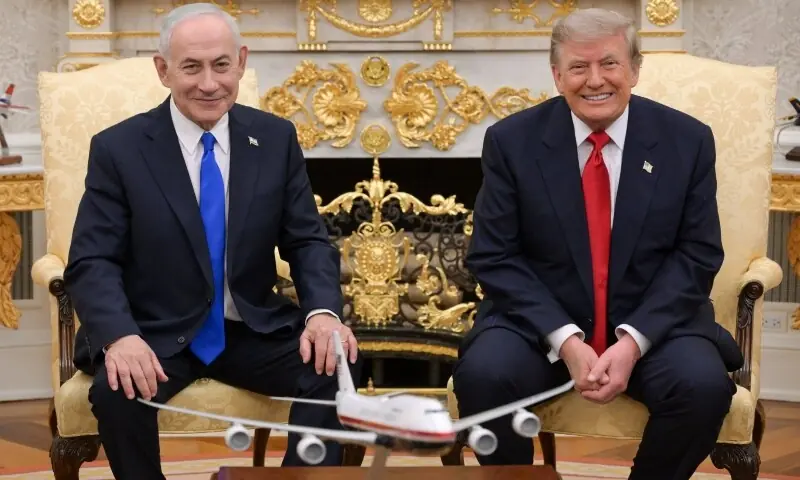
Israeli Prime Minister Benjamin Netanyahu met President Donald Trump at the White House on Tuesday, July 28, 2026, for their first face-to-face talks since the United States and Israel launched strikes on Iran in late February 2026. The meeting, held behind closed doors, lasted roughly an hour and a half and was described by the White House as "positive and productive."
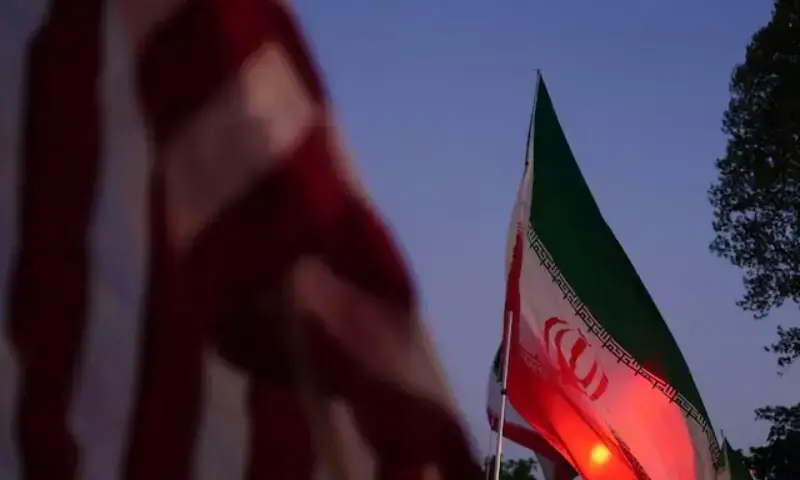
The war with Iran sits at the center of everything. Fighting began with joint US-Israeli strikes in late February, then a ceasefire took hold in April, then collapsed earlier this month, triggering a fresh round of hostilities. Israel has not participated directly in this latest flare-up, with Washington saying it wants to give negotiations another chance. The conflict has strained an alliance that both leaders insist remains solid.
The relationship hit a notable low in April, when Trump publicly directed profanity-laced criticism at Netanyahu during ceasefire talks and later called him "a very difficult guy" in a media interview. Netanyahu played those moments down as "tactical disagreements," arguing the two sides agree on the core goal: forcing a strategic change in Iran's posture. Tuesday's meeting is, in part, designed to make that argument credibly in public.
What the talks covered
Israel's government confirmed that Iran was the first item on the agenda, but the session was also expected to cover a US-sponsored framework deal between Israel and Lebanon signed last month, whose implementation on the ground has proved difficult. Gaza was on the table too, though international relations expert Yonatan Freeman of the Hebrew University of Jerusalem told reporters that Trump is likely to treat Gaza as a lower priority than Iran and the expansion of the Abraham Accords.
The Abraham Accords are the US-brokered normalisation agreements from Trump's first term, under which Israel formalised diplomatic ties with the United Arab Emirates, Bahrain, and Morocco. Broadening that circle to additional Arab states remains a stated strategic goal for both Washington and Jerusalem. Netanyahu himself framed the visit in those terms before departing Israel, saying the aim was "to safeguard our security and also to expand the circle of peace around us."
Danny Danon, Israel's ambassador to the United Nations, said the visit comes at a "critical time for the Middle East," pointing to Iran's continued blockade of the Strait of Hormuz, a chokepoint for roughly a fifth of the world's seaborne oil. That disruption has ripple effects far beyond the battlefield, pressing on global energy prices and shipping costs.
Why the optics matter as much as the substance
This is the eighth meeting between Netanyahu and Trump since Trump returned to office in early 2025. The frequency reflects both the pace of events and a political calculation. Netanyahu faces a national election later in 2026, and Trump faces US midterm polls in the same period. Both leaders have a domestic incentive to project strength and allied unity rather than friction.
Freeman argues the real disagreements are about method, not direction: the pace of military operations, the intensity of strikes, the sequencing of diplomatic moves. On the fundamental aim of permanently altering Iran's regional influence and nuclear trajectory, he says the two leaders are aligned. The visit is, in part, a signal to Tehran, Beirut, and other regional actors that no daylight exists in the core alliance.
Other analysts read the situation differently, suggesting the talks could open space for a gradual reduction of Israeli military presence in Lebanon, Syria, or Gaza, particularly if a viable diplomatic track with Iran takes shape. Gaza's humanitarian situation, nearly three years into the Israel-Hamas war, remains severe. Reconstruction efforts are at a standstill, with diplomatic momentum absent.
What to watch next: whether the US-Iran negotiating track produces a durable pause or collapses again, how the Lebanon framework deal moves from paper to practice, and whether any Abraham Accords expansion gains traction before both leaders face their respective electorates.