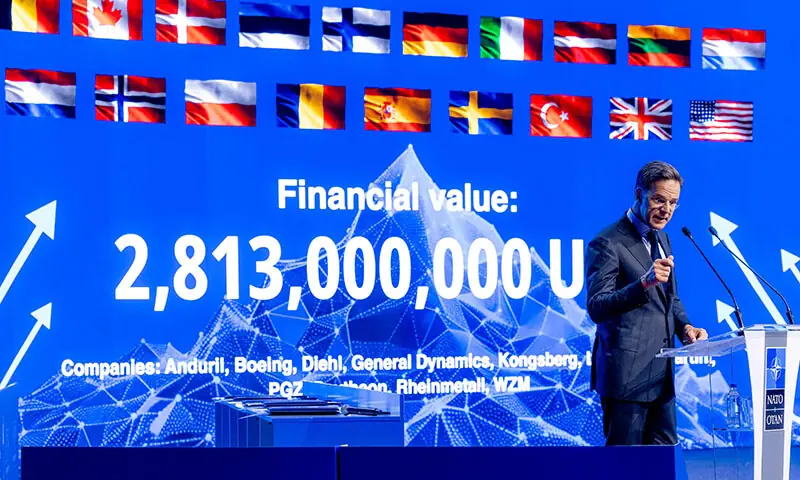
NATO Unveils Major Arms Deals Ahead of Trump Summit
NATO Secretary General Mark Rutte unveiled tens of billions of dollars in arms deals at a defence forum in Ankara ahead of the alliance's summit with President Trump.
Key Takeaways
July 28, 2026 · 4 min read · By Rishabh Bhardwaj
·
AI-assisted, human-reviewed · Our editorial standards
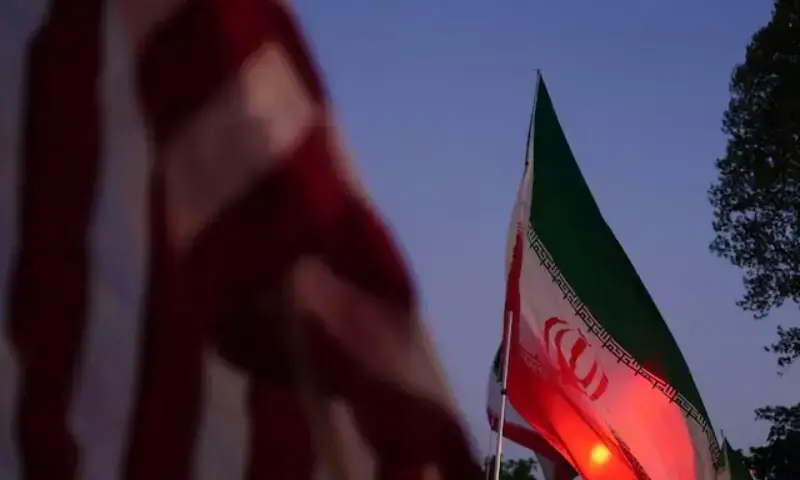
A fragile pause in the US bombing campaign against Iran took hold over the weekend, with no American strikes reported on Saturday or Sunday after 13 consecutive nights of attacks. Iran, which had been responding each night with its own strikes on US bases in neighbouring countries, also stood down for two days. Diplomatic sources in Washington credited the halt to a coordinated mediation effort involving Pakistan, Turkey, Qatar, and others working to keep channels open between Washington and Tehran.
Pakistan's role appears to have been quietly but consistently active throughout the latest escalation. Diplomatic sources in Washington said Islamabad maintained communication with Tehran, Washington, Riyadh, and Beijing during the US bombing campaign, helping preserve space for dialogue at a moment of acute risk. Pakistani contacts operated at multiple levels, including senior officials, diplomatic counterparts, and policymakers in Washington. Pakistan's stated position, the sources said, was that dialogue is the only path to a sustainable end to the confrontation.
Turkey's foreign ministry was also visibly active over the weekend. Anadolu Agency reported that Turkish Foreign Minister Hakan Fidan held separate calls with Qatari Prime Minister and Foreign Minister Mohammed bin Abdulrahman Al Thani and Pakistan's Chief of Defence Forces Field Marshal Asim Munir. According to Anadolu, both Islamabad and Doha have stepped up the exchange of messages between the two sides after Washington and Tehran each communicated responses to a joint formula aimed at ending the war.
US Ambassador to the United Nations Mike Waltz confirmed on Fox News that President Trump had chosen to pause strikes to make room for diplomacy. He said US forces remained "locked and loaded" but that Trump was "giving talks some space." That framing lines up with the mediation accounts, but American media pointed to additional pressures pushing in the same direction.
CNN and the New York Times reported that Pentagon Chief of Staff Dan Caine had flagged a depletion of Patriot air defence missile stocks, which US forces depend on to protect bases across the Middle East. The New York Times added that plans to escalate the campaign were shelved partly because of those shrinking supplies. CNN separately reported that Vice President JD Vance had expressed reservations about continuing the strikes. Admiral Brad Cooper, the overall commander of US forces in the Middle East, reportedly advised halting the campaign because it had reached the limits of its effectiveness, according to Axios.
The convergence of military supply constraints, internal political caution, and active diplomatic pressure created the conditions for a pause. Iran's army spokesman Mohammad Akraminia confirmed Tehran's own calculus: "Since our strategy has essentially been retaliatory, we have also halted our retaliatory operations." That formulation keeps Iran's posture conditional, not conciliatory, but it does lower the immediate temperature.
The war itself began in February 2026 alongside Israel, and a ceasefire in April had already broken down once before the latest 13-night escalation. That history matters: a two-day pause is not a ceasefire, and the factors that restarted bombing after April have not visibly been resolved.
What is different now is the density of the mediation traffic. Multiple regional actors, Qatar, Pakistan, and Turkey most visibly, are actively shuttling messages rather than merely calling for calm. The fact that Washington and Tehran are understood to have exchanged responses to a joint formula suggests something closer to a structured negotiation than an open-ended ceasefire.
The risks of collapse remain substantial. Trump faces pressure from allies in the Gulf who are exposed to Iranian retaliation, the threat of wider regional spillover, and the economic shock that extended conflict in the region carries for global energy and trade. Unconfirmed Iranian media reports on Sunday of an oil tanker damaged by a sea mine, if accurate, point to how quickly the situation could deteriorate through incidents that neither side may directly control.
For now, the channels are open and both sides are not shooting. Whether that holds depends on whether the joint formula reported by Anadolu carries enough substance to move toward a formal negotiating process before the pause runs out of momentum.
NATO Secretary General Mark Rutte unveiled tens of billions of dollars in arms deals at a defence forum in Ankara ahead of the alliance's summit with President Trump.
Brent crude surged past $100 a barrel on Thursday after Houthi forces attacked two Saudi oil tankers in the Red Sea, adding pressure to an already disrupted Strait of Hormuz. Goldman Sachs now sees Brent potentially exceeding $120 in Q4 2026 if both chokepoints remain closed.
Pakistan and China are pushing to revive US-Iran peace talks through the Islamabad MoU framework, even as US missiles strike Iranian targets and both sides escalate threats.
Houthi rebels claimed a missile strike on the Saudi city of Jizan on Saturday, escalating a conflict that now threatens both of Saudi Arabia's main oil export routes simultaneously. The flare-up adds pressure on US-Iran talks as the five-month-old war continues to widen across the region.