The Trump administration fired all 22 members of the National Science Board on Friday with a two-sentence email offering no explanation. Members were told, on behalf of President Trump, that their positions were "terminated, effective immediately." The National Science Board serves two key roles: it oversees the National Science Foundation, the main federal agency funding basic research across universities and labs, and it acts as an independent advisory body to the President and Congress on science and engineering policy. Losing the board disrupts both functions at once. No replacement members or interim arrangements have been announced. The NSF has already faced budget pressure and scrutiny under the current administration, making this dismissal another significant hit to the agency's governance structure. Watch for how the NSF operates without board oversight and whether Congress pushes back, given the board's statutory advisory role to the legislature. The absence of any stated rationale makes the next move hard to predict.
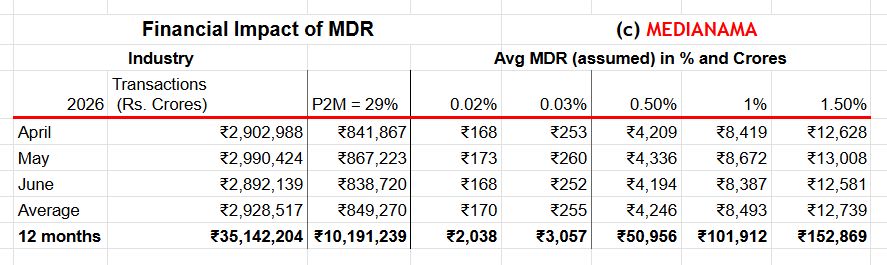
India's government plans to amend the Payment and Settlement Systems Act to restore UPI merchant discount rates, ending the zero-MDR regime in place since January 2020.
India's government has introduced the Taxation and Other Laws (Amendment) Bill, 2026, proposing changes to payments regulation, income tax, and the Finance Act to attract FDI and support Make in India. The Bill's final shape will depend on parliamentary debate and committee review.
The government's Taxation and Other Laws (Amendment) Bill, 2026, proposes to replace the blanket UPI MDR ban with a system allowing the Centre to notify which payment modes stay fee-free.
Prime Minister Narendra Modi inaugurated the Rs 5,000 crore Bhogapuram greenfield airport in Andhra Pradesh, built under a public-private partnership model. He also laid foundation stones for infrastructure projects worth nearly Rs 18,000 crore in the state, signalling a broad investment push for the region.