Houthi rebels claimed a missile strike on the Saudi city of Jizan early Saturday, hours after vowing retaliation for Saudi airstrikes on Houthi military sites in Yemen. The move opens a new front in a rapidly spreading regional conflict that began with US-Israeli strikes on Tehran in February 2026 and has since drawn in multiple state and non-state actors across the Middle East.
Saudi Arabia's civil defence agency issued brief warnings to residents in Jizan and the port city of Yanbu on Saturday morning, citing "potential danger," before lifting them minutes later. Riyadh did not immediately confirm or deny the Houthi claim. Similar civil defence alerts have been raised in the past when missiles or drones were fired at the kingdom.
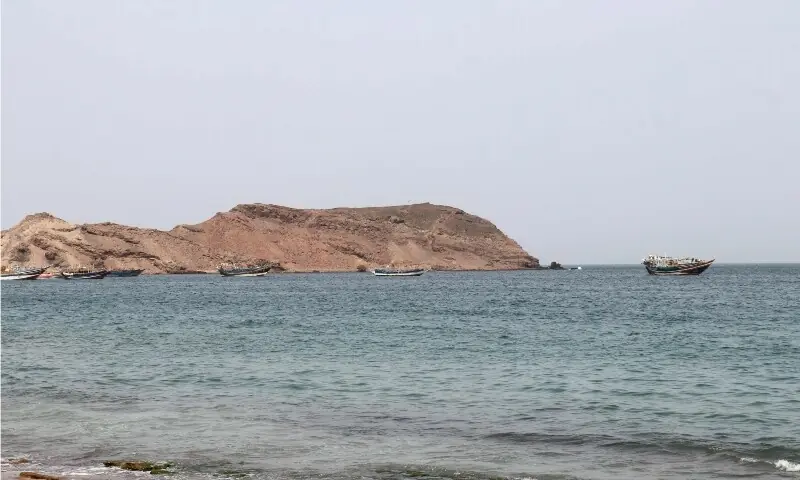
The immediate trigger was a Friday airstrike by a Saudi-led coalition on Houthi positions in and around Hodeida, Yemen's main Red Sea port. A Yemeni security source told AFP the strikes hit a naval base at Ras al-Kathib, a military camp on Kamaran island, and a telecommunications building near Hodeida's port. The Houthis' al-Masirah television channel reported two wounded: a worker in Hodeida and a woman on Kamaran island. Riyadh said the operation was a direct response to Houthi attacks on commercial vessels in the Red Sea.
Two blockades, one narrow window
The Houthi escalation is compounding a severe chokepoint problem for Saudi Arabia. The rebels announced a maritime blockade of Saudi-flagged and Saudi-affiliated vessels earlier this week and claimed attacks on two Saudi ships. Saudi state media confirmed one hit, with the transport authority stating that the vessel NCC MASA sustained minor hull damage while sailing in the Red Sea on Friday before resuming its course.
That blockade now runs parallel to Iran's ongoing blockade of the Strait of Hormuz, which the United States says it entered the conflict specifically to keep open. The Strait of Hormuz and the Red Sea together form Saudi Arabia's only two viable maritime export routes for oil. With both under simultaneous pressure, Riyadh faces a logistical squeeze with direct consequences for global energy supply chains.
Red Sea access has become especially critical for Saudi oil exports precisely because Hormuz traffic is already disrupted. Losing reliable use of both corridors at once would force longer, costlier rerouting around Africa, raising shipping costs and adding weeks to delivery times for oil and other cargo.
US posture: paused escalation, open threat
The broader conflict is now in its fifth month, far beyond the four-to-five-week timeline President Trump had initially predicted. Speaking in the Oval Office on Friday, Trump said he had not decided on a large-scale military operation against Iran, citing what he described as increasingly serious negotiations with Tehran. "I think they're getting more and more serious as the days go by, for maybe the obvious reason," Trump said.
Trump drew one explicit red line: a decision to escalate sharply would come if Iran appeared close to developing a nuclear weapon. He warned Tehran it faced a choice between a deal and a "much higher level" of strikes, after nearly two weeks of US attacks that he said had left a ceasefire agreement in tatters.
The conflict is also generating domestic political pressure. The prolonged war is weighing on Trump's approval ratings ahead of US midterm elections in November 2026. Iran's military said Friday it had struck US military assets in Bahrain, Jordan, and Kuwait. Iran's Revolutionary Guards separately claimed via state media that they had targeted an Amazon data center in Bahrain, though neither Amazon, Bahrain, nor the United States confirmed that claim or any casualties. Sirens sounded again in Bahrain early Saturday, with the interior ministry urging residents to take shelter.
Four US service members have been killed in Iranian retaliatory strikes since the conflict began. The pace of Iranian counter-attacks and the Houthi opening of a Saudi front suggest the conflict is broadening faster than diplomatic channels are narrowing it. The next key signal will be whether US-Iran talks produce any concrete movement, and whether Saudi Arabia responds militarily to Saturday's claimed missile strike on Jizan.