India to Restore UPI Merchant Fees, PhonePe Gains Most
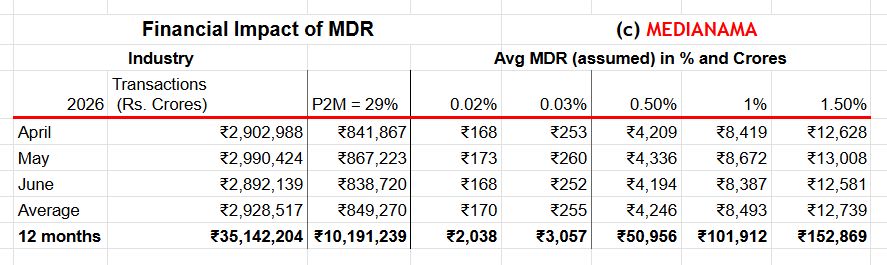
India's government plans to amend the Payment and Settlement Systems Act to restore UPI merchant discount rates, ending the zero-MDR regime in place since January 2020.
Key Takeaways
June 24, 2026 · 5 min read · By Rishabh Bhardwaj
·
AI-assisted, human-reviewed · Our editorial standards

The Securities and Exchange Board of India released a consultation paper on June 23, 2026, proposing a single Common Advertisement Code (CAC) that would replace the separate advertising rules currently binding seven types of market intermediaries. Comments close on July 14, 2026. The draft makes three structural changes: it removes mandatory prior approval for most ads, treats finfluencers and AI avatars as celebrities subject to stricter rules, and bans dark patterns in securities advertising for the first time.
The code would cover stock brokers, depository participants, investment advisers, research analysts, online bond platform providers, portfolio managers, and mutual funds. SEBI can add more categories later. Its definition of advertisement is broad, covering print, broadcast, digital, outdoor, podcasts, streaming services, social media, and online news sites.
Brokers, bond platforms, advisers, and analysts currently need regulatory sign-off before publishing an ad. SEBI wants to end that requirement. Under the draft, entities would upload each ad or a link to it on a central portal within 24 hours of running it. Mutual funds already operate this way. Supervisory bodies, including stock exchanges, depositories, and the Association of Mutual Funds in India (AMFI), would review ads after they run and flag violations to SEBI.
The practical consequence is significant: an ad reaches investors before any regulator has seen it. SEBI argues that post-issuance monitoring protects investors as effectively as pre-clearance, but the draft names no audit format, no sampling method, and no penalty floor for the portal. The CCPA's dark patterns regime used a similar post-facto model, and a LocalCircles audit found 97% non-compliance across 290 major platforms, a data point that makes SEBI's confidence harder to accept at face value.
Celebrity ads retain prior approval, and SEBI has sharply widened the definition. Anyone falls into celebrity territory if they appear in the top 50 of a current national celebrity index, played a lead role in a film or OTT series, have more than 5 lakh followers on a single social media handle, represented India in sport or competed at the Olympics or Asian Games, hosted a TV programme for at least one season or 10 episodes, won or reached the final of a popular competitive show, or operate as a virtual character with lifelike human traits that influences an audience. SEBI can add more categories at its discretion.
This matters because it brings a large slice of financial advertising back under pre-clearance. The draft frees brokers from approval on routine ads, then routes every celebrity ad through the same gate. With the definition now stretching to influencers above 5 lakh followers, sportspersons, TV hosts, and AI avatars, that could cover a significant share of how financial firms actually advertise. SEBI does not explain how supervisory bodies would handle that volume.
Celebrities face clear limits on what they can say. They may promote a firm's brand and list the products it offers, but they cannot make any claim about a specific product or service. Firms cannot pass celebrity costs to clients or charge them to a mutual fund scheme.
The move builds on SEBI's enforcement record since 2024. It barred regulated entities from working with unregistered finfluencers, mandated that social media posts carry registration IDs, and fined finfluencers including Avadhut Sathe and Baap of Chart.
On dark patterns, the draft binds all covered entities and any platform they use to Annexure I of the Central Consumer Protection Authority (CCPA) Dark Patterns Guidelines, 2023. SEBI specifically names false urgency (fake scarcity to force quick decisions), forced action (requiring users to buy more or share data), and subscription traps (hiding cancellation options). SEBI's own enforcement toolkit, including onboarding bans, could give this prohibition more force than the CCPA's self-declaration approach has delivered. CCPA fines have stayed well below the Rs 50 lakh ceiling despite widespread violations.
Other notable provisions: ads cannot carry guaranteed or risk-free return claims (only online bond platform providers may promise fixed returns, with disclaimers), testimonials, or content that runs down rivals. Incentives such as vouchers or perks that push trading, revive dormant accounts, or drive app downloads are prohibited. Ratings and rankings in ads must be verified by a SEBI-recognised Past Risk and Return Verification Agency (PaRRVA), which independently checks the figures an intermediary cites. Disclaimers for ads citing a specific security must appear on the same page or in the same video frame, not at the end.
The code leaves two gaps worth watching. First, it only catches a finfluencer when a regulated firm pays for or engages them. An unpaid influencer promoting a stock on their own account stays outside the code entirely. Second, the educational content exemption, which covers explanations of financial concepts with minimal branding, is broad enough that firms may test its limits, as the Basant Maheshwari case illustrated when the firm argued its stock videos were educational content.
SEBI plans to roll the code out in four steps: embedding it in the SEBI (Intermediaries) Regulations 2008, building the reporting portal, allowing a six-month transition after notification, and then enforcing it through ad withdrawals, onboarding halts, monetary penalties, and summary proceedings. The consultation period closes July 14, 2026, accepting comments through SEBI's web form or at consultationmirsd@sebi.gov.in.
India's government plans to amend the Payment and Settlement Systems Act to restore UPI merchant discount rates, ending the zero-MDR regime in place since January 2020.
India's government has introduced the Taxation and Other Laws (Amendment) Bill, 2026, proposing changes to payments regulation, income tax, and the Finance Act to attract FDI and support Make in India. The Bill's final shape will depend on parliamentary debate and committee review.
The government's Taxation and Other Laws (Amendment) Bill, 2026, proposes to replace the blanket UPI MDR ban with a system allowing the Centre to notify which payment modes stay fee-free.
Prime Minister Narendra Modi inaugurated the Rs 5,000 crore Bhogapuram greenfield airport in Andhra Pradesh, built under a public-private partnership model. He also laid foundation stones for infrastructure projects worth nearly Rs 18,000 crore in the state, signalling a broad investment push for the region.