India to Restore UPI Merchant Fees, PhonePe Gains Most
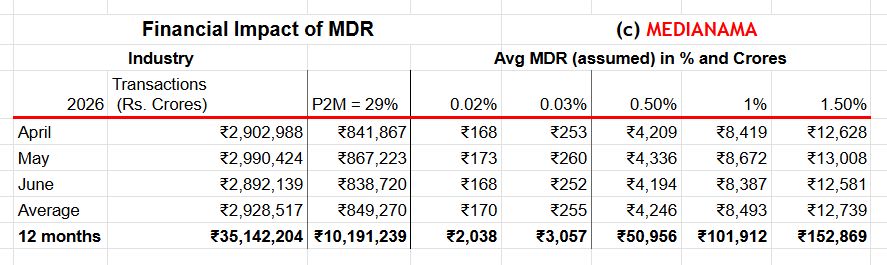
India's government plans to amend the Payment and Settlement Systems Act to restore UPI merchant discount rates, ending the zero-MDR regime in place since January 2020.
Key Takeaways
May 9, 2026 · 3 min read · By Rishabh Bhardwaj
·
AI-assisted, human-reviewed · Our editorial standards

The Indian government has fully operationalised four new labour codes by publishing the implementing rules, marking a significant shift in how the country's workplace laws are structured and enforced.
The four codes, covering wages, industrial relations, social security, and occupational safety, consolidate 29 older central labour laws into a unified framework. The move has been in the works for several years, with Parliament passing the codes between 2019 and 2020, but implementation stalled because most states had not finalized their own rules. The central government's publication of rules clears a critical procedural step required before the codes can take legal effect.
The most visible change for workers is in take-home pay and provident fund contributions. The codes redefine how "wages" are calculated, requiring that basic pay be at least 50% of total compensation. Many companies currently structure salaries with a low basic and high allowances to reduce their provident fund liability. The new definition would raise the provident fund base for a large share of formal sector workers, increasing both employee deductions and employer contributions, which could compress corporate margins in labour-intensive sectors.
For businesses, the industrial relations code raises the threshold for firms needing government approval before laying off workers or closing a plant, from 100 employees to 300. This gives mid-sized manufacturers more operational flexibility, a provision that industry groups have long sought. It also introduces fixed-term employment contracts, allowing companies to hire workers for specific durations without making them permanent, which could affect job security for a portion of the workforce.
The social security code extends coverage to gig and platform workers for the first time, bringing delivery riders, cab drivers, and freelancers under a benefits framework. The occupational safety code sets clearer standards for working conditions, particularly in mines, factories, and construction, sectors with historically high rates of workplace injury.
The consolidation is designed to reduce the compliance burden on businesses, which previously had to navigate dozens of overlapping laws with different definitions and filing requirements. A unified system with common definitions, a single registration process, and digital filing is expected to ease compliance, particularly for smaller firms.
What to watch: the pace at which individual states align their rules with the central codes will determine how quickly businesses and workers feel the change. States that have not yet published conforming rules could create a patchwork of enforcement, complicating compliance for companies operating across multiple locations.
India's government plans to amend the Payment and Settlement Systems Act to restore UPI merchant discount rates, ending the zero-MDR regime in place since January 2020.
India's government has introduced the Taxation and Other Laws (Amendment) Bill, 2026, proposing changes to payments regulation, income tax, and the Finance Act to attract FDI and support Make in India. The Bill's final shape will depend on parliamentary debate and committee review.
The government's Taxation and Other Laws (Amendment) Bill, 2026, proposes to replace the blanket UPI MDR ban with a system allowing the Centre to notify which payment modes stay fee-free.
Prime Minister Narendra Modi inaugurated the Rs 5,000 crore Bhogapuram greenfield airport in Andhra Pradesh, built under a public-private partnership model. He also laid foundation stones for infrastructure projects worth nearly Rs 18,000 crore in the state, signalling a broad investment push for the region.