
Qatar Signals Progress in US-Iran War Talks
Qatar's foreign ministry said mediators including Qatar, Pakistan, and Oman have reached "very progressive stages" in efforts to end the US-Iran war, pushing Brent crude down more than four percent.
Key Takeaways
May 3, 2026 · 2 min read · By Rishabh Bhardwaj
·
AI-assisted, human-reviewed · Our editorial standards
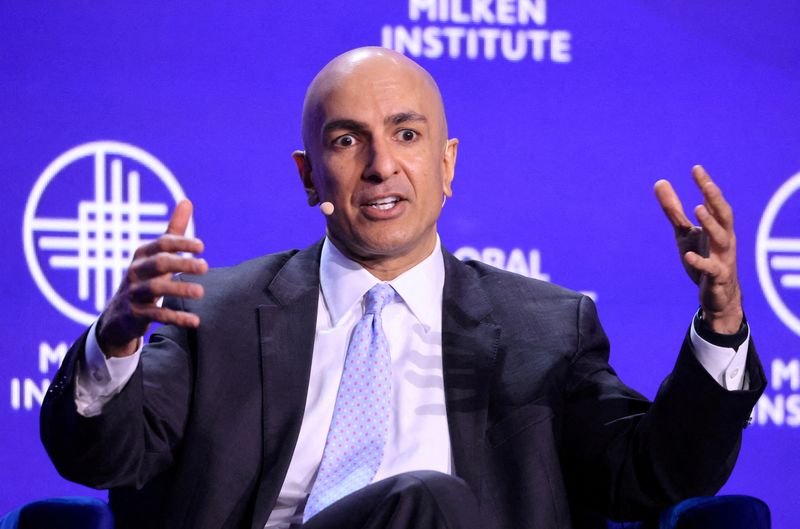
Federal Reserve Bank of Minneapolis President Neel Kashkari said a potential war involving Iran would limit the Fed's ability to offer clear guidance on where interest rates are headed.
Kashkari's comment is notable because forward guidance, the Fed's practice of signaling future rate moves, is one of its most powerful tools. When the Fed tells markets it expects to cut or hold rates, investors reprice bonds, equities, and credit accordingly. If that guidance becomes unreliable, markets have to price in more uncertainty, which typically pushes up borrowing costs and volatility.
A war involving Iran would likely disrupt oil supply routes, particularly through the Strait of Hormuz, through which a significant share of global crude passes. Higher oil prices feed directly into inflation. The Fed targets 2% inflation, and an energy-driven price spike would force policymakers to choose between cutting rates to support a slowing economy and holding them high to keep inflation in check, two conflicting pressures that make any firm guidance misleading.
That conflict between growth risk and inflation risk is sometimes called a supply shock dilemma. Central banks have limited tools to address it cleanly: rate cuts ease financial conditions but can worsen inflation, while rate hikes contain prices but can tip economies into recession.
Without credible Fed guidance, bond markets would have to do more of the work, likely pricing in a wider range of outcomes. That means higher yield volatility, which flows through to mortgage rates, corporate borrowing costs, and consumer credit. Businesses planning capital expenditure and households deciding on large purchases both face more uncertainty when rate direction is unclear.
For India, the transmission runs through multiple channels: a stronger dollar driven by safe-haven demand could pressure the rupee, raise import costs, and tighten domestic financial conditions, even before the Reserve Bank of India makes any move of its own.
Kashkari did not specify a timeline or detail the exact scenarios the Fed is modeling. His comment reflects a broader acknowledgment among central bankers that geopolitical shocks are now a live factor in monetary policy deliberations, not just background noise. Watch for whether other Fed officials echo this caution at upcoming public appearances, and whether the Fed's next policy statement signals any change in its guidance language.
Qatar's foreign ministry said mediators including Qatar, Pakistan, and Oman have reached "very progressive stages" in efforts to end the US-Iran war, pushing Brent crude down more than four percent.
Qatar confirmed it is mediating between the US and Iran but said no direct talks are currently planned. The clarification follows conflicting statements from President Trump, who claimed talks are under way, and Tehran, which denied any dialogue is happening.
Saudi Aramco reported sharply higher second-quarter 2026 profits as the Iran war restricts global oil supply and pushes crude prices up. Other oil supermajors also posted outsized earnings, raising concerns about sustained fuel cost pressure for importing economies.
President Trump called current Iran negotiations the "last chance" to end five months of conflict, pushing oil prices higher. Tehran denied formal talks are taking place, raising the risk of a diplomatic breakdown with direct consequences for global energy markets.