Marvell Commits $250 Mn to India Chip Expansion
Marvell Technology will invest $250 million in India over three years, doubling its workforce and expanding offices in Bengaluru and Hyderabad to advance AI and cloud chip design.
Key Takeaways
May 11, 2026 · 2 min read · By Rishabh Bhardwaj
·
AI-assisted, human-reviewed · Our editorial standards
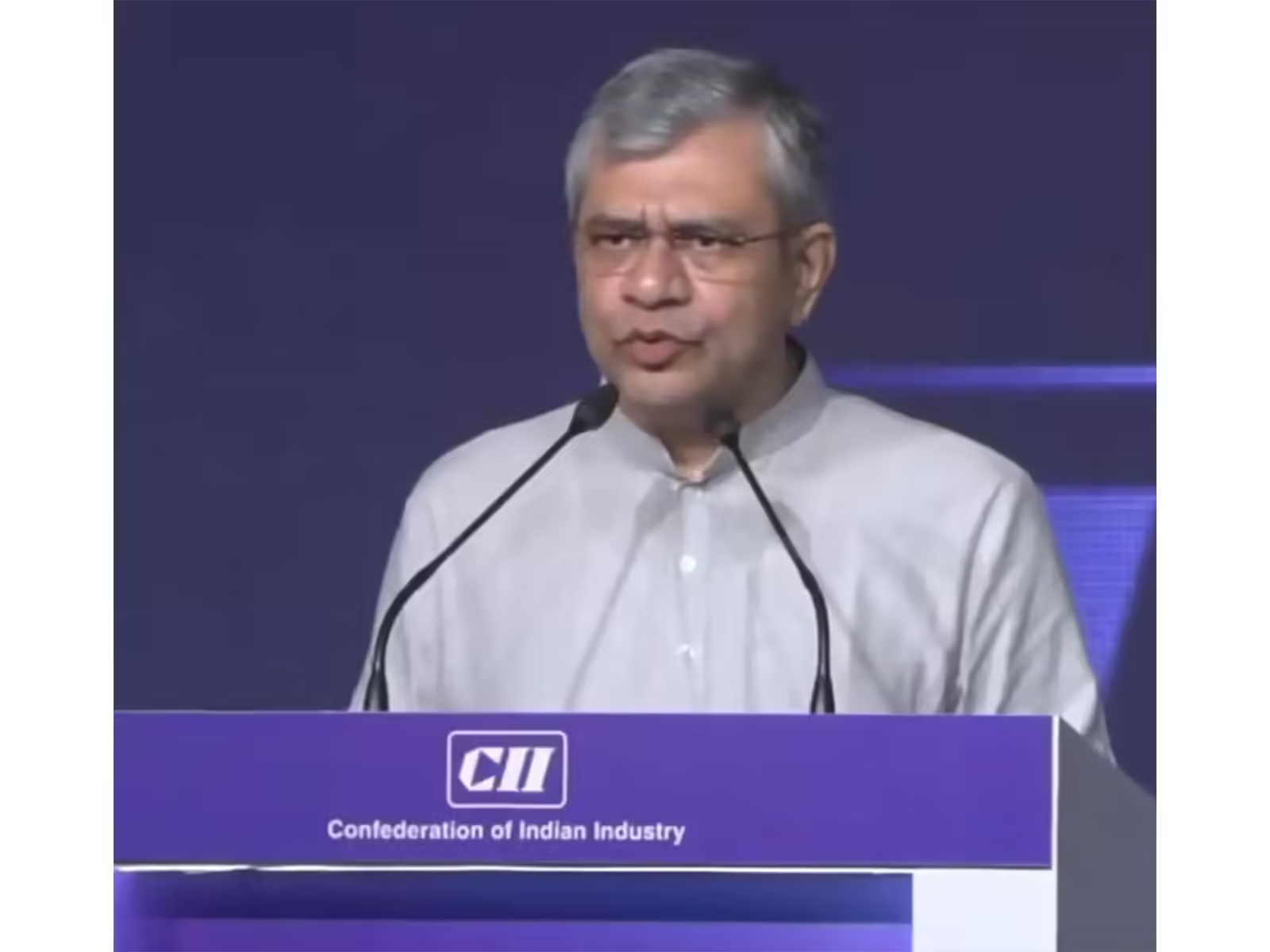
India is set to have four semiconductor fabrication plants running by the end of 2025, Union Minister Rajiv Vaishnaw has said. Two plants are already operational, a third will begin production in July, and a fourth is expected to come online between November and December.
The timeline matters because semiconductors sit at the base of nearly every modern electronic product, from smartphones and cars to defense systems and data centers. Until recently, India had no domestic chip production capacity worth speaking of, leaving it entirely dependent on imports, primarily from Taiwan, South Korea, and China.
The four plants are part of India's broader semiconductor mission, a government-backed push to build a domestic chip supply chain. While the government has not detailed in this update which companies are running which facilities, the mission has previously seen approvals for units backed by the Tata Group, Foxconn's India partnership, and others under the India Semiconductor Mission scheme.
Alongside chip manufacturing, India is also expanding its data center capacity and pushing into AI hardware manufacturing. These are complementary bets: chips feed data centers, data centers run AI workloads, and domestic production of all three reduces reliance on foreign supply chains.
The timing is deliberate. Global semiconductor supply chains have been under pressure since the COVID-era chip shortage, and geopolitical tensions between the US and China have pushed major economies to build local production buffers. India is positioning itself as an alternative manufacturing hub, particularly as companies diversify away from Taiwan and China.
Vaishnaw framed the progress as giving India the tools to handle global economic turbulence and sustain growth. A domestic chip supply chain reduces import costs over time, creates high-skill manufacturing jobs, and gives India more leverage in technology trade negotiations.
The immediate test is execution. Getting a semiconductor plant from construction to commercial-scale production is technically complex and has tripped up even well-funded projects globally. Watching whether the July and November-December deadlines hold will be the first real indicator of whether India's semiconductor ambitions are on track.
Marvell Technology will invest $250 million in India over three years, doubling its workforce and expanding offices in Bengaluru and Hyderabad to advance AI and cloud chip design.
Microsoft, Nvidia, SpaceX, and Palantir have joined the newly formed Open Secure AI Alliance alongside dozens of U.S. and European tech companies. The group aims to set shared AI security standards as fallout from a cyber attack on OpenAI pushes the industry toward coordinated defenses.
Skyroot Aerospace's Vikram-1 became India's first privately built rocket to reach orbit, making India only the third country after the US and China with a private orbital launch capability.
India has approved a ₹1.25 lakh crore ISM 2.0 that replaces the earlier grant-only model with a grant-plus-equity structure, co-investing alongside private venture capital in fabless chip design startups.