India to Restore UPI Merchant Fees, PhonePe Gains Most
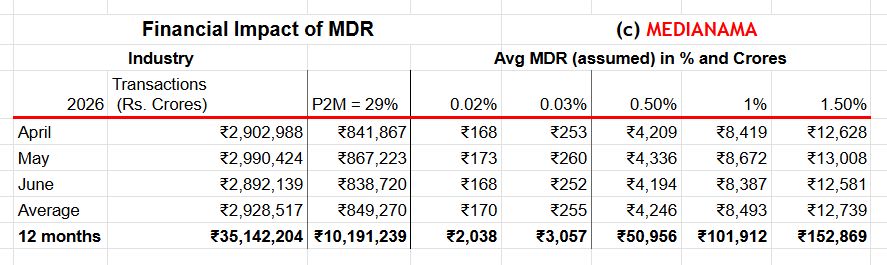
India's government plans to amend the Payment and Settlement Systems Act to restore UPI merchant discount rates, ending the zero-MDR regime in place since January 2020.
Key Takeaways
May 8, 2026 · 2 min read · By Rishabh Bhardwaj
·
AI-assisted, human-reviewed · Our editorial standards
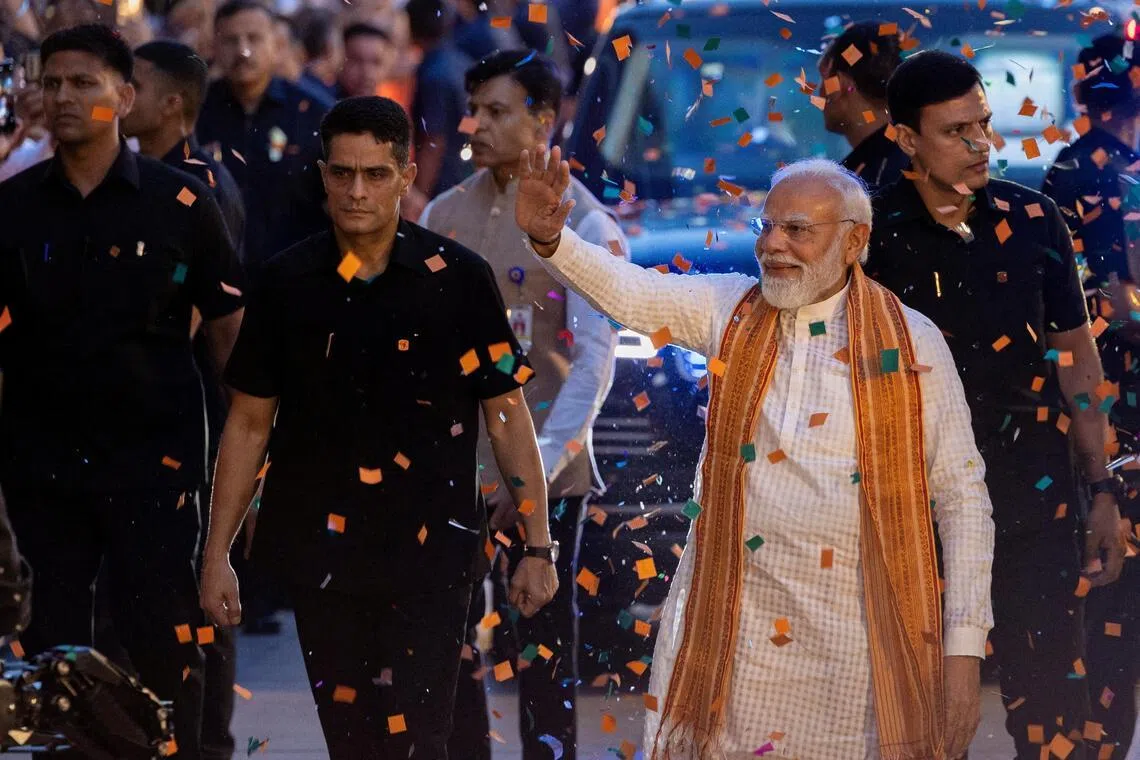
India's Bharatiya Janata Party has extended its political reach after recent state election results, now governing or participating in ruling coalitions across 22 states and union territories. The outcome deepens Prime Minister Narendra Modi's grip on subnational governance ahead of any future national contest.
India has 28 states and 8 union territories, giving the BJP a presence in roughly two-thirds of the country's administrative units. Controlling state governments matters beyond politics: states set land acquisition rules, administer law and order, manage electricity distribution, and share tax revenues under federal formulas. A broader state-level footprint gives the BJP greater influence over how central policy translates into ground-level execution.
Coalition presence, as distinct from outright majority rule, still allows the BJP to shape cabinet decisions, budgets, and administrative appointments in those states, though with constraints from alliance partners.
For businesses, a more uniform political landscape across states can reduce the friction of operating in multiple regulatory environments, particularly where state-level approvals are needed for land, power, or labor. Investors in infrastructure, real estate, and energy sectors watch state-government alignment closely because project clearances depend heavily on which party controls the state machinery.
Federally, a stronger subnational base reinforces Modi's legislative and administrative agenda, making it easier to push through reforms that require state cooperation, such as land laws, power-sector restructuring, and goods-and-services tax administration.
The consolidation also has electoral implications. State governments influence voter outreach, local bureaucracy, and the distribution of welfare schemes, all of which feed back into national election performance.
The key variable to watch is how many of these 22 states represent outright BJP majorities versus coalition-dependent governments, since the latter can be fragile. Any alliance breakdowns or by-election results that shift that number would be the clearest signal of whether this dominance is durable.
India's government plans to amend the Payment and Settlement Systems Act to restore UPI merchant discount rates, ending the zero-MDR regime in place since January 2020.
India's government has introduced the Taxation and Other Laws (Amendment) Bill, 2026, proposing changes to payments regulation, income tax, and the Finance Act to attract FDI and support Make in India. The Bill's final shape will depend on parliamentary debate and committee review.
The government's Taxation and Other Laws (Amendment) Bill, 2026, proposes to replace the blanket UPI MDR ban with a system allowing the Centre to notify which payment modes stay fee-free.
Prime Minister Narendra Modi inaugurated the Rs 5,000 crore Bhogapuram greenfield airport in Andhra Pradesh, built under a public-private partnership model. He also laid foundation stones for infrastructure projects worth nearly Rs 18,000 crore in the state, signalling a broad investment push for the region.