The question of how private market assets belong inside defined contribution plans has moved from theoretical to operational, as plan sponsors, asset managers, and regulators begin wrestling with the structural mechanics of inclusion. Unlike defined benefit plans, DC structures place liquidity risk directly on the individual participant, making the standard illiquidity premium argument more complicated than it appears in institutional portfolios. The core tension is valuation: private assets reprice infrequently, creating fairness problems when participants enter or exit a fund holding illiquid positions. Daily liquidity requirements embedded in most DC recordkeeping infrastructure are fundamentally mismatched with the lock-up periods typical of private equity, private credit, and real assets. Regulatory guidance from the Department of Labor has been cautious but not prohibitive, leaving plan fiduciaries navigating significant liability exposure without a clear safe harbor. The practical path most often discussed involves target-date funds or collective investment trusts as wrappers, limiting direct participant exposure while preserving some illiquidity premium capture. Fiduciary liability, valuation methodology, and recordkeeper readiness remain the three active constraints shaping whether and how this integration actually proceeds.
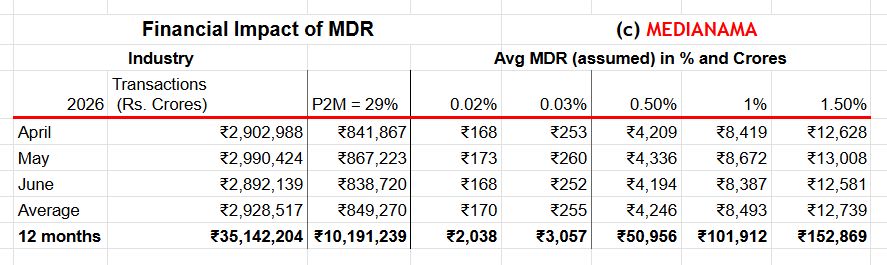
India's government plans to amend the Payment and Settlement Systems Act to restore UPI merchant discount rates, ending the zero-MDR regime in place since January 2020.
India's government has introduced the Taxation and Other Laws (Amendment) Bill, 2026, proposing changes to payments regulation, income tax, and the Finance Act to attract FDI and support Make in India. The Bill's final shape will depend on parliamentary debate and committee review.
The government's Taxation and Other Laws (Amendment) Bill, 2026, proposes to replace the blanket UPI MDR ban with a system allowing the Centre to notify which payment modes stay fee-free.
Prime Minister Narendra Modi inaugurated the Rs 5,000 crore Bhogapuram greenfield airport in Andhra Pradesh, built under a public-private partnership model. He also laid foundation stones for infrastructure projects worth nearly Rs 18,000 crore in the state, signalling a broad investment push for the region.