The House passed a budget resolution that opens the door to roughly $70 billion in new spending on immigration enforcement, a major step toward President Trump's border agenda. The move clears a procedural path for Republicans to draft a bill that bypasses the Senate's 60-vote filibuster threshold, using a process called reconciliation, which only requires a simple majority. The money is earmarked for ICE, Immigration and Customs Enforcement, and CBP, Customs and Border Protection, two agencies central to the administration's deportation and border-security push. Republicans are also framing this as a vehicle to reopen and refund the Department of Homeland Security, which has been effectively dormant under recent budget constraints. The next step is drafting the actual legislation, where fights over spending details and offsets are likely. Whether the Senate Republican caucus holds together through reconciliation will determine if the funding clears Congress and reaches the president's desk.
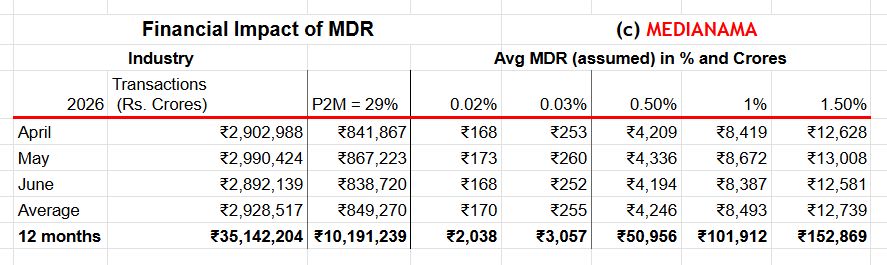
India's government plans to amend the Payment and Settlement Systems Act to restore UPI merchant discount rates, ending the zero-MDR regime in place since January 2020.
India's government has introduced the Taxation and Other Laws (Amendment) Bill, 2026, proposing changes to payments regulation, income tax, and the Finance Act to attract FDI and support Make in India. The Bill's final shape will depend on parliamentary debate and committee review.
The government's Taxation and Other Laws (Amendment) Bill, 2026, proposes to replace the blanket UPI MDR ban with a system allowing the Centre to notify which payment modes stay fee-free.
Prime Minister Narendra Modi inaugurated the Rs 5,000 crore Bhogapuram greenfield airport in Andhra Pradesh, built under a public-private partnership model. He also laid foundation stones for infrastructure projects worth nearly Rs 18,000 crore in the state, signalling a broad investment push for the region.