India to Restore UPI Merchant Fees, PhonePe Gains Most
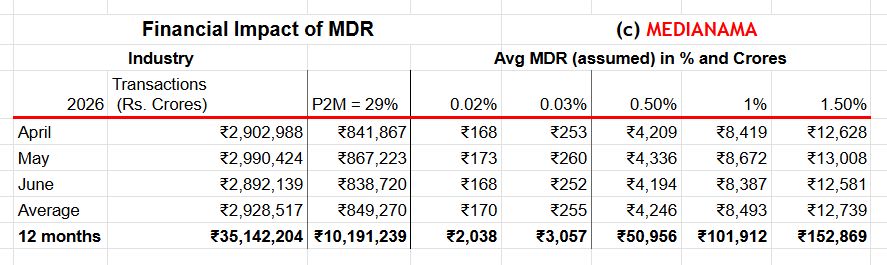
India's government plans to amend the Payment and Settlement Systems Act to restore UPI merchant discount rates, ending the zero-MDR regime in place since January 2020.
Key Takeaways
May 3, 2026 · 3 min read · By Rishabh Bhardwaj
·
AI-assisted, human-reviewed · Our editorial standards
Four stories are shaping India's medical education and healthcare policy landscape today, touching on reservation rights, public accountability, fee abuse, and hospital liability.
The Rajasthan High Court has upheld a February 18, 2026, counselling board resolution that blocks out-of-state candidates from claiming reservation benefits, including relaxed qualifying percentiles, in Rajasthan's NEET PG admissions. The court dismissed a challenge filed by the Federation of Private Medical and Dental Colleges of Rajasthan, clarifying that the policy does not constitute 100% domicile-based reservation. Candidates from other states can still compete for general (unreserved) seats; they simply cannot use reserved-category relaxations tied to Rajasthan's domicile. This ruling effectively draws a hard boundary around state-specific reservation structures for postgraduate medical admissions, a question that has long been contested across multiple states.
A Parliamentary Standing Committee on Health has flagged a significant accountability gap: AIIMS New Delhi imposes no service bond on its graduates, and the institute keeps no data on where its alumni practice after graduating. The committee has asked how doctors trained at one of India's most prestigious publicly funded medical institutions contribute to the domestic healthcare system. It has recommended that the Department of Health develop a structured database tracking specialist employment within India. The concern is straightforward, the government spends heavily to train these doctors, but has no way to measure whether that investment benefits Indian patients.
The Telangana State Medico Parents Association staged a protest outside Kaloji Narayana Rao University of Health Sciences, alleging that private medical colleges are systematically overcharging families. The core claim: colleges are billing students for five academic years despite the MBBS course lasting 4.5 years, adding an extra ₹6 lakh to ₹12 lakh per student depending on category. Total illegal collections are alleged to exceed ₹200 crore annually. Fee discrepancies are also stark, A-category seat fees are prescribed at around ₹60,000, but colleges reportedly charge up to ₹2.6 lakh under various heads. Parents also allege delays and non-refunds of demand drafts when students switch colleges. Complaints to the Fee Regulatory Committee have reportedly gone unaddressed. The association is demanding university-managed direct fee collection and strict enforcement against violating institutions.
The District Consumer Disputes Redressal Commission, South Delhi, has exonerated Max Smart Super Speciality Hospital, Saket, from a medical negligence complaint involving a minor treated for recurrent abdominal pain. The child's father alleged that doctors began treatment without a proper diagnosis, relying on assumptions. The commission found no evidence of negligence or deficiency in service and ruled in the hospital's favour. The case is a reminder that consumer courts require concrete evidence to establish medical negligence, suspicion or outcome dissatisfaction alone is not sufficient.
Across these four stories, the common thread is accountability: who gets access to public medical education resources, whether publicly funded training translates to public benefit, and whether regulators are actually enforcing the rules that exist.
India's government plans to amend the Payment and Settlement Systems Act to restore UPI merchant discount rates, ending the zero-MDR regime in place since January 2020.
India's government has introduced the Taxation and Other Laws (Amendment) Bill, 2026, proposing changes to payments regulation, income tax, and the Finance Act to attract FDI and support Make in India. The Bill's final shape will depend on parliamentary debate and committee review.
The government's Taxation and Other Laws (Amendment) Bill, 2026, proposes to replace the blanket UPI MDR ban with a system allowing the Centre to notify which payment modes stay fee-free.
Prime Minister Narendra Modi inaugurated the Rs 5,000 crore Bhogapuram greenfield airport in Andhra Pradesh, built under a public-private partnership model. He also laid foundation stones for infrastructure projects worth nearly Rs 18,000 crore in the state, signalling a broad investment push for the region.