India to Restore UPI Merchant Fees, PhonePe Gains Most
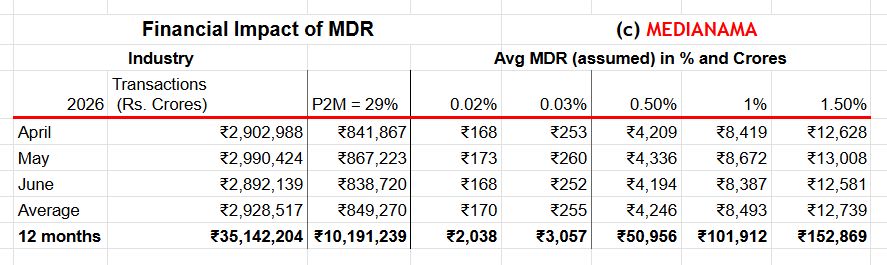
India's government plans to amend the Payment and Settlement Systems Act to restore UPI merchant discount rates, ending the zero-MDR regime in place since January 2020.
Key Takeaways
July 6, 2026 · 5 min read · By Rishabh Bhardwaj
·
AI-assisted, human-reviewed · Our editorial standards
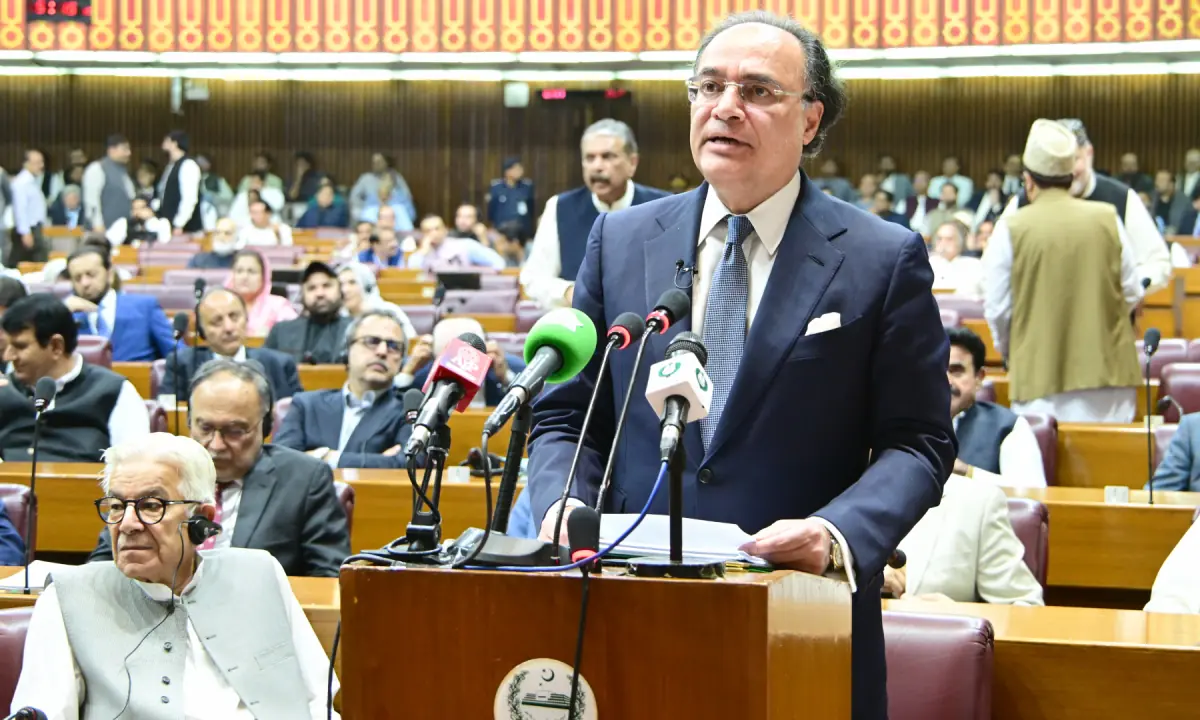
Pakistan's Finance Minister Muhammad Aurangzeb presented a Rs18.8 trillion federal budget for fiscal year 2026-27 in the National Assembly on Friday, targeting 4 percent GDP growth, cutting income taxes across four salary slabs, and raising defence spending as the government's top stated priority.
The budget session opened two hours late and was disrupted throughout by loud protests from opposition lawmakers, primarily from the Pakistan Tehreek-e-Insaf. PTI members surrounded the speaker's dais, shouted slogans, tore copies of the budget document, and held placards calling the budget "IMF budget unacceptable". A scuffle broke out between PTI MNA Shahid Khattak and treasury bench members, requiring security staff to intervene.
The budget's single largest line item is debt servicing. Of the Rs18.8 trillion total outlay, Rs8,045 billion is earmarked for markup payments alone, which illustrates just how much of government revenue is consumed before any spending decision is made. Defence has been allocated Rs3,000 billion, which Aurangzeb described as the government's topmost priority, citing regional uncertainty following a US-Israel conflict with Iran that he said caused global fuel prices to spike. The government claims it absorbed Rs128 billion in fuel subsidies to shield consumers from the full price rise.
The most direct relief for salaried workers comes through cuts across four income tax slabs. People earning between Rs2.2 million and Rs3.2 million annually will now be taxed at a maximum of 20 percent instead of 23 percent. The rate for the Rs3.2-4.1 million band drops from 30 percent to 25 percent. Earners in the Rs4.1-5.6 million range will pay 29 percent instead of 35 percent, and those earning Rs5.6-7 million will pay 32 percent rather than 35 percent. The 9 percent surcharge on the salaried class has been abolished entirely. Businesses earning between Rs150 million and Rs500 million annually will see the super tax removed, while larger businesses earning above Rs500 million will see it reduced from 10 percent to 8 percent.
The withholding tax on foreign debit and credit card transactions has been sharply reduced from 5 percent to 0.5 percent, a change that will directly lower costs for Pakistanis paying for overseas subscriptions, travel, and imports. Taxes on sanitary pads and contraceptives have been removed entirely. For the technology sector, the Final Tax Regime for IT companies and freelance exporters has been extended for three years until FY30, giving the industry policy certainty.
Government employees will receive a 7 percent salary raise, with the same increase applied to pensioners. The minimum wage has been proposed to rise by 10 percent. The Benazir Income Support Programme budget has been raised 17 percent to Rs838 billion, with coverage set to expand to 12 million families. Rs71 billion has been set aside for the PM's Apna Ghar housing scheme, which offers mortgages at a 5 percent rate.
The Federal Board of Revenue has been set a tax collection target of Rs15,264 billion for FY2026-27, a 17.6 percent increase over the outgoing year's Rs12,983 billion. Under the National Finance Commission Award, Rs8,848 billion of that is to be transferred to provinces. However, the federal government has introduced a new arrangement where provinces will return funds above a protected floor of Rs13,350 billion to the federal government as grants under Article 164 of the Constitution for what Aurangzeb called "strategic national requirements". This mechanism, framed as "cooperative federalism", is set to run through FY27 and be renewed for FY28 and FY29 in consultation with provinces. It is worth watching how this arrangement plays out in practice, since it effectively claws back a portion of provincial transfers for central spending.
The fiscal deficit is targeted at 3.6 percent of GDP, down from the 4 percent expected for the outgoing year and sharply lower than the 7.8 percent recorded in June 2023. A primary surplus of 2 percent of GDP is being targeted, a metric closely watched by the International Monetary Fund as part of Pakistan's ongoing programme. Federal non-tax revenue is budgeted at Rs5,336 billion. The federal PSDP allocation stands at Rs1,000 billion, rising to Rs1,451 billion when state-owned enterprise and public-private partnership funds are included.
Aurangzeb pointed to a string of macroeconomic improvements. Foreign exchange reserves have climbed to $17 billion from $4 billion three years ago. Remittances reached $38 billion in the first 11 months of FY26 and are projected to exceed $41 billion by year-end, which would be a record. The economy's size has grown to $452 billion and per capita income has risen to $1,901 from $1,751 last year. FBR revenue has roughly doubled over three years, from Rs7,200 billion in FY23 to an expected Rs13,000 billion by end-FY26. The Pakistan Stock Exchange added 173,000 new investors over the past year.
A notable new initiative is the National Artificial Intelligence Ecosystem Development Programme, listed as a flagship $1 billion project. No further operational details were disclosed in the budget speech.
The budget session also surfaced coalition tensions. The PPP, which supports the PML-N-led government but governs Sindh separately, initially signalled Bilawal Bhutto Zardari might skip the session over a water dispute, with PPP members holding placards citing a 48 percent water shortage in Sindh and criticising the Indus River Systems Authority. After a meeting with Deputy Prime Minister Ishaq Dar and Law Minister Azam Nazeer Tarar at Parliament, Bilawal attended. PPP spokesperson Shazia Marri said the party's participation was "token", signalling ongoing friction within the coalition that could shape the budget's passage through Parliament in the coming weeks.
India's government plans to amend the Payment and Settlement Systems Act to restore UPI merchant discount rates, ending the zero-MDR regime in place since January 2020.
India's government has introduced the Taxation and Other Laws (Amendment) Bill, 2026, proposing changes to payments regulation, income tax, and the Finance Act to attract FDI and support Make in India. The Bill's final shape will depend on parliamentary debate and committee review.
The government's Taxation and Other Laws (Amendment) Bill, 2026, proposes to replace the blanket UPI MDR ban with a system allowing the Centre to notify which payment modes stay fee-free.
Prime Minister Narendra Modi inaugurated the Rs 5,000 crore Bhogapuram greenfield airport in Andhra Pradesh, built under a public-private partnership model. He also laid foundation stones for infrastructure projects worth nearly Rs 18,000 crore in the state, signalling a broad investment push for the region.