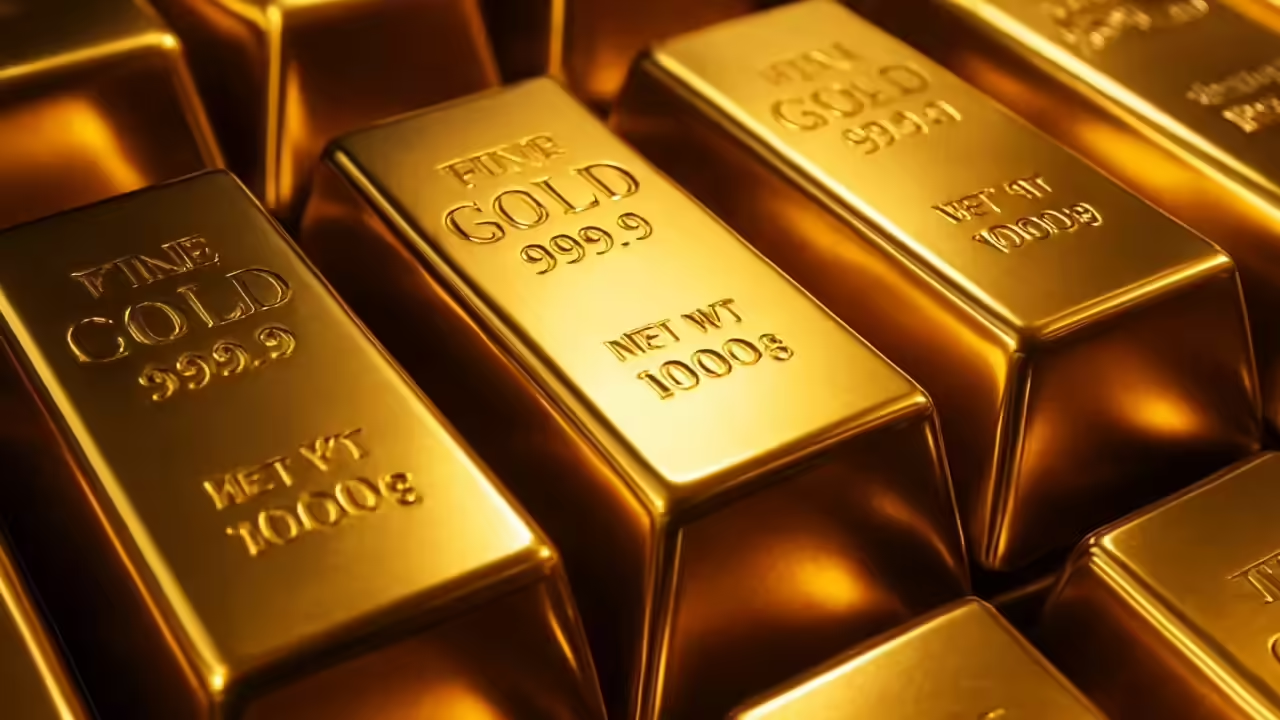
Gold prices held steady as investors balanced competing signals: a partial ceasefire between Hezbollah and Israel on one side, and active U.S.-Iran negotiations on the other. Neither development was decisive enough to push bullion sharply in either direction, leaving the market in a holding pattern.
Gold tends to rise when geopolitical tension escalates and fall when tensions ease. The partial Hezbollah-Israel ceasefire reduced some of the war-risk premium that had supported prices in recent weeks. But ongoing U.S.-Iran talks introduced fresh uncertainty, keeping investors from moving too far in either direction. When the outcome of a major diplomatic process is unclear, gold often stays range-bound as traders wait for confirmation before committing capital.
Beyond geopolitics, inflation concerns are adding another layer of complexity. If inflation remains sticky, central banks may have to keep interest rates higher for longer. Higher rates raise the cost of holding gold, which pays no yield, so rate expectations directly shape demand for bullion. The market is currently pricing in scenarios that pull in opposite directions: inflation that supports gold as a store of value, versus rate hikes that make it less attractive compared to yield-bearing assets.
What Investors Are Watching
Two near-term data points are driving positioning right now. U.S. employment figures are due, and the numbers matter because a strong jobs market gives the Federal Reserve more room to hold rates high or raise them further. Weak jobs data, by contrast, could signal a slowdown that prompts a more cautious Fed, which would typically lift gold.
Remarks from Federal Reserve officials are also in focus. Any signal about the pace or endpoint of rate policy will be read closely by gold traders. A hawkish tone, suggesting more rate increases ahead, would pressure gold. A softer tone, hinting that the tightening cycle is near its end, would likely support prices.
Why It Matters
Gold is widely held as a hedge against both inflation and geopolitical instability. When both factors are live and unresolved at the same time, the market tends to stay cautious rather than make a directional bet. That is the situation now: multiple open variables, each capable of moving prices meaningfully, with no clear resolution in sight.
For broader financial markets, gold's steadiness reflects a wider sense of investor hesitation. Equities, currencies, and bonds are all parsing the same uncertain signals from the Middle East and from the Fed. Gold's flat performance is less a sign of calm and more a sign that no one wants to be caught on the wrong side of a surprise development.
The next clear catalyst is likely to come from either the U.S. jobs report or a concrete update on the Iran talks. Until then, gold is likely to stay rangebound, with traders staying nimble on both sides of the trade.