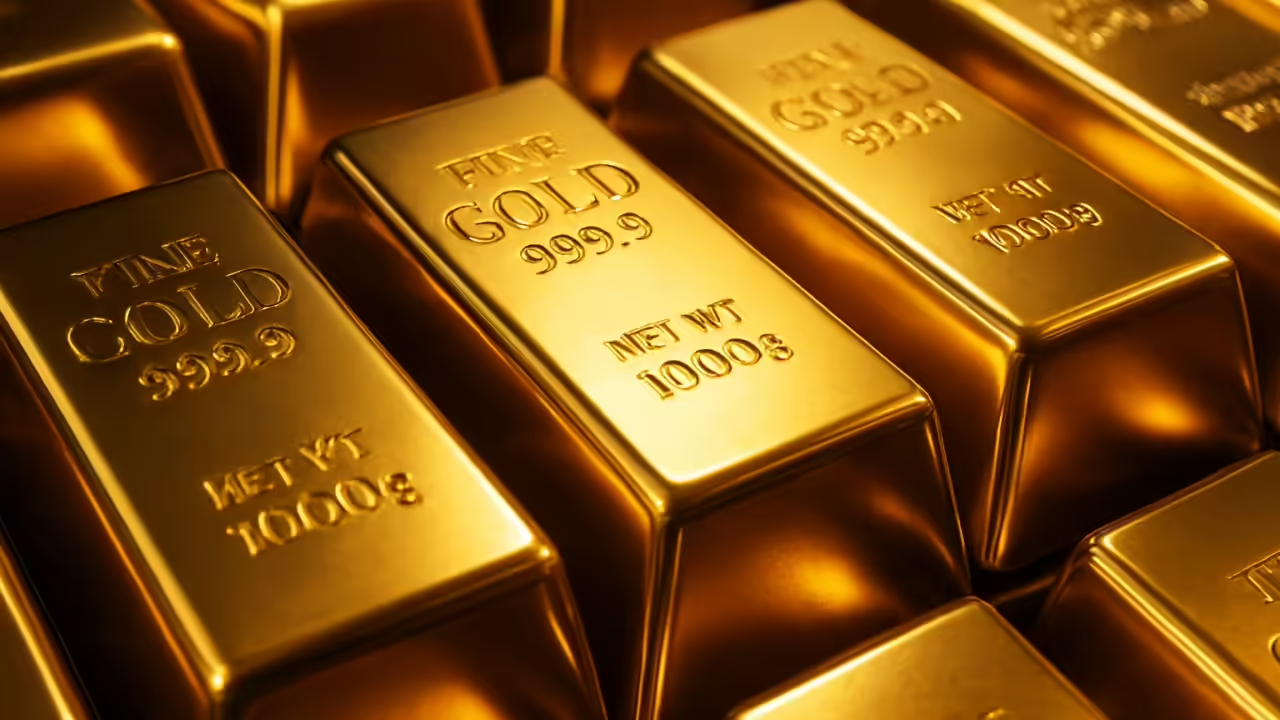
Gold is heading for a fourth straight weekly loss as rising bets on U.S. Federal Reserve rate hikes push the dollar higher, making gold more expensive for buyers in other currencies and reducing its appeal as a yield-free asset.
The metal has been under consistent pressure since rate-hike expectations began firming up. When the Fed signals a tighter policy path, bond yields rise and the dollar strengthens. Both moves work against gold: a stronger dollar directly raises gold's price in non-dollar markets, while higher yields make interest-bearing assets more competitive alternatives.
Dollar strength is the main driver
The dollar's recent gains are the clearest near-term force pressing on gold prices. Investors pricing in further Fed tightening tend to rotate toward dollar-denominated assets that now offer higher returns. Gold, which pays no interest or dividend, loses ground in that environment. Four consecutive weeks of declines suggests the market is not treating this as a short-term blip but as a sustained repricing of gold's value relative to a high-rate world.
Inflation data adds a complicating layer. There is some evidence that price pressures may be moderating, which would ordinarily give the Fed room to pause. But underlying inflation, the kind that strips out food and energy, remains elevated enough to keep rate-hike bets alive. Until that changes meaningfully, the Fed's bias toward tightening is unlikely to reverse, and gold faces continued headwinds from dollar strength.
Geopolitical risk adds a wildcard
One factor that could interrupt gold's slide is geopolitical tension. Investors are watching a fragile U.S.-Iran peace agreement closely after an incident in the Strait of Hormuz raised fresh concerns about regional stability. The Strait of Hormuz is a narrow waterway through which a significant share of global oil exports pass, making any disruption there a serious concern for energy markets and, by extension, broader risk sentiment.
Gold typically benefits from geopolitical uncertainty because investors treat it as a safe store of value when other assets look risky. If tensions in the Strait of Hormuz escalate, or if the U.S.-Iran agreement breaks down further, some investors may move back into gold as a hedge. That dynamic has not been strong enough so far to offset dollar pressure, but it remains a live variable worth tracking.
The tension between these two forces, dollar strength on one side and geopolitical risk on the other, defines gold's near-term trading range. For gold to recover, either the Fed would need to signal a pause or pivot, or geopolitical risks would need to escalate enough to drive a genuine flight to safety.
For now, the Fed narrative is winning. Rate expectations are firm, the dollar is strong, and gold buyers lack a compelling catalyst to step back in aggressively. Traders watching gold should focus on any shift in U.S. inflation data or Fed commentary as the most likely trigger for a trend change.
Longer term, gold's position depends on whether the Fed can bring inflation down without triggering a sharp economic slowdown. A hard landing scenario, where rate hikes push the economy into recession, could actually revive gold demand as investors seek safety. But that scenario remains uncertain for now, and the market is not pricing it in strongly enough to lift gold out of its current losing streak.