India to Restore UPI Merchant Fees, PhonePe Gains Most
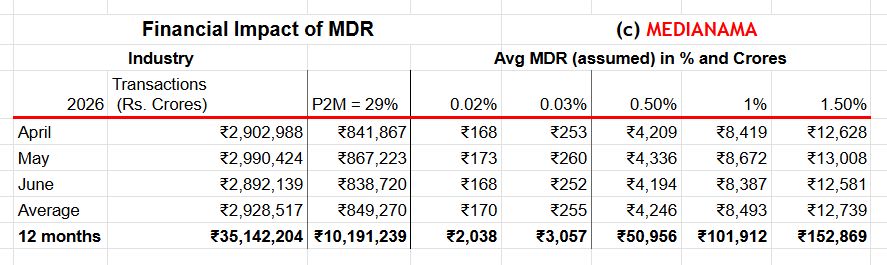
India's government plans to amend the Payment and Settlement Systems Act to restore UPI merchant discount rates, ending the zero-MDR regime in place since January 2020.
Key Takeaways
June 6, 2026 · 4 min read · By Rishabh Bhardwaj
·
AI-assisted, human-reviewed · Our editorial standards
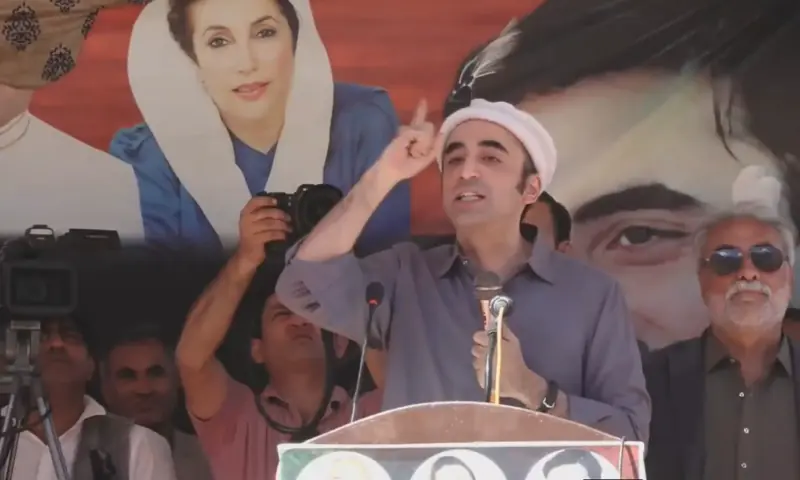
PPP Chairperson Bilawal Bhutto-Zardari used an election rally in Shigar on Monday to demand that any new constitutional amendment must protect the rights of Gilgit-Baltistan, framing the June 7 GB elections as a test of whether the region can win meaningful political and economic autonomy.
Bilawal's central argument was that GB has long had its fate decided in Islamabad rather than by its own people. He called for GB elections to be held at the same time as general elections across Pakistan, saying that synchronising the two would give GB's campaign for self-rule, which he called haq-i-hakimiyat, its best chance of real progress. Without that alignment, he argued, the region's political voice remains structurally weaker than that of other provinces.
He went further on economic control, demanding that all political, financial, and administrative authority be transferred to the assemblies in Gilgit and Muzaffarabad. He singled out the Ministry of Kashmir Affairs and Gilgit-Baltistan for abolition, questioning its value and suggesting that if the federal government claims it lacks resources, eliminating that ministry should be the first cut. The argument is direct: a ministry that governs GB from a distance, in Bilawal's framing, consumes federal budget without delivering local control.
Bilawal said the PPP would work to extend the same rights and resources to GB as those guaranteed to other units under the 18th Amendment, Pakistan's landmark devolution law that transferred significant federal powers to provinces in 2010. GB currently lacks full provincial status, which means it does not automatically benefit from 18th Amendment protections. Bringing GB under that framework would be a structural change, not just a symbolic one, affecting budgetary transfers, land ownership rules, and legislative authority.
On the question of land and natural resources, Bilawal drew a sharp contrast with rival parties, accusing them of treating GB's mountains, minerals, and marble as assets to be managed centrally. He told the crowd those resources belong to them, not to Islamabad, and linked local ownership directly to local employment. His pitch was that economic rights and political rights reinforce each other: without ownership, youth employment cannot be secured.
Bilawal also addressed election credibility directly, telling supporters to secure Form-45, the polling station result slip signed by a presiding officer, after casting their votes. He pledged the PPP would handle Form-47, the constituency-level consolidated result. The remark was a pointed reference to past allegations of result tampering. He then walked it back slightly, adding that the PPP expected free and fair elections and did not anticipate losing seats.
On the Benazir Income Support Programme, Bilawal pushed back hard against proposals to devolve it to provinces. He argued that BISP is the federal government's only reliable mechanism to reach the poor in remote areas like GB, and that devolving it would effectively end the programme for regions that lack the provincial budget to sustain it. He framed any such move as a conspiracy against low-income families and vowed the PPP would protect the scheme.
He also referenced the US-Israeli conflict with Iran as a source of global financial stress, using it to argue that voters in a worsening economic environment should elect representatives with a track record of supporting poor and working-class citizens. He cast the PPP, through BISP and other social programmes, as the only credible option for farmers, labourers, and low-income groups.
The June 7 GB elections will test whether Bilawal's combination of autonomy demands, resource rights, and social protection messaging can deliver the PPP a strong mandate in a region where federal policy decisions have historically outweighed local legislative authority. The constitutional amendment question, left open by Bilawal's conditional framing, is the bigger variable: what gets written into any future amendment will determine whether these campaign pledges have a legal path to becoming real policy.
India's government plans to amend the Payment and Settlement Systems Act to restore UPI merchant discount rates, ending the zero-MDR regime in place since January 2020.
India's government has introduced the Taxation and Other Laws (Amendment) Bill, 2026, proposing changes to payments regulation, income tax, and the Finance Act to attract FDI and support Make in India. The Bill's final shape will depend on parliamentary debate and committee review.
The government's Taxation and Other Laws (Amendment) Bill, 2026, proposes to replace the blanket UPI MDR ban with a system allowing the Centre to notify which payment modes stay fee-free.
Prime Minister Narendra Modi inaugurated the Rs 5,000 crore Bhogapuram greenfield airport in Andhra Pradesh, built under a public-private partnership model. He also laid foundation stones for infrastructure projects worth nearly Rs 18,000 crore in the state, signalling a broad investment push for the region.