India to Restore UPI Merchant Fees, PhonePe Gains Most
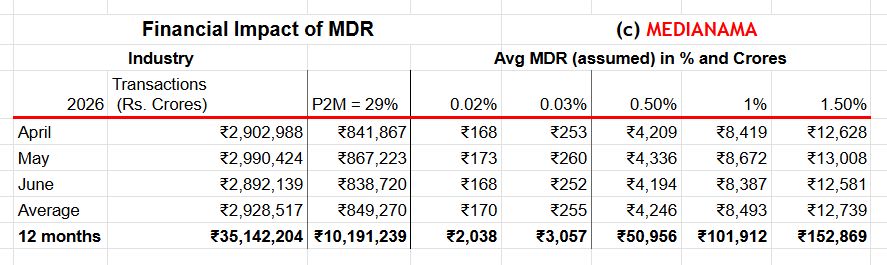
India's government plans to amend the Payment and Settlement Systems Act to restore UPI merchant discount rates, ending the zero-MDR regime in place since January 2020.
Key Takeaways
May 2, 2026 · 3 min read · By Rishabh Bhardwaj
·
AI-assisted, human-reviewed · Our editorial standards
India's Finance Ministry has officially notified changes to its foreign direct investment rules under the Foreign Exchange Management Act (FEMA), making it easier for foreign companies with minority Chinese shareholding to invest in India without going through the government approval route.
The key change: foreign entities where Chinese investors hold up to 10% of the stake will now qualify for the automatic route, meaning they don't need prior government clearance to invest in India. Previously, any foreign company with Chinese ownership, even a small slice, faced the stricter government approval process. The 10% threshold creates a meaningful carve-out for companies that are primarily owned and controlled elsewhere but have some Chinese minority participation.
This relaxation is explicitly limited to foreign entities not registered in China, Hong Kong, or any other country sharing a land border with India. That means companies incorporated in, say, the United States, United Kingdom, or Singapore, but with a Chinese fund or institution holding a minority stake, could now invest more freely. The rule change does not help Chinese or Hong Kong-incorporated companies at all; they remain under the prior approval regime.
The practical effect is significant for global venture capital and private equity funds that have Chinese limited partners or co-investors as minority shareholders. Many such funds had been caught in a regulatory grey zone, unable to deploy capital into India efficiently because of their Chinese LP exposure. The 10% ceiling gives those funds a clear, workable threshold.
India tightened FDI rules for border-sharing countries in April 2020, responding to concerns about opportunistic acquisitions during the pandemic period. Since then, the rules have created friction for a wide range of foreign investors who had indirect Chinese connections. This notification is a calibrated easing, it does not reverse the 2020 framework but draws a sharper line between minority exposure and material Chinese control.
For Indian startups and businesses seeking foreign capital, this could reopen access to a set of global funds that had been effectively sidelined. Fund managers who were routing capital through complex structures to avoid the approval requirement may now have a cleaner path. The 10% cap also gives Indian regulators a defined line to monitor, rather than adjudicating case by case.
The immediate question is whether the government will clarify how the 10% stake is calculated, direct holding only, or including indirect or beneficial ownership. That detail will determine how practically useful the exemption is for multi-layered fund structures. Investors and their legal advisors will be watching for further guidance from the Reserve Bank of India or the Department for Promotion of Industry and Internal Trade.
India's government plans to amend the Payment and Settlement Systems Act to restore UPI merchant discount rates, ending the zero-MDR regime in place since January 2020.
India's government has introduced the Taxation and Other Laws (Amendment) Bill, 2026, proposing changes to payments regulation, income tax, and the Finance Act to attract FDI and support Make in India. The Bill's final shape will depend on parliamentary debate and committee review.
The government's Taxation and Other Laws (Amendment) Bill, 2026, proposes to replace the blanket UPI MDR ban with a system allowing the Centre to notify which payment modes stay fee-free.
Prime Minister Narendra Modi inaugurated the Rs 5,000 crore Bhogapuram greenfield airport in Andhra Pradesh, built under a public-private partnership model. He also laid foundation stones for infrastructure projects worth nearly Rs 18,000 crore in the state, signalling a broad investment push for the region.