India to Restore UPI Merchant Fees, PhonePe Gains Most
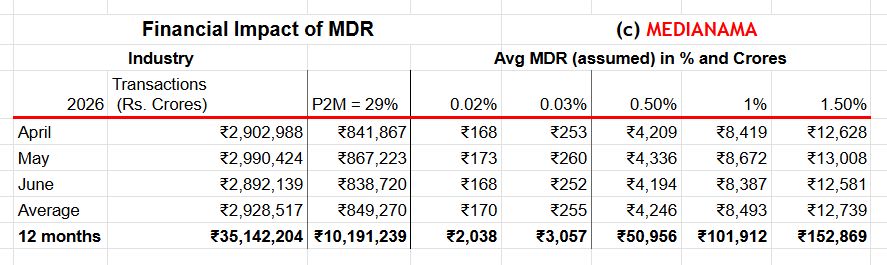
India's government plans to amend the Payment and Settlement Systems Act to restore UPI merchant discount rates, ending the zero-MDR regime in place since January 2020.
Key Takeaways
May 2, 2026 · 2 min read · By Rishabh Bhardwaj
·
AI-assisted, human-reviewed · Our editorial standards
The Finance Ministry has formally notified 100% foreign direct investment (FDI) in India's insurance sector by amending the Foreign Exchange Management Act (FEMA) rules. The move removes the previous 74% ceiling on foreign ownership in Indian insurance companies, opening the sector fully to overseas capital.
One carve-out applies: the Life Insurance Corporation of India (LIC) retains a separate, lower cap of 20% for foreign investment. LIC's sheer size and its status as a state-owned institution make it a special case, the government has historically kept a tighter grip on foreign exposure there.
India has progressively raised the FDI ceiling in insurance over the past decade, from 26% to 49%, then to 74% in 2021, and now to 100%. Each step was aimed at pulling in more long-term foreign capital to deepen insurance penetration, which remains well below the global average despite a large and growing population.
At 100%, foreign insurers can now set up and fully own subsidiaries in India without needing a local joint-venture partner. This changes the calculus for global insurance groups that were previously reluctant to enter or scale up because they could not hold a controlling majority. Full ownership means they can consolidate financials, repatriate profits more freely, and align Indian operations with global strategy, all of which lower the practical barriers to entry.
Existing joint ventures between Indian promoters and foreign insurers may see renegotiation pressure, as the foreign partner now has the option to buy out the Indian side entirely. New entrants, particularly large global insurers sitting out the Indian market, now face fewer structural reasons to delay.
For Indian insurance companies listed on exchanges, increased foreign interest could mean higher valuations and more capital availability. However, domestic promoters in current JV structures could face dilution or exit pressure depending on how agreements are structured.
The LIC cap at 20% keeps the country's largest insurer, and a major conduit for government borrowing, at arm's length from foreign control. This protects both policy continuity and the government's ability to use LIC as a financial tool when needed.
The formal FEMA notification gives the change legal force, meaning foreign investors and their Indian partners can begin acting on the new rules immediately. Watch for announcements from global insurance majors currently holding minority stakes in Indian companies, they now have the regulatory green light to move toward full ownership.
India's government plans to amend the Payment and Settlement Systems Act to restore UPI merchant discount rates, ending the zero-MDR regime in place since January 2020.
India's government has introduced the Taxation and Other Laws (Amendment) Bill, 2026, proposing changes to payments regulation, income tax, and the Finance Act to attract FDI and support Make in India. The Bill's final shape will depend on parliamentary debate and committee review.
The government's Taxation and Other Laws (Amendment) Bill, 2026, proposes to replace the blanket UPI MDR ban with a system allowing the Centre to notify which payment modes stay fee-free.
Prime Minister Narendra Modi inaugurated the Rs 5,000 crore Bhogapuram greenfield airport in Andhra Pradesh, built under a public-private partnership model. He also laid foundation stones for infrastructure projects worth nearly Rs 18,000 crore in the state, signalling a broad investment push for the region.