India to Restore UPI Merchant Fees, PhonePe Gains Most
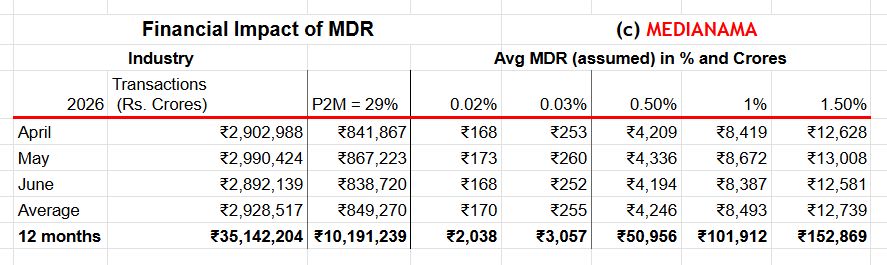
India's government plans to amend the Payment and Settlement Systems Act to restore UPI merchant discount rates, ending the zero-MDR regime in place since January 2020.
Key Takeaways
May 2, 2026 · 2 min read · By Rishabh Bhardwaj
·
AI-assisted, human-reviewed · Our editorial standards

A federal appeals court has ruled that mifepristone, the most commonly used abortion medication in the United States, cannot be sent to patients by mail. The decision strikes at one of the main ways abortion access has been preserved since the Supreme Court overturned Roe v. Wade in 2022.
After the Supreme Court removed the federal right to abortion in 2022, many states moved quickly to ban or restrict the procedure. Telehealth providers stepped in to fill the gap: doctors in states where abortion remains legal prescribe mifepristone remotely, and the pills are mailed directly to patients in restricted states. This route became a critical lifeline for millions of people who could not travel to a clinic.
Mifepristone is approved by the FDA and is used in the majority of abortions in the US. It works by blocking a hormone needed for pregnancy to continue, and is typically used in combination with a second drug, misoprostol. The two-drug regimen is considered safe and effective by major medical bodies.
The appeals court ruling means mail delivery of mifepristone is no longer permitted under its jurisdiction. Patients in states with abortion restrictions who relied on telehealth prescriptions and mail-order delivery will lose that option if the ruling stands or is upheld further. It also raises the compliance burden for telehealth providers who have built services around this model.
The ruling is likely to face further legal challenges. It could be appealed to the Supreme Court, which has already weighed in on mifepristone access in a separate case. That earlier case, decided in 2024, kept the drug available nationally on procedural grounds without resolving the underlying access questions, meaning the legal fight over mail delivery remains open.
For now, providers and patients in affected states face immediate uncertainty. Those tracking this case should watch whether the ruling is stayed pending appeal, which states fall under the court's jurisdiction, and whether the Supreme Court agrees to hear a follow-up challenge.
India's government plans to amend the Payment and Settlement Systems Act to restore UPI merchant discount rates, ending the zero-MDR regime in place since January 2020.
India's government has introduced the Taxation and Other Laws (Amendment) Bill, 2026, proposing changes to payments regulation, income tax, and the Finance Act to attract FDI and support Make in India. The Bill's final shape will depend on parliamentary debate and committee review.
The government's Taxation and Other Laws (Amendment) Bill, 2026, proposes to replace the blanket UPI MDR ban with a system allowing the Centre to notify which payment modes stay fee-free.
Prime Minister Narendra Modi inaugurated the Rs 5,000 crore Bhogapuram greenfield airport in Andhra Pradesh, built under a public-private partnership model. He also laid foundation stones for infrastructure projects worth nearly Rs 18,000 crore in the state, signalling a broad investment push for the region.