The Securities and Exchange Board of India has asked top brokers to submit client-level profit-and-loss data for the January, March quarter, according to people familiar with the matter. The request targets the derivatives segment, where Sebi has spent the past year rolling out tightening measures aimed at curbing retail speculation, particularly in index options. By collecting Q4 figures, the regulator can stitch together a full fiscal-year picture of how retail traders fared under the new regime. Sebi's measures, which included higher margin requirements, revised lot sizes, and contract expiry changes, were designed to reduce turnover concentration and limit losses among small participants. Q4 data will let the regulator test whether those interventions shifted profit-and-loss outcomes in any measurable way. If the data show persistent retail losses despite the rule changes, Sebi could justify further restrictions; if outcomes improved, the current framework may hold. Brokers with large retail derivatives books face the most direct compliance burden, and the findings could also influence how exchanges structure product offerings going forward.
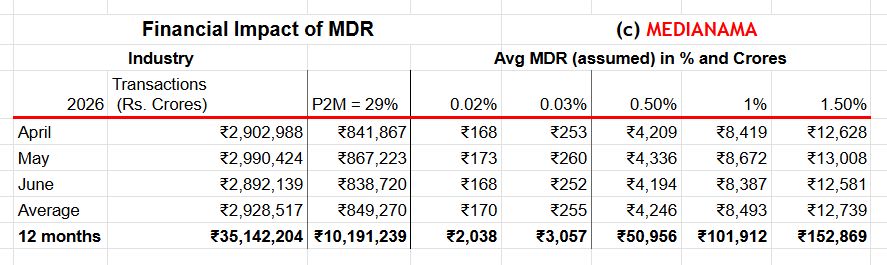
India's government plans to amend the Payment and Settlement Systems Act to restore UPI merchant discount rates, ending the zero-MDR regime in place since January 2020.
India's government has introduced the Taxation and Other Laws (Amendment) Bill, 2026, proposing changes to payments regulation, income tax, and the Finance Act to attract FDI and support Make in India. The Bill's final shape will depend on parliamentary debate and committee review.
The government's Taxation and Other Laws (Amendment) Bill, 2026, proposes to replace the blanket UPI MDR ban with a system allowing the Centre to notify which payment modes stay fee-free.
Prime Minister Narendra Modi inaugurated the Rs 5,000 crore Bhogapuram greenfield airport in Andhra Pradesh, built under a public-private partnership model. He also laid foundation stones for infrastructure projects worth nearly Rs 18,000 crore in the state, signalling a broad investment push for the region.