India's delimitation debate pits two constitutional principles against each other: democratic representation, which weights seats by population, and federalism, which distributes power across states regardless of size. The tension has sharpened ahead of the scheduled post-2026 census-based delimitation exercise, when parliamentary constituency boundaries will be redrawn using fresh population data. Southern states, which invested heavily in family planning over decades, face losing seats to more populous northern states that did not achieve comparable fertility reductions. The mechanism is straightforward: if Lok Sabha seat allocation tracks population, slower-growing states shrink in parliamentary weight even as their per-capita economic contribution and governance performance improve. This creates a structural disincentive, effectively penalizing states for complying with national demographic objectives. The resolution requires weighing individual voter equality, a core democratic norm, against interstate parity, a federalist safeguard. Whether the delimitation formula adjusts seat counts, introduces compensatory fiscal transfers, or freezes the current allocation will determine how the Union manages a fault line between its two foundational organizing principles. Legislative design choices in the coming years carry long-term consequences for center-state fiscal bargaining and political representation.
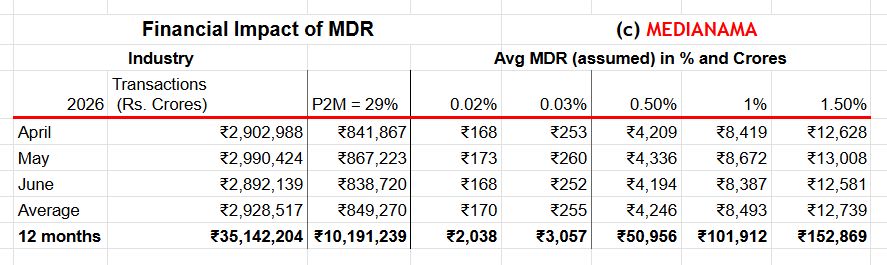
India's government plans to amend the Payment and Settlement Systems Act to restore UPI merchant discount rates, ending the zero-MDR regime in place since January 2020.
India's government has introduced the Taxation and Other Laws (Amendment) Bill, 2026, proposing changes to payments regulation, income tax, and the Finance Act to attract FDI and support Make in India. The Bill's final shape will depend on parliamentary debate and committee review.
The government's Taxation and Other Laws (Amendment) Bill, 2026, proposes to replace the blanket UPI MDR ban with a system allowing the Centre to notify which payment modes stay fee-free.
Prime Minister Narendra Modi inaugurated the Rs 5,000 crore Bhogapuram greenfield airport in Andhra Pradesh, built under a public-private partnership model. He also laid foundation stones for infrastructure projects worth nearly Rs 18,000 crore in the state, signalling a broad investment push for the region.