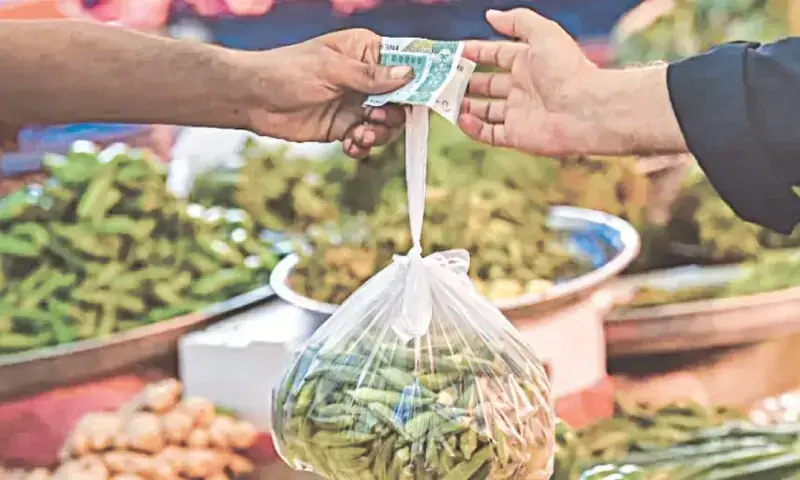
Pakistan's short-term inflation rose 13.52 percent year on year in the week ending July 2, 2026, driven by surging energy costs and elevated food prices, according to data released by the Pakistan Bureau of Statistics. The Sensitive Price Index, which tracks weekly price changes for 51 essential items, has now posted an annual increase for 45 consecutive weeks, pointing to a sustained squeeze on household budgets.
The sharpest pressure came from energy. Electricity charges jumped 49.14 percent year on year, and liquefied petroleum gas rose 44.08 percent over the same period. Wheat flour, a staple for most Pakistani households, was up 68.47 percent on an annual basis. Together, these three items reflect how the cost of cooking, heating, and basic nutrition has compounded across income groups over the past year.
Food inflation remained broadly elevated. Prices rose sharply for onions, tomatoes, potatoes, mutton, beef, and wheat flour. Perishable vegetables are notoriously volatile, and seasonal supply disruptions tend to amplify their price swings in weekly SPI readings. But the persistence of these gains across 45 weeks signals more than short-term seasonal noise.
A slight pause, but no relief yet
On a week-on-week basis, the SPI fell 0.98 percent compared to the prior week. That dip reflects a steep cut in petroleum product prices over the two weeks before the reference date, which the PBS data confirmed had reached unprecedented levels. Lower petrol and diesel prices reduce transport costs, which in turn soften distribution costs for food and other goods. That transmission, however, takes time.
Despite international crude oil prices falling below pre-war levels, the government has kept petrol and diesel prices unchanged since the Friday before the reference week. That decision limits any near-term pass-through to consumers at the pump and keeps transport costs elevated across the broader economy. Fuel price policy in Pakistan is set periodically by the government, and the gap between international prices and domestic retail rates is a key lever for managing both fiscal revenue and household cost relief.
What it means for consumers and policy
The weekly SPI is a leading indicator of cost-of-living pressure, particularly for lower-income urban households who spend a larger share of income on food and energy. When electricity, cooking gas, and wheat flour all rise simultaneously, the effect on real purchasing power is immediate and visible at the household level.
The 45-week streak of annual increases means Pakistani consumers have faced uninterrupted inflation pressure since roughly August 2025. The pace of growth has slowed recently, partly because the base period from a year ago already included elevated prices, and partly due to the fuel price cuts. But slowing does not mean reversing. A 13.52 percent annual reading is still a substantial burden, and the items driving it, power and staple foods, are not discretionary.
For monetary policymakers at the State Bank of Pakistan, persistent SPI pressure alongside high food and energy costs complicates the path to rate cuts. Any signal that inflation is durably declining would support easing, but a 45-week run of annual gains makes that case harder to argue in the short term.
What to watch in coming weeks: whether the government passes on the international oil price decline to domestic fuel prices at the next scheduled revision, and whether perishable food prices cool as seasonal supply improves. Both would reduce the week-on-week index further. A sustained drop in the annual rate, however, would require energy tariff relief or a meaningful easing in wheat flour prices, neither of which appears imminent based on current policy signals.