India to Restore UPI Merchant Fees, PhonePe Gains Most
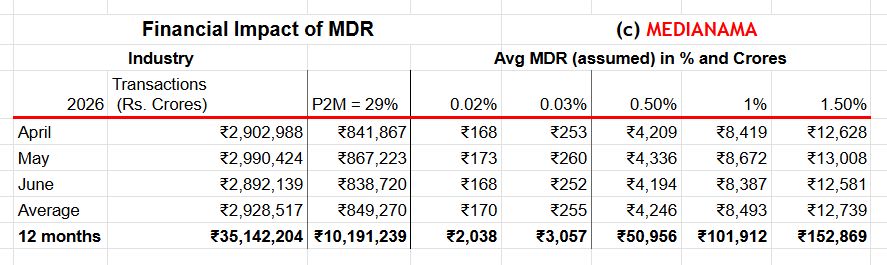
India's government plans to amend the Payment and Settlement Systems Act to restore UPI merchant discount rates, ending the zero-MDR regime in place since January 2020.
Key Takeaways
May 2, 2026 · 3 min read · By Rishabh Bhardwaj
·
AI-assisted, human-reviewed · Our editorial standards

India has opened its insurance sector to full foreign ownership. The Centre has notified 100% foreign direct investment (FDI) in insurance companies under the automatic route, meaning foreign investors no longer need prior government approval to buy into Indian insurers. The change is now operational under the Insurance Laws (Amendment) Act, 2025, which was cleared in December 2025.
Until now, foreign investors could hold a maximum 74% stake in an Indian insurance company. The new rules remove that ceiling entirely, making India one of the more open insurance markets globally. The shift applies to all insurance companies except the Life Insurance Corporation of India (LIC), where foreign investment remains capped at 20%.
Foreign investors can now acquire up to 100% in an Indian insurer without applying to the government, but they still need clearance from the Insurance Regulatory and Development Authority of India (IRDAI). Any increase in foreign shareholding must follow pricing norms set by the Reserve Bank of India (RBI) under the Foreign Exchange Management Act (FEMA). Companies receiving foreign investment must also appoint at least one resident Indian citizen as chairperson, managing director, or CEO, a guardrail the government has retained to keep local leadership in place.
The 100% FDI limit extends to insurance intermediaries too, brokers, third-party administrators, and surveyors, consistent with rules already in place since 2020 when India first opened intermediaries to full foreign ownership.
The FDI change is part of a wider structural overhaul of the insurance sector. The amendment package includes lower paid-up capital requirements, which makes it easier to start an insurance company, and a composite licence framework that lets a single entity offer multiple types of insurance. Changes to the LIC Act, 1956 and the IRDAI Act, 1999 are also included, giving insurers more operational flexibility.
The government says the measure is designed to attract stable, long-term capital, facilitate technology transfer, and improve insurance penetration, a persistent gap in India where a large share of the population remains uninsured. Finance Minister Nirmala Sitharaman first announced the proposal in the Union Budget for 2026.
IRDAI projects India's insurance market will become the sixth largest globally within the next decade. The insurtech segment is also growing fast, driven by digital distribution and data-driven underwriting. Full FDI access could accelerate both trends by bringing in global capital and technology-led business models.
For domestic insurers and startups, the trade-off is real. More foreign capital can speed up product development and digital adoption. But global players with larger balance sheets and advanced technology could also sharpen competition significantly. The next signal to watch is whether large foreign insurers move to acquire or increase existing stakes, and how IRDAI frames its regulatory clearance process under the new rules.
India's government plans to amend the Payment and Settlement Systems Act to restore UPI merchant discount rates, ending the zero-MDR regime in place since January 2020.
India's government has introduced the Taxation and Other Laws (Amendment) Bill, 2026, proposing changes to payments regulation, income tax, and the Finance Act to attract FDI and support Make in India. The Bill's final shape will depend on parliamentary debate and committee review.
The government's Taxation and Other Laws (Amendment) Bill, 2026, proposes to replace the blanket UPI MDR ban with a system allowing the Centre to notify which payment modes stay fee-free.
Prime Minister Narendra Modi inaugurated the Rs 5,000 crore Bhogapuram greenfield airport in Andhra Pradesh, built under a public-private partnership model. He also laid foundation stones for infrastructure projects worth nearly Rs 18,000 crore in the state, signalling a broad investment push for the region.