India to Restore UPI Merchant Fees, PhonePe Gains Most
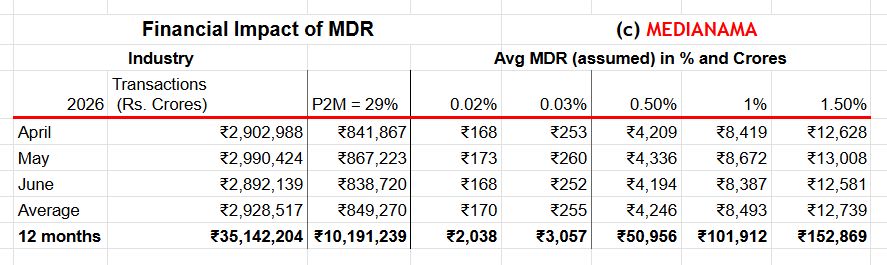
India's government plans to amend the Payment and Settlement Systems Act to restore UPI merchant discount rates, ending the zero-MDR regime in place since January 2020.
Key Takeaways
July 7, 2026 · 5 min read · By Rishabh Bhardwaj
·
AI-assisted, human-reviewed · Our editorial standards
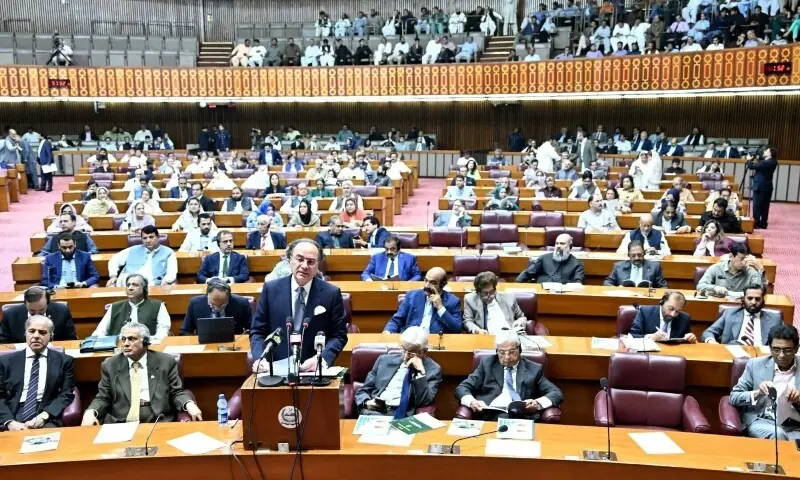
Pakistan's federal budget for 2026-27 delivers a broad package of tax cuts, tariff reductions, and sector-specific relief measures, with the biggest gains going to higher-earning salaried workers, real estate buyers, exporters, and businesses across energy, shipping, and electric vehicles.
The most direct relief for salaried individuals comes through restructured income tax slabs for those earning between Rs2.2 million and Rs7 million a year. The government has raised the threshold for the top 35 percent bracket from Rs4.1 million to Rs7 million, cutting rates for four income bands in between. Those earning Rs2.2 million to Rs3.2 million will now pay 20 percent. The Rs3.2 million to Rs4.1 million band drops from 30 percent to 25 percent. The Rs4.1 million to Rs5.6 million band falls from 35 percent to 29 percent, and the Rs5.6 million to Rs7 million band is reduced from 35 percent to 32 percent. The exemption threshold stays at Rs600,000 and the 1 percent token tax for incomes up to Rs1 million remains. The government estimates this slab restructuring will cost the exchequer Rs830.5 million in foregone revenue. A surcharge on salaried taxpayers has also been abolished.
Super tax, which was levied on high-income earners as a supplementary charge, has been abolished for anyone earning up to Rs500 million annually. For incomes above Rs500 million, the rate drops from 10 percent to 8 percent. Banks, oil and gas exploration and production companies, and fertiliser firms are excluded from these concessions, a carve-out that signals the government is protecting fiscal flows from sectors with relatively inelastic earnings.
Government employees will see salaries rise 7 percent, pensions increase 7 percent, and the minimum wage go up 10 percent, adding some support at the lower end of the income scale.
The real estate sector gets several targeted measures. The tax on deemed income from capital assets in Pakistan has been abolished. Advance tax on property sales under Section 236C has been cut to a flat 2.75 percent from a range of 4.5 to 5.5 percent, and advance tax on purchases under Section 236K drops to a uniform 1.5 percent from a range of 1.5 to 2.5 percent. Capital value tax on foreign assets held by resident Pakistanis has also been removed. These changes are designed to reduce friction in property transactions and encourage more formal documentation of deals.
Exporters benefit from two moves. The combined withholding and advance tax on export proceeds has been trimmed from 2 percent to 1.25 percent. The reduced 0.25 percent tax rate for IT and IT-enabled services exporters, which was due to expire in 2026, has been extended to 2029, giving the sector three more years of cost certainty.
For individuals making foreign payments by card, the advance tax on debit, credit, and prepaid card remittances drops sharply from 5 percent to 0.5 percent. E-commerce sellers with turnover above Rs200 million will now be able to adjust tax deducted on their transactions against their overall liability. A new 10 percent tax credit on investment in electronic systems integrated with the Federal Board of Revenue's computerised network has been introduced to nudge businesses toward digital compliance.
Excise duty on business class international air travel has been cut dramatically. Tickets to North, Central, and South America drop from Rs350,000 to Rs50,000. Europe, the Far East, and Australia go from Rs210,000 to Rs40,000. The Middle East and Africa fall from Rs105,000 to Rs25,000. This is a significant reduction for frequent corporate travellers and could modestly support aviation-related businesses.
On sales tax, magazines receive a new exemption, the so-called tampon tax is abolished, and import relief on CKD kits for electric vehicles is extended to June 30, 2027. Refineries upgrading their facilities, Pakistan International Airlines importing or leasing aircraft parts, and strategic imports linked to the SCO summit and counterterrorism operations all receive exemptions. Shipping investments also qualify for sales tax relief under a new entry in the Sixth Schedule.
Customs duties are being rationalised under the National Tariff Policy for 2025 to 2030. Rates on 92 tariff lines are being cut, with the 20 percent slab moving to 15 percent, 15 percent to 10 percent, and 10 percent to 5 percent. The 5 percent slab is abolished. Additional customs duty is also being eased across more than 3,000 tariff lines, with reductions ranging from 6 percent to 4 percent, 4 percent to 2 percent, and full elimination on 569 lines. Taken together, these cuts are intended to lower input costs for manufacturers and reduce the price of imported goods.
Several other measures round out the package. Special Purpose Vehicles set up for asset-backed securitisation are proposed to receive income tax exemption, which could open new financing channels in capital markets. The withholding tax exemption threshold for small traders doubles from Rs100 million to Rs200 million. Advance tax on payments for foreign television content and advertisements is withdrawn. Charitable and welfare organisations including the Pakistan Red Crescent Society, Bahria Foundation, Shaheen Foundation, and the Sindh Institute of Urology and Transplantation receive extended income tax exemptions.
The breadth of this package signals that the government is trying to pull multiple levers at once: reducing the cost of formal economic activity, encouraging documentation through digital incentives, and directing targeted relief toward sectors it considers strategically important. How much of this translates into actual compliance improvement or investment will depend on implementation, which is where Pakistan's previous reform efforts have often stalled.
India's government plans to amend the Payment and Settlement Systems Act to restore UPI merchant discount rates, ending the zero-MDR regime in place since January 2020.
India's government has introduced the Taxation and Other Laws (Amendment) Bill, 2026, proposing changes to payments regulation, income tax, and the Finance Act to attract FDI and support Make in India. The Bill's final shape will depend on parliamentary debate and committee review.
The government's Taxation and Other Laws (Amendment) Bill, 2026, proposes to replace the blanket UPI MDR ban with a system allowing the Centre to notify which payment modes stay fee-free.
Prime Minister Narendra Modi inaugurated the Rs 5,000 crore Bhogapuram greenfield airport in Andhra Pradesh, built under a public-private partnership model. He also laid foundation stones for infrastructure projects worth nearly Rs 18,000 crore in the state, signalling a broad investment push for the region.