
DLF, Sun Pharma, ITC Lead Heavy Q1 FY27 Results Day
Dozens of major Indian companies including DLF, Sun Pharma, ITC, Bajaj Finserv, Persistent Systems, and Muthoot Finance report Q1 FY27 earnings on August 3, 2026.
Key Takeaways
August 3, 2026 · 3 min read · By Rishabh Bhardwaj
·
AI-assisted, human-reviewed · Our editorial standards
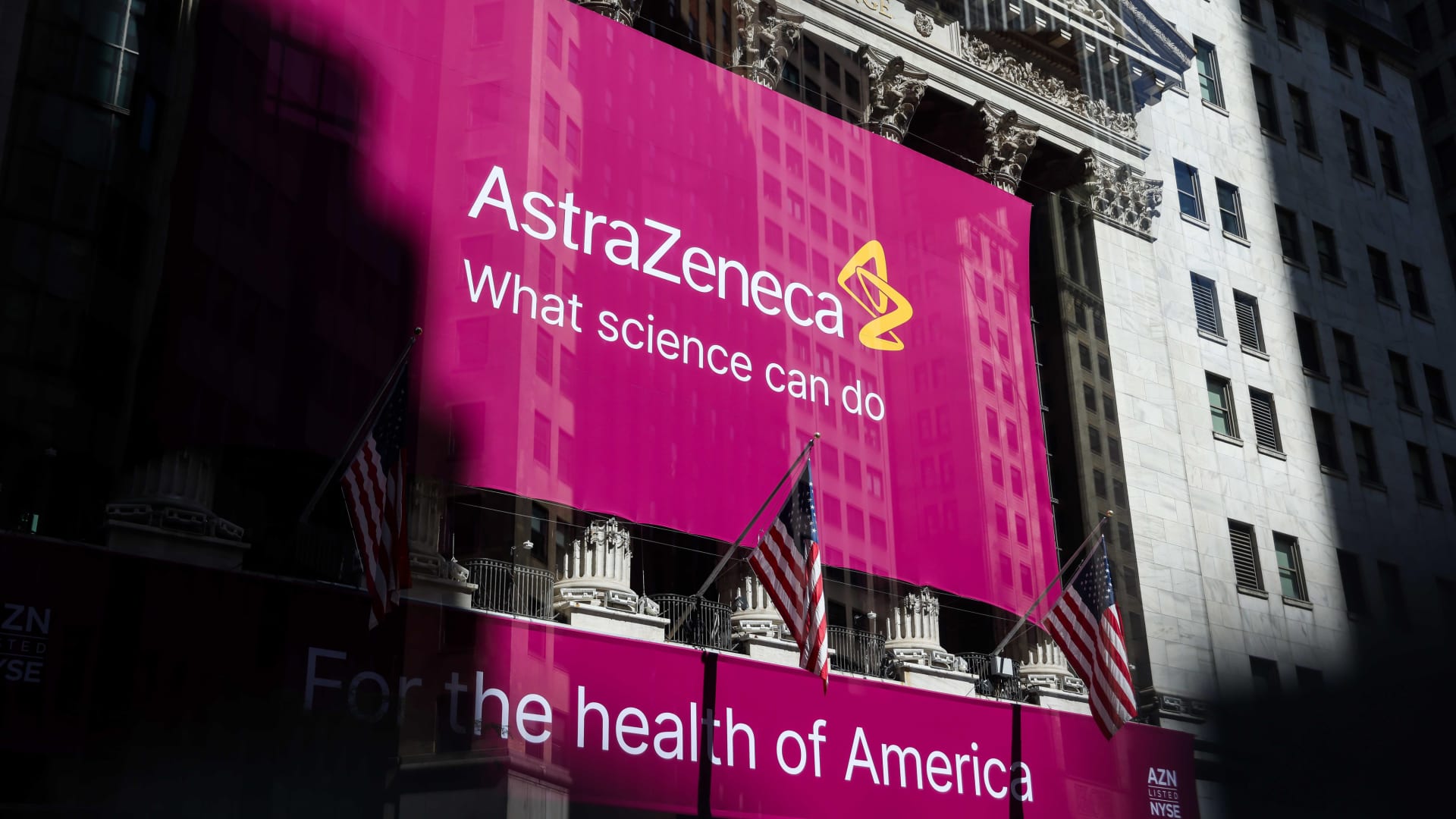
AstraZeneca shares fell around 7% on Monday after the Financial Times reported that the British-Swedish drugmaker has held merger discussions with Bristol Myers Squibb over several months, in what would rank among the largest corporate deals ever attempted.
The reported talks center on a combination that would be valued at roughly $400 billion. Neither company has confirmed the discussions publicly, but the report alone was enough to move markets sharply, with AstraZeneca's share price sliding as investors weighed what a deal at that scale would mean for the company's trajectory.
The share drop reflects a pattern common in large acquisition talks: the target's stock tends to rise on takeover speculation, while the acquirer's or the larger party's stock often falls as investors price in execution risk, integration costs, and the premium typically paid to close a deal of this size. A $400 billion combination would dwarf most pharmaceutical mergers in history, creating a company with enormous reach across oncology, immunology, cardiovascular drugs, and other therapeutic areas where both companies have built franchises.
Pharmaceutical mega-mergers face scrutiny on multiple fronts. Regulators in the United States, the European Union, and the United Kingdom would all likely review a combination of this size, given that both AstraZeneca and Bristol Myers Squibb hold dominant positions in several drug categories. Antitrust reviews at this scale can take well over a year and often require divestitures as a condition of approval.
Beyond regulatory risk, integrating two companies of this size is operationally demanding. Both firms have significant research pipelines, large commercial operations, and distinct corporate cultures shaped by their respective histories. AstraZeneca has spent the better part of the last decade rebuilding its pipeline after a period of patent cliff pressure, and its oncology and rare disease portfolios have become core to its market valuation. Any deal that disrupts that momentum would concern long-term shareholders.
Bristol Myers Squibb, for its part, has been managing its own pipeline transitions following major acquisitions including Celgene in 2019. That deal, worth around $74 billion at the time, was itself one of the largest in pharma history. A merger with AstraZeneca would represent a far larger bet.
The 7% drop in AstraZeneca shares signals that the market is not straightforwardly positive about this combination from AstraZeneca's perspective. Investors may be concerned about deal pricing, meaning whether AstraZeneca would be paying a large premium, or about the complexity of merging two pipelines with overlapping and competing assets.
There is also the question of strategic fit. AstraZeneca has built a clear identity as a science-led company with a focused therapeutic strategy. A merger of this scale could dilute that focus, redirect capital allocation, and shift management attention away from organic pipeline development toward years of integration work.
Until either company speaks officially, the market is trading on the Financial Times report alone. If talks are confirmed or advance, expect further price movement and likely formal statements from both boards. If the talks are denied or fall apart, AstraZeneca shares would likely recover a portion of Monday's losses quickly.
For now, the story raises a straightforward question that neither company has yet answered publicly: what does a $400 billion pharmaceutical combination actually look like, and who benefits from it?
Dozens of major Indian companies including DLF, Sun Pharma, ITC, Bajaj Finserv, Persistent Systems, and Muthoot Finance report Q1 FY27 earnings on August 3, 2026.
Oil prices fell more than 4% on Monday after President Donald Trump said he called off a planned military strike on Iran. The move unwound the geopolitical risk premium traders had built into crude prices, with broader market direction now shifting back to supply and demand fundamentals.
President Trump endorsed Fed Chair Kevin Warsh even as the two disagree on rate policy, after the Fed held rates steady but saw internal FOMC support for a hike. Financial markets are now pricing in a potential rate increase at the September Fed meeting.
HPCL fell up to 1% on NSE on Thursday, with BPCL and IOC also sliding, as crude oil prices crossed $90 per barrel. Higher crude squeezes margins for state-owned fuel retailers when domestic pump prices are not raised in step.