India's Digital Personal Data Protection Act, 2023 (DPDPA) is reshaping how companies handle user data. Startups are now scrambling to build compliance systems, and a new market worth ₹10,000 Cr is forming around it. IDfy, a verification startup founded in 2011, is one of the players betting big on this shift. The company launched Privy, a privacy and data governance platform, built across three pillars: data governance, privacy management, and a compliance copilot. Cofounder Ashok Hariharan told Inc42 that Privy contributes about 10% of IDfy's revenue today but is expected to scale quickly. IDfy was also declared the winner of an Indian government competition for building consent management systems under DPDPA, 2023, in March 2026. The DPDP Rules 2025, notified on November 14, 2025, give organisations an 18-month phased rollout. Consent manager obligations kick in from November 2026, with core requirements due by May 13, 2027. An EY India report found that awareness of the Act is growing, but readiness remains uneven. Other players in this space include Perfios, which launched Perfios DPDP Suite, Cross Identity's Vishwaas AI, Redacto, NeoKred, and Tata Consultancy Services, which is reportedly seeking a consent manager permit. SMEs face the steepest compliance challenge. IDfy plans to open-source parts of its technology stack to help smaller businesses meet minimum compliance requirements. IDfy's revenue from operations rose to ₹188.5 Cr in FY25, and the company says it has crossed ₹200 Cr in FY26.
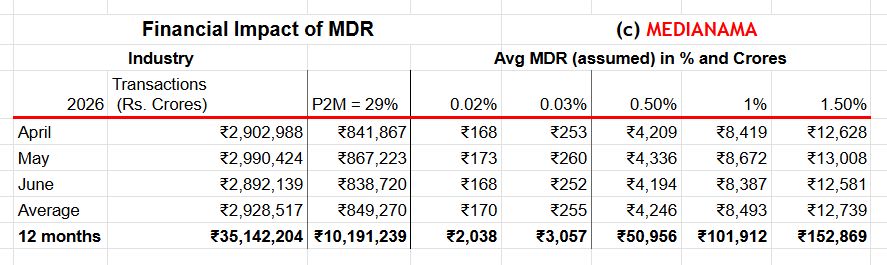
India's government plans to amend the Payment and Settlement Systems Act to restore UPI merchant discount rates, ending the zero-MDR regime in place since January 2020.
India's government has introduced the Taxation and Other Laws (Amendment) Bill, 2026, proposing changes to payments regulation, income tax, and the Finance Act to attract FDI and support Make in India. The Bill's final shape will depend on parliamentary debate and committee review.
The government's Taxation and Other Laws (Amendment) Bill, 2026, proposes to replace the blanket UPI MDR ban with a system allowing the Centre to notify which payment modes stay fee-free.
Prime Minister Narendra Modi inaugurated the Rs 5,000 crore Bhogapuram greenfield airport in Andhra Pradesh, built under a public-private partnership model. He also laid foundation stones for infrastructure projects worth nearly Rs 18,000 crore in the state, signalling a broad investment push for the region.