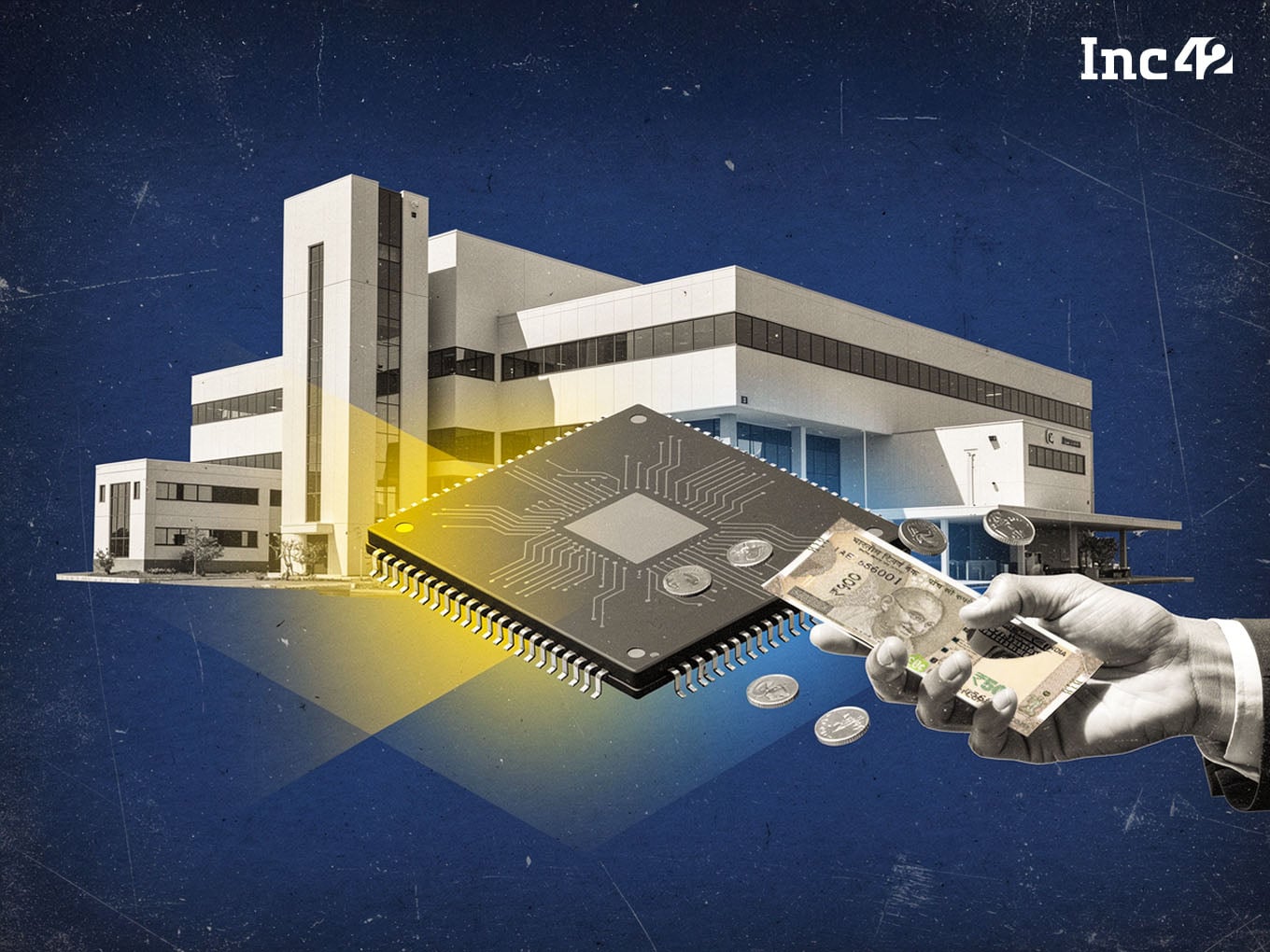
Marvell Commits $250 Mn to India Chip Expansion
Marvell Technology will invest $250 million in India over three years, doubling its workforce and expanding offices in Bengaluru and Hyderabad to advance AI and cloud chip design.
Key Takeaways
June 26, 2026 · 4 min read · By Rishabh Bhardwaj
·
AI-assisted, human-reviewed · Our editorial standards

Apple has raised the starting prices of its MacBook and iPad lineups by 20% to 42% in India and globally, blaming a sharp rise in memory chip costs driven by AI data centre demand. The price of the 14-inch MacBook Pro with M5 Pro chip has gone up to Rs 2,99,900 from Rs 2,49,900, a 20% increase. The 13-inch iPad Air has seen a steeper jump, rising 41% to Rs 1,19,900 from Rs 84,900.
Apple, in a direct statement, pointed to the AI infrastructure boom as the root cause. "The rapid expansion of AI data centres has created an extraordinary surge in demand for memory and storage," the company said. "We have never seen a component price increase this much, this quickly. We have shielded our customers from these increases so far, but we have now reached a point where we need to begin raising prices on a number of products."
The mechanism is straightforward. Memory chip makers, including the sector's biggest names, have been directing a growing share of their output toward AI data centre customers, who need vast amounts of DRAM and NAND flash to power large language models and GPU clusters. That has left the consumer electronics segment, including laptops and tablets, with tighter supply and higher costs.
Micron, the leading memory chip supplier, recently reported gross margins of 86%, up from around 15% just a year ago. That swing tells the whole story: memory suppliers are capturing extraordinary profits precisely because demand from AI buyers outstrips what they can produce, and consumer electronics manufacturers have to pay the higher clearing price or go without.
Counterpoint Research co-founder Neil Shah said Apple had held off passing on these costs for at least two quarters, absorbing the pressure rather than billing customers. That window has now closed. Shah described the shift in the semiconductor supply chain as structural, not temporary, adding that the situation is unlikely to improve for at least the next two years given how much AI infrastructure investment is being prioritised over consumer supply.
Apple affects MacBook Neo, MacBook Air, MacBook Pro, iPad Air, and iPad Pro Wi-Fi models. The company is not alone. Price increases of 40% or more have already spread across the consumer electronics industry, according to CyberMedia Research VP Prabhu Ram, who noted that Apple passing costs on to consumers is a significant signal. "Apple, long regarded as the industry's benchmark for supply chain resilience, has begun passing higher component costs on to consumers. That is a strong signal that pricing pressures have reached a level that even the most sophisticated absorption strategies cannot fully offset," Ram said.
The timing adds a layer of complexity. Apple plans to roll out a revamped version of its on-device Apple Intelligence platform later in 2026 across its device lineup. That push demands devices with more memory and computing capability, which means the products getting more expensive are precisely the ones Apple needs consumers to upgrade to.
Shah sees a bifurcated demand outcome. Higher prices may suppress overall volumes, particularly among budget-conscious buyers who might delay purchases or opt out entirely. At the same time, customers who cannot defer an upgrade may trade up rather than compromise on specifications, shifting the mix toward higher-end, higher-margin configurations. If that pattern holds, Apple's revenue per unit could rise even if total units sold decline.
For Indian consumers specifically, the rupee-denominated price increases land on top of existing import duties and taxes, making the effective cost increase larger in real terms than the headline percentages suggest. The iPad Air jump to Rs 1,19,900 moves it further from the mass-market price band it previously occupied, narrowing the field of likely buyers significantly.
The broader market question is whether competing PC and tablet makers, facing the same component cost pressures, follow Apple's lead and raise their own prices, or try to hold lower price points to gain share. Either way, the era of flat or declining consumer electronics prices, which has held for most of the past decade, appears to be over for now.
Marvell Technology will invest $250 million in India over three years, doubling its workforce and expanding offices in Bengaluru and Hyderabad to advance AI and cloud chip design.
Microsoft, Nvidia, SpaceX, and Palantir have joined the newly formed Open Secure AI Alliance alongside dozens of U.S. and European tech companies. The group aims to set shared AI security standards as fallout from a cyber attack on OpenAI pushes the industry toward coordinated defenses.
Skyroot Aerospace's Vikram-1 became India's first privately built rocket to reach orbit, making India only the third country after the US and China with a private orbital launch capability.
India has approved a ₹1.25 lakh crore ISM 2.0 that replaces the earlier grant-only model with a grant-plus-equity structure, co-investing alongside private venture capital in fabless chip design startups.